
The Surprising Role Fathers Play in Unlocking Humanity’s Future—And Why It Matters More Than Ever
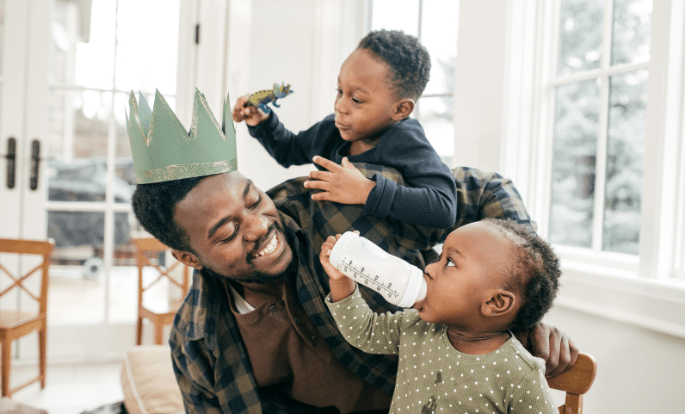
No kidding, the moment you welcome your first child into the world—it’s unforgettable. For me, it was November 21, 1969, the day I learned firsthand about the power of presence and how being a father is so much more than just showing up. Picture this: coaching my wife through those Lamaze breaths, heart pounding, ready to step back but then deciding—no way—I’m not just some waiting-room spectator. That choice wasn’t just about being there; it was a vow to break the mold, to stand up and be fully present in a way my own father couldn’t. Since then, I’ve come to realize fatherhood reshapes you, biologically and emotionally, turning you into someone who cares deeply—not just for your kid, but for the world they’re stepping into. So, what if dads stepping up even more could actually help build a healthier, more sustainable future? Intrigued? Let’s dive into this journey together. LEARN MORE

No one forgets the birth of their first child. For me the blessed event occurred on November 21, 1969. I had done my best to coach my wife through the Lamaze breathing techniques that we had learned in our birthing classes. It was now time for her to move to the delivery room to complete the birth process and welcome our newborn child into the world.
We were both ready for the final stage of the journey. The nurse turned to me with a smile saying,
“OK, Mr. Diamond, your job is done now. You can go to the waiting room and we’ll let you know when your child arrives.”
I felt a mixture of relief and disappointment. On the one hand we had done this far together and I wanted to be with my wife for the birth. On the other, I was afraid I might freak out and pass out. I didn’t want to screw things up.
I kissed my wife and told her she would do fine. She attempted a smile but was overcome with the next contraction. As they wheeled her to the left towards the delivery room, I went the other direction. But as I started to go through the waiting room doors, something stopped me. I felt the calling of my soon-to-be born child saying,
“I don’t want a waiting room father. Your place is here with us.”
I turned around and walked back the other way and pushed through the doors into the delivery room. I didn’t ask permission and there was no question of my leaving, if asked. I didn’t care what the rules were, my child needed me, and I answered the call. It wasn’t long until our beautiful baby boy was born. As Jemal was handed to me, amid tears of relief and joy, I made a vow that I would be a different kind of father than my father was able to be for me and to do everything I could to create a world where fathers were fully involved with their children throughout their lives.
After we brought him home from the hospital, I took three weeks off from work to spend time being the supportive parent for my wife and continue bonding with our son. The event of Jemal’s birth and the aftermath changed my life forever. A year after Jemal’s birth, my wife announced that she needed a break from 24/7 child rearing. She acknowledged that I was a great help, but she needed a break from being the primary caregiver. A girlfriend had invited her to go on a road trip, maybe for a few weeks, and asked if I could take a few weeks off from work again and be with Jemal.
I quickly agreed, wanting to be a good, new-age, liberated father. But inside I was terrified. It was one thing to be the supportive parent knowing that I had the mother of our child to step in at any time. I believed that mothers had an inherent understanding of babies and knew what to do, a special something I felt men lacked. I felt I had learned a lot about taking care of our baby boy, but what did I know really. I was just a man. What would I do if he needed something that I couldn’t give him? We didn’t have mothers in the area that could help us out, but my wife assured me I could call her anytime if I needed advice.
The first few days were scary, but Jemal and I figured things out together. I found I had abilities I didn’t know I had. We played together, father and son. I fed him, changed his diapers, slept with one ear open listening to any cries in the night. My wife phoned a few times and I told her honestly that things were going fine. We both missed her, but father and son were surviving and thriving.
We did more than survive and thrive. We formed a bond together that has lasted through time. We’re connected in a way that most fathers and sons are not. I feel confident as a father and as a man that I never imagined I would feel.
Jemal will be fifty-six in November. My wife and I now have six grown children, seventeen grandchildren, and four great grandchildren. I continue to love and learn. I recently heard about a new book, Father Time: A Natural History of Men and Babies by world renowned evolutionary anthropologist Sarah Blaffer Hrdy. It helped me understand my own experiences as a father and the importance of fathers throughout evolutionary history.
I recently had the good fortune of interviewing Dr. Hrdy, which you can watch here. After a full career studying the lives of mothers and writing iconic books including The Woman That Never Evolved, Mother Nature, she began to recognize the importance of fathering that had been mostly neglected by experts in Darwinian science and evolutionary psychology.
“It has long seemed self-evident that women care for babies and men do other things,” says Dr. Hrdy. “Hasn’t it always been so? When evolutionary science came along, it rubber-stamped this venerable division of labor: mammalian males evolved to compete for status and mates, while females were purpose-built to gestate, suckle, and otherwise nurture the victors’ offspring.”
Yet experiences Dr. Hrdy was having in her own family watched men nurture babies, led her explore the evolutionary roots of male nurture of young babies and has helped us recognize a much more expanded reality of what it means to be a man. What she discovered will forever change our views of manhood.
I learned this more than fifty years ago when Jemal was born. More and more men have experienced this expanded reality.
“Men caring for babies undergo the same neurological transformations, the same increase in prolactin levels and oxytocin-induced sensual pleasure as mothers do,”
says Dr. Hrdy. I didn’t understand the biological changes I went through at the time, but that was certainly my experience as I spent significant time physically in touch with Jemal.
“If their brains undergo shape-shifting similar to that in mothers, wouldn’t men’s psychological preferences change as well?” asks Dr. Hrdy. “Might men’s priorities come to more nearly resemble the more prosocial ones mothers are assumed to have? Might such men also be more likely to opt for safer and more sustainable courses of action?”
I would take it another step further. Would men with this kind of changed brains, brains that are not only tuned to children, but to humans and other living things, be the kind of men who can join with women to create a healthier, more sustainable world? It doesn’t take experts to alert us to the reality that humanity is out of balance with the laws of nature and that we need to change our ways if we are going to survive and thrive as a species.
Thomas Berry was a priest, a “geologian,” and a historian of religions. He spoke eloquently to our connection to the Earth and the consequences of our failure to remember we are one member in the community of life.
“We never knew enough. Nor were we sufficiently intimate with all our cousins in the great family of the earth. Nor could we listen to the various creatures of the earth, each telling its own story. The time has now come, however, when we will listen or we will die.”
At a time when mothers are feeling overwhelmed by trying to take care of infants and many are seeking child care from strangers or even looking to AI robots to raise our children, the answer may be to support more hands-on, and hearts-connected fathers and their babies. What do you think?
You can learn more about Dr. Hrdy and her work by visiting her website. You can watch my in-depth interview with her here.
If you appreciate articles like these, I invite you to subscribe to my free weekly newsletter here.

ALOHA Organic Plant Based Protein Bar | Peanut Butter Chocolate Chip, 12 Ct | 14g Plant-Based Protein, 10g Fiber, 5g Sugar | No Sucralose or Stevia | Non-GMO, Vegan & Dairy Free
$22.50 (as of October 15, 2026 03:09 GMT +00:00 - More infoProduct prices and availability are accurate as of the date/time indicated and are subject to change. Any price and availability information displayed on [relevant Amazon Site(s), as applicable] at the time of purchase will apply to the purchase of this product.)
OneBug Super Absorbent Leakproof Disposable Dog Pee Pads, 100 Count | Puppy Training Pads 28x34in,XL Size,6-Layer,Quick-Dry, Odor Control,Suitable for All Breeds , All Ages of Dogs
$29.99 (as of October 15, 2026 03:21 GMT +00:00 - More infoProduct prices and availability are accurate as of the date/time indicated and are subject to change. Any price and availability information displayed on [relevant Amazon Site(s), as applicable] at the time of purchase will apply to the purchase of this product.)
Apple Watch Series 12 GPS 42mm Smartwatch | Light Gold Aluminum Case, Sand Sport Band - S/M. Health + Fitness + Sleep Tracking, Heart Rate, Safety
$389.99 (as of October 15, 2026 03:32 GMT +00:00 - More infoProduct prices and availability are accurate as of the date/time indicated and are subject to change. Any price and availability information displayed on [relevant Amazon Site(s), as applicable] at the time of purchase will apply to the purchase of this product.)
Milk-Bone Soft & Chewy Dog Treats, 25 Oz. Canister | Made with real beef & filet mignon, tender dog treats, easy to chew, for dogs of all ages and sizes
$14.48 (as of October 15, 2026 03:11 GMT +00:00 - More infoProduct prices and availability are accurate as of the date/time indicated and are subject to change. Any price and availability information displayed on [relevant Amazon Site(s), as applicable] at the time of purchase will apply to the purchase of this product.)











Post Comment