
The Untapped Ad Goldmine Beyond Meta and Google That’s Quietly Making Ecommerce Brands Millions — Are You Missing Out?
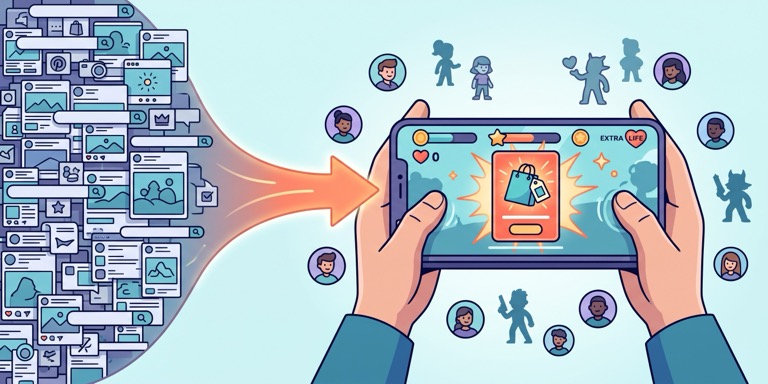
So, you’ve mastered Meta and Google, huh? Pixels firing, audiences dialed in like a pro, creative fresh—and yet, that revenue graph? It’s flatlining like a patient on life support. More dollars in, same dollars out. It’s the digital marketing equivalent of running on a treadmill—fast, exhausting, and you’re not getting anywhere new. Sounds familiar? Trust me, been there, done that, got the battle scars. Here’s the kicker: once your core channels are slick and optimized, growth ain’t just tough—it’s a grind. What if I told you the next big swell of customers, the kind you haven’t touched before, are hiding in plain sight? Not scrolling social feeds or hunting Google snippets, but tapping away in mobile games—yes, the very games you might sneak a round of during your downtime. With over a billion players daily, mobile games offer a goldmine of eyeballs and attention that most ecommerce brands haven’t dared to claim yet. Enter AppLovin—your gateway to in-app advertising that’s not just another interruption but a full-attention, opt-in playground where you’ve got up to a full minute to tell your story, connect, and sell. If you’re ready to kick the tires on something fresh and potentially game-changing, this might just be the secret sauce you’ve been hunting. Ready to level up? LEARN MORE
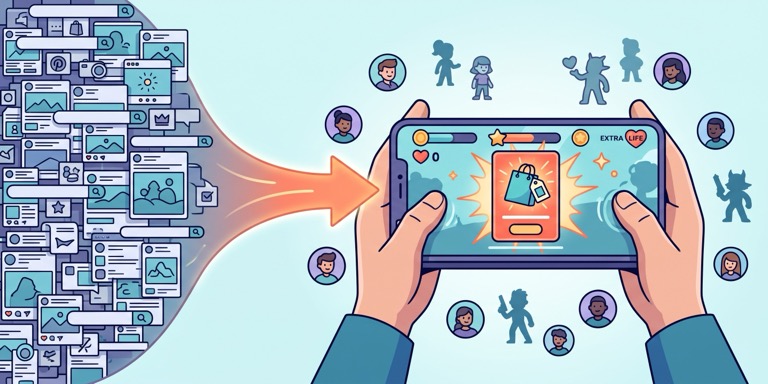
You’ve done the work on Meta and Google. The pixels are firing, the audiences are dialled in, the creative gets refreshed every week, and your best campaigns have run long enough that you know the numbers by heart.
At some point, the line on the graph stopped climbing the way it used to. More budget goes in, roughly the same revenue comes back out.
You’ve built acquisition around Meta and Google, learned what works, you get genuinely good at them. Now you’re looking for another source of growth.
The question is: once your core channels are established, where does the next wave of growth come from?
There’s an answer most ecommerce brands haven’t looked at, and it’s hiding somewhere you probably spend time yourself.
Not a feed. A mobile game. The channel is in-app and mobile-game advertising, and AppLovin is the platform that opens it up at scale.
Short on time? Here are the key takeaways
- Build beyond your core channels: once Meta and Google are optimised, growth gets harder.
- The next channel is in mobile games: more than a billion people play them every day, and AppLovin helps ecommerce brands finally reach them.
- It’s a full-attention environment: full-screen ads are unskippable for up to 60 seconds, something no scrollable feed can give you.
- The format lets you actually sell: video, interactive elements and a shoppable product catalog in one placement, instead of a single image someone thumbs past.
- The returns are real and quick: brands are seeing incremental revenue in a matter of weeks, and you can go live in under an hour.
The growth question
For many ecommerce brands, Meta and Google form the foundation of acquisition. You find a channel that works, and you pour everything into getting good at it.
You learn the platform, you build the creative engine, you tune the funnel, and the revenue follows.
As the business grows, however, the question becomes how to build on that foundation. The easy wins are gone, the audiences are saturated, and every extra dollar works a little harder for a little less.
You can keep optimising, and you should. But at some point the only way to add a meaningful new slice of revenue is to add a meaningful new source of customers.
A second or third channel that reaches people your current ads never touch is how you get back to adding customers instead of rotating through the same ones. It also means your whole business stops depending on one or two platforms’ rules and algorithms.
So the question becomes practical. If the next wave of growth has to come from somewhere new, which somewhere is actually worth testing?
Your next customer is probably playing a mobile game
The largest pool most ecommerce brands have never advertised in is mobile gaming.
More than a billion people play mobile games every day, and they’re not who you picture. Think of a commuter playing a word game on the train, someone unwinding with a puzzle before bed, or a parent filling ten minutes in a waiting room.
The audience is enormous, broad, and it skews in directions that line up neatly with a lot of ecommerce. These are everyday consumers spending time in an environment beyond search results and social feeds.
What makes it interesting is not just the size. It’s that almost none of your competitors are there.
Everyone is crowded into the same feeds, bidding against each other for the same placements in front of the same people. Mobile game inventory is the rare spot where demand hasn’t caught up to the attention yet. AppLovin puts ecommerce brands in front of consumers through full-screen ads, giving them space to explain their products and offers.
You’re reaching real buyers in an environment where you aren’t elbow to elbow with every other brand in your category.
For a founder who has spent years learning to win in the most competitive auctions on the internet, that’s a strange and welcome change of scenery.
A different kind of attention
The thing that genuinely sets this channel apart is how the attention works.
Most of AppLovin’s ads run as rewarded placements. Players choose to watch an ad in exchange for something they want inside the game: an extra life, a hint, a bonus, or a way to keep playing.
They choose to watch. That choice creates an opportunity for a brand to introduce itself during gameplay.
Nobody does that on a social feed. In a feed, you’re an interruption the user is trying to scroll past in half a second, and you’ve trained yourself to win that half second because it’s all you get.
In a rewarded placement you get up to 60 seconds, with an average watch time around 35. The ad runs full screen, while the person is actively paying attention because they opted in.
There are interstitial placements too: full-screen ads shown at natural breaks in gameplay, like between levels, which are unskippable for the first five seconds. But the rewarded format is the one that changes the maths. You go from fighting for a thumb-stop to holding a genuinely attentive audience for the better part of a minute.
Both placements give you a place to demonstrate your product, explain the benefits, and give someone a chance to buy.
Enough room to actually sell
Up to 60 seconds of attention is only useful if the format lets you use it, and this is where AppLovin’s ad experience does more than a static image ever could.
A good placement here isn’t one asset. It combines a video that tells your story, interactives that let the person engage rather than just watch, and a dynamic product catalog they can browse and shop inside the ad itself.
You can introduce the brand, explain why the product is worth buying, show it in use, and hand them a way to purchase, all in one continuous experience. For a considered product, the kind that usually needs a landing page and a bit of convincing, that extra room does real work.
It also gives your creativity somewhere to breathe. The video and UGC you’ve already made for other channels has a natural home here, and the interactive layer gives you a way to stand out that a feed placement can’t match.
Faster to start than you’d expect
Setup is fast. Brands can go live on AppLovin in under an hour, which makes testing this channel closer to running an experiment than launching a new programme.
You’re not rebuilding your stack or hiring a specialist team. You point the system at the outcome you care about, such as return on ad spend or cost per purchase, feed it your creative, and let AppLovin’s AI handle the heavy lifting of finding the right customers and optimising toward your return.
The machine learning underneath it is built to chase performance, not clicks, so it’s working toward the same number you are.
Low effort to start, real attention when you get there. That combination is rare, and it’s the main reason this channel belongs in your testing calendar rather than a someday-maybe note.
The returns brands are already seeing
The numbers coming off AppLovin hold up.
HexClad, the cookware brand, drove more than $1 million in incremental revenue in three weeks. Incremental is the word that matters there: net-new revenue the brand wasn’t already getting, not sales shuffled over from another channel and re-credited.
MAËLYS, in body care, scaled to $200,000 in daily spend within a week of starting on AppLovin. A brand doesn’t pour budget into a channel that quickly unless the returns on the way up are holding, which tells you the ceiling is high and the efficiency was there.
Kitsch, in haircare and accessories, scaled its spend 3.4 times without losing efficiency. That’s the proof point a lot of founders care about most: a channel that grows with you and keeps its returns intact as the budget climbs.
Three different categories, cookware, body care, and haircare, and the same shape of result in each. Real incremental revenue, and profitable scale that held as spend went up.
How to test it without betting the business
You don’t need to go all in to find out whether this works for you. Treat it the way you’d treat any serious test.
Start with a prospecting campaign aimed squarely at new customers, since reaching people your current channels miss is the entire point. Feed it your strongest video creative, the stuff that already earns attention elsewhere, and give it a few variations to work with rather than a single ad.
Let it run for a few weeks before you judge it, because the system needs room to learn and creative needs time to find its audience. Measure it honestly: a geo-holdout test, where you hold the channel back in some regions and compare, is the cleanest way to confirm the revenue is genuinely incremental rather than borrowed.
Once you can see it clearing your return target, scale it the way the brands above did, steadily, watching the efficiency as you climb.
Done this way, the downside is a capped test budget and a few weeks, and the upside is a whole new source of customers most of your competitors haven’t touched.
Final Thoughts
The founders who keep growing tend to share a habit: they find the next channel before the last one runs dry. Once your core platforms are doing all they can, the job is to go and reach the people they can’t, and right now the most under-used place to do that is the billion-plus people spending real, attentive time inside mobile games.
That’s where AppLovin comes in. It opens up that in-app and mobile gaming inventory at scale, in an opt-in, full-attention format that gives you up to a minute to make your case, with AI that optimises toward your actual returns and a setup you can have live in under an hour.
For a brand that’s hit the ceiling on its core channels, it’s the most straightforward way to find the next wave of growth.
Foundr readers get a $5K ad credit match when you spend your first $5k, so you can test the channel on the best possible terms. Start here: applovin.com/foundr
Sparkling Ice, Black Raspberry Sparkling Water, Zero Sugar Flavored Water, with Vitamins and Antioxidants, Low Calorie Beverage, 17 fl oz Bottles (Pack of 12)
$12.47 (as of November 27, 2026 03:25 GMT +00:00 - More infoProduct prices and availability are accurate as of the date/time indicated and are subject to change. Any price and availability information displayed on [relevant Amazon Site(s), as applicable] at the time of purchase will apply to the purchase of this product.)
Sony WH-CH530 Wireless On-Ear Bluetooth Headphones with Microphone, Black | Comfortable Lightweight Design, Up to 55 Hrs Battery with Quick Charging, Multipoint Connection, Clear Calls, Swivel design
$38.00 (as of November 27, 2026 03:39 GMT +00:00 - More infoProduct prices and availability are accurate as of the date/time indicated and are subject to change. Any price and availability information displayed on [relevant Amazon Site(s), as applicable] at the time of purchase will apply to the purchase of this product.)
GNMN Active Noise Cancelling Ear Buds Wireless Earbuds 96hrs Playback Bluetooth Headphones Dual Battery Display Stereo Bass Earphones with Earhooks Microphone IPX7 Waterproof for Sports/Runing/Workout
$75.99 (as of November 27, 2026 03:39 GMT +00:00 - More infoProduct prices and availability are accurate as of the date/time indicated and are subject to change. Any price and availability information displayed on [relevant Amazon Site(s), as applicable] at the time of purchase will apply to the purchase of this product.)
Milk-Bone Original Biscuits Large Dog Treats, 10 Lb.
$14.98 (as of November 27, 2026 03:25 GMT +00:00 - More infoProduct prices and availability are accurate as of the date/time indicated and are subject to change. Any price and availability information displayed on [relevant Amazon Site(s), as applicable] at the time of purchase will apply to the purchase of this product.)












Post Comment