
UEFA’s Final Showdown: Why Choosing Between Spotify Camp Nou and Wembley Could Make or Break Champions League History—and Your Next Big Bet

Who’s ready for a showdown between two of football’s most iconic arenas? UEFA’s Executive Committee faces a pretty thrilling conundrum: should the 2029 Champions League final be staged at Barcelona’s legendary—and soon even more colossal—Spotify Camp Nou, or should London’s famed Wembley Stadium take the crown once again? With the bidding window shuttered on June 10, 2026, it’s down to just these heavy-hitters, and the decision will drop on September 15, 2026, in Thessaloniki, Greece. Now here’s a thought—does size trump legacy, or can Wembley’s recent renovations and history outshine Camp Nou’s historic grandeur and staggering seating capacity? It’s a high-stakes duel blending tradition, ambition, and a dash of national pride, and honestly, the suspense is killing me already. LEARN MORE

Two cathedrals of football are competing for the right to host the sport’s biggest club match. UEFA’s Executive Committee will choose between Barcelona’s Spotify Camp Nou and London’s Wembley Stadium as the venue for the 2029 Champions League final, with the decision set for September 15, 2026, in Thessaloniki, Greece.
The bidding window closed on June 10, 2026, and only these two venues submitted proposals.
The case for Camp Nou
Barcelona’s bid carries serious institutional weight. The Spanish Council of Ministers formally approved government backing for the Camp Nou proposal in May 2026, with Minister Milagros Tolón coordinating the effort alongside the Royal Spanish Football Federation (RFEF).
The renovated Spotify Camp Nou is expected to exceed 105,000 seats upon completion, making it comfortably the largest football stadium in Europe. For context, that’s roughly 15,000 more seats than Wembley’s 90,000 capacity.
Camp Nou also has Champions League final pedigree. The stadium hosted the 1989 European Cup final and the 1999 Champions League final, which remains one of the most famous matches ever played. That was the night Manchester United scored twice in stoppage time to beat Bayern Munich.
Wembley’s counterargument
Wembley’s 90,000 capacity, while smaller than Camp Nou’s projected figure, still ranks among the largest purpose-built football venues on the continent. The rebuilt stadium, which opened in 2007, has hosted the Champions League final twice before, in 2011 and 2013.
What goes into the decision
UEFA’s venue selection process weighs several factors beyond raw seat count. Stadium quality, transport links, accommodation capacity, government guarantees, sustainability commitments, and the overall “event concept” all feed into the evaluation.
The fact that only two bids were submitted is notable. In previous cycles, three or four venues sometimes competed for hosting rights.

INSIGNIA 50" Class F50 Series LED 4K UHD Smart Fire TV, Voice Remote with Alexa, Stream Live TV Without Cable
$159.99 (as of October 7, 2026 03:20 GMT +00:00 - More infoProduct prices and availability are accurate as of the date/time indicated and are subject to change. Any price and availability information displayed on [relevant Amazon Site(s), as applicable] at the time of purchase will apply to the purchase of this product.)
Amazon Echo Dot (newest model) - Vibrant sounding speaker, Designed for Alexa+, Great for bedrooms, dining rooms and offices, Charcoal
$39.99 (as of October 7, 2026 03:20 GMT +00:00 - More infoProduct prices and availability are accurate as of the date/time indicated and are subject to change. Any price and availability information displayed on [relevant Amazon Site(s), as applicable] at the time of purchase will apply to the purchase of this product.)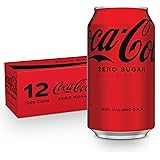
Coca-Cola Zero Sugar Soda Soft Drink Fridge Pack Cans, 12 fl oz, 12 Pack | Carbonated cola soda pop with zero calories
$7.68 (as of October 7, 2026 03:07 GMT +00:00 - More infoProduct prices and availability are accurate as of the date/time indicated and are subject to change. Any price and availability information displayed on [relevant Amazon Site(s), as applicable] at the time of purchase will apply to the purchase of this product.)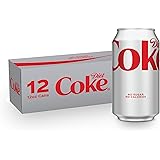
Diet Coke Soda Soft Drinks, 12 fl oz Fridge Pack Cans, 12 Pack - Cola Flavored Diet Soda Soft Drinks
$7.68 (as of October 7, 2026 03:07 GMT +00:00 - More infoProduct prices and availability are accurate as of the date/time indicated and are subject to change. Any price and availability information displayed on [relevant Amazon Site(s), as applicable] at the time of purchase will apply to the purchase of this product.)













Post Comment