
Unlock the Secret Toolbox That Stops Mental Spirals Before They Destroy Your Day—Here’s How to Take Back Control Now
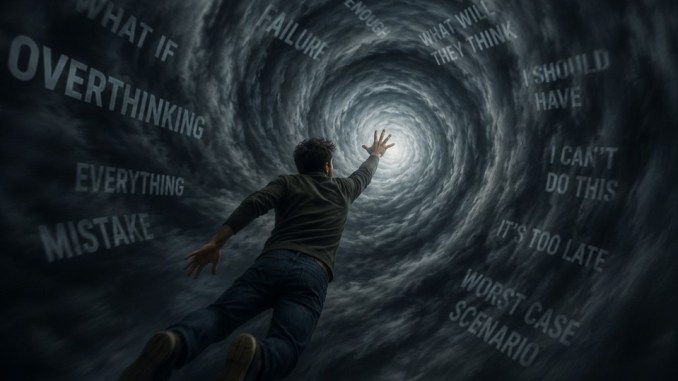
Ever find yourself stuck in that relentless loop—replaying a conversation like it’s the world’s worst movie on repeat? You check your phone again. And again. Your mind races, leaping ten steps ahead to the absolute worst-case scenario, convincing you that sending that long, fiery text or quitting your job will somehow snap you out of the spiral. Sound familiar? I get it. We’ve all been there, caught in that dizzying swirl where every thought feels urgent, every feeling screams “act now!” But here’s a little secret: you don’t need to fix everything in one breath. Nope. It’s not about achieving flawless calm or instant clarity. Instead, it’s about dialing down that storm just enough to make your next move—your next *safe* move. This guide is your toolbox for that very moment. Think of it as your stepping stone out of the spiral, one notch at a time. Ready to steady the ship, take a breath, and find your footing? Let’s do this.

You are replaying the conversation again.
You are checking your phone, imagining the worst, or mentally jumping ten steps ahead. Part of you wants to send a long text, confront someone, quit your job, end a relationship, pour another drink, make a major purchase, or do something—anything—that will make this feeling stop.
Pause here.
You do not have to solve your whole life right now. You only need to lower the intensity enough to make your next safe decision.
That is the purpose of this guide.
Not perfect calm. Not instant certainty. Not a complete solution to everything that is upsetting you.
For the next few minutes, the goal is simply to bring the spiral down by one notch.
START HERE
You do not need to read this entire guide right now.
Put both feet on the floor. Rate the intensity of the spiral from 1 to 10. Then choose one tool from this article.
Your job is not to solve everything. Your job is to lower the intensity enough to make your next safe decision.
You Are Spiraling Right Now—Do These Three Things
Before reading any further, try these three steps:
- Put both feet on the floor or another stable surface.
- Take one gentle breath without trying to force yourself to relax.
- Say, either aloud or silently: “I am spiraling. I do not have to act on this yet.”
That last sentence matters.
Naming what is happening can create a little distance between you and the storm in your head. You are not denying the problem. You are recognizing that your current level of distress may be affecting how you interpret it.
A thought is not a command.
A feeling is not a forecast.
You can wait before acting.
Rate the Spiral From 1 to 10
Before choosing a coping tool, give the intensity a number.
Use a scale from 1 to 10:
- 1–3: The feeling is present but relatively manageable.
- 4–6: You are distressed, but you can still slow down and consider options.
- 7–8: You are highly activated and may be at risk of acting impulsively.
- 9–10: The experience feels overwhelming, unsafe, or extremely difficult to manage alone.
Do not overthink the number. Choose the rating that feels closest.
If you are at an eight or nine, the goal is not necessarily to reach a one. That may be unrealistic in the middle of an intense moment.
Getting from a nine to a five can be meaningful progress.
At a five, you may still feel anxious, angry, embarrassed, rejected, or uncertain. But you may also be able to put down the phone, delay the argument, ask for help, or make a safer decision.
THE GOAL IS NOT PERFECT CALM
Your goal is not always to move from a 9 to a 1.
If one tool helps you move from a 9 to a 7—or from a 7 to a 5—that counts.

What Spiraling Can Feel Like
“Spiraling” is not a formal diagnosis. It is a common way people describe a period when thoughts, emotions, physical sensations, and urges begin feeding one another.
It may look like:
- replaying something you said or did;
- imagining increasingly disastrous outcomes;
- checking texts, email, social media, or someone’s location repeatedly;
- feeling certain that silence, a facial expression, or a short message means something terrible;
- jumping from one problem to the conclusion that your entire life is falling apart;
- feeling driven to explain yourself immediately;
- mentally preparing for rejection, humiliation, illness, failure, or abandonment;
- experiencing a racing heart, tight chest, nausea, trembling, sweating, dizziness, or restlessness;
- wanting to escape the feeling through alcohol, drugs, shopping, gambling, sex, food, or impulsive action;
- feeling emotionally flooded and unable to think clearly.
A spiral can occur alongside anxiety, panic, trauma reactions, depression, obsessive thinking, relationship distress, sleep deprivation, substance use, or intense stress. It can also happen when several smaller pressures collide at once.
Not every spiral is caused by an anxiety disorder, and an article cannot diagnose what is happening to you. You also do not need to determine the exact cause before taking your next stabilizing step.
Right now, the priority is to reduce the intensity and avoid making the situation worse.
When you are feeling steadier, you may find it useful to read more about how men can experience anxiety, including some signs that are easy to miss.
CHOOSE ONE TOOL
You do not need to use every technique in this guide.
Pick one. Try it for a few minutes. Then rate the spiral again.
If the tool does not help—or makes you feel more uncomfortable—stop and try another. Different nervous systems respond to different approaches.
The Spiraling Toolbox
The following tools target different parts of the spiral.
Some work with thoughts. Others use the senses, body, environment, time, or support from another person.
You are not required to use them in order.
Tool 1: Name What Is Happening
Start by putting simple language around the experience.
Try one of these statements:
- “I am having a spiral.”
- “My mind is searching for danger.”
- “I am emotionally flooded.”
- “I am treating a prediction as though it has already happened.”
- “I want to act because I want immediate relief.”
- “This is an intense moment, not necessarily an accurate picture of everything.”
The goal is not to argue with yourself or pretend the concern is meaningless.
It is to move from:
“Everything is falling apart.”
to:
“I am having the thought that everything is falling apart.”
That small shift does not make the problem disappear. It helps you notice that you are experiencing a thought—not receiving a legally binding instruction from your mind.
Rate the intensity again after naming the experience.
You might say:
“This is an eight right now. I am not going to make a major decision at an eight.”
Tool 2: Stop Adding Fuel
When a fire is burning, the first move is not always to put it out completely. Sometimes the first move is to stop throwing more fuel onto it.
Ask yourself:
“What am I doing right now that is making this spiral louder?”
Possible fuel includes:
- rereading the same text thread;
- checking whether someone is online;
- searching symptoms repeatedly;
- scrolling through social media;
- drinking more alcohol;
- asking multiple people for reassurance;
- mentally rehearsing a confrontation;
- searching for evidence that confirms your worst fear;
- reading old messages or looking through old photographs;
- drafting increasingly emotional responses;
- staying in a loud or overstimulating environment;
- checking your bank account, work email, test results, or notifications every few minutes.
Choose one source of fuel and interrupt it.
Put the phone face down. Close the browser. Leave the room. Turn off notifications. Step away from the conversation. Ask someone you trust to hold your keys or credit card temporarily if impulsive behavior is a concern.
You are not avoiding the issue forever.
You are creating a temporary boundary between the feeling and the behavior it is demanding.
You can learn more about behaviors that may unintentionally intensify distress in 10 things that can make anxiety worse.
THE PHONE RULE
Put your phone in another room for ten minutes.
If ten minutes feels impossible, start with two.
You are allowed to retrieve it later. The purpose is to break the checking loop long enough for your body and attention to shift.
Tool 3: Try Four-Square Breathing
Four-square breathing—also known as box breathing—uses four equal parts:
- Breathe in gently for a count of four.
- Hold softly for four.
- Breathe out for four.
- Pause for four.
Repeat the square three or four times.
You can imagine tracing the sides of a square as you breathe:
In: 1, 2, 3, 4
Hold: 1, 2, 3, 4
Out: 1, 2, 3, 4
Pause: 1, 2, 3, 4
Do not gulp air or force your lungs to fill completely. Keep the breath gentle and comfortable.
If holding your breath feels uncomfortable, makes you lightheaded, or increases panic, skip the holds. Use the longer-exhale technique in the next section or choose a sensory grounding tool.
Breathing exercises are not right for everyone. Focusing on breathing can sometimes make a person more aware of frightening physical sensations. There is nothing wrong with you if this method does not help.

Tool 4: Make the Exhale Longer
If breath-holding does not feel good, try a simpler pattern.
Breathe in gently for three counts and breathe out for five:
In: 1, 2, 3
Out: 1, 2, 3, 4, 5
Do not strain to reach the number. Your exhale only needs to be a little longer than your inhale.
Continue for about one minute, or stop sooner if you become uncomfortable.
You can also repeat a short phrase during the exhale:
- “Not right now.”
- “I can wait.”
- “One thing at a time.”
- “Let the wave move.”
- “I do not need certainty this second.”
The point is not to command yourself to calm down. It is to offer your body a slower, steadier rhythm to follow.
Tool 5: Ground Yourself Through the Five Senses
When your mind is trapped in a feared future or painful replay, grounding redirects attention toward what is physically present.
Try the 5-4-3-2-1 grounding method.
Name:
- 5 things you can see
- 4 things you can feel
- 3 things you can hear
- 2 things you can smell
- 1 thing you can taste
Go slowly and be specific.
Instead of saying “chair,” notice:
“The chair is dark brown. The fabric feels rough. One leg has a scratch.”
Instead of saying “I hear traffic,” notice:
“I hear one car accelerating, a bus braking, and tires moving over the pavement.”
If five steps feel like too much, choose one sense.
Find every green object in the room. Notice three places where your body touches a surface. Listen for the farthest sound you can detect.
This is not a test. There is no perfect way to do it.
Tool 6: Orient Yourself to Time and Place
A spiral can make a feared event feel as though it is happening right now—even when you are responding to a memory, prediction, unanswered question, or imagined outcome.
Look around and state:
- your name;
- your current location;
- the day and approximate time;
- what is happening right now;
- what is not happening right now.
For example:
“My name is Marcus. I am sitting in my apartment in Chicago. It is Friday evening. I received a short text from my partner. I am afraid that he is leaving me. He has not said he is leaving me. I am physically safe in this room.”
Or:
“I am at my desk. My supervisor asked to meet with me on Monday. I do not know what the meeting is about. I am imagining that I will be fired, but I have not been fired.”
Orientation does not require you to tell yourself that everything is fine.
It asks you to distinguish the present moment from the story your fear is building around it.
Tool 7: Ask, “Is That Really True?”
When you are spiraling, your mind may take a possibility and present it as a settled fact.
A simple cognitive behavioral therapy question can help interrupt that process:
“Is what I am thinking really true?”
You are not forcing yourself to think positively. You are checking whether fear has quietly turned an assumption into a conclusion.
Imagine that you hear another department at your company is laying people off.
Your mind says:
“I am next. I am going to lose my job.”
Pause and ask:
“Is that really true?”
What may actually be true is:
- another department announced layoffs;
- the news made you afraid;
- you do not know whether your department will be affected;
- nobody has told you that your position is being eliminated.
The feared outcome may be possible. But possible and proven are not the same thing.
This question can move you from:
“I am definitely losing my job.”
to:
“I heard about layoffs in another department, and now I am afraid that I could be next. I do not currently know that my job is being eliminated.”
The second statement may still feel uncomfortable. It is also more accurate.
Accuracy creates more room to think than certainty built from fear.
ASK YOURSELF
- Is that really true?
- What do I know for certain?
- What am I assuming?
- Am I predicting the future?
- Am I filling in missing information?
- Would I feel this certain if my intensity were lower?

Tool 8: Separate Facts From Predictions
Take a piece of paper or open a blank note. Divide it into two sections.
What I Know
Write only what can be directly observed or verified.
What My Mind Is Predicting
Write the conclusions, interpretations, and feared outcomes.
For example:
What I know:
- He has not responded for four hours.
- We had a disagreement yesterday.
- I sent one follow-up message.
What my mind is predicting:
- He is ending the relationship.
- He is with someone else.
- I have ruined everything.
- I will always be alone.
Another example:
What I know:
- My chest feels tight.
- I slept four hours.
- I drank two large coffees.
- I have experienced anxiety symptoms before.
What my mind is predicting:
- Something terrible is happening.
- I am about to lose control.
- This feeling will never end.
Your predictions may eventually prove correct, partly correct, or completely wrong. That is not the immediate question.
The question is:
“What has actually been established at this moment?”
Fear can feel convincing even when important information is missing. You can read more about the relationship between anxiety, fear, and coping when you have more bandwidth.
Tool 9: Shrink the Time Horizon
Spiraling often stretches one painful moment across an entire imagined future.
A difficult date becomes:
“I will always be alone.”
A mistake at work becomes:
“My career is over.”
A disagreement becomes:
“This relationship has been a lie.”
Bring the time horizon closer.
Do not ask:
“How will I fix my entire life?”
Ask:
- “What do I need for the next ten minutes?”
- “What is the next safe thing?”
- “Can this wait until morning?”
- “What needs to happen before I go to sleep?”
- “What would I choose if I did not need immediate relief?”
- “What could make the next hour more manageable?”
The answer might be:
- drink a glass of water;
- eat something simple;
- take prescribed medication according to your clinician’s directions;
- sit somewhere quieter;
- change into comfortable clothes;
- cancel one nonessential obligation;
- ask someone to stay on the phone;
- write down the problem and revisit it tomorrow;
- pull over if you are too distressed to drive safely;
- go to bed without sending the message.
You are not minimizing your life.
You are reducing the size of the problem your overwhelmed brain is being asked to process.
Tool 10: Use the Delay Rule
Strong emotions create urgency.
They tell you:
- Send it now.
- End it now.
- Buy it now.
- Confront him now.
- Quit now.
- Explain everything now.
- Make them understand now.
Urgency is not the same as importance.
Unless there is an immediate safety issue, give yourself a delay period before taking an action that could have lasting consequences.
Depending on the situation, that might mean:
- ten minutes before sending a follow-up text;
- one hour before replying to an upsetting email;
- sleeping on a breakup decision;
- twenty-four hours before making a major purchase;
- speaking with someone grounded before quitting your job;
- waiting until you are sober before addressing a conflict;
- consulting a professional before making a serious medical, legal, or financial decision.
Write the message if you need to—but put it in your notes instead of sending it.
Build the online shopping cart—but do not check out.
Draft the resignation—but do not submit it.
You can still act later. The delay rule simply gives tomorrow’s version of you a seat at the table.
DO NOT DO THIS WHILE SPIRALING
When possible, delay:
- sending the long paragraph;
- quitting your job;
- ending a relationship by text;
- confronting someone impulsively;
- posting publicly about the situation;
- checking social media repeatedly;
- driving while severely distressed;
- drinking heavily or mixing substances;
- making a major purchase;
- gambling for relief;
- contacting an ex for immediate reassurance;
- treating a frightening thought as established fact.
Tool 11: Change the Physical Sensation
A mild change in temperature or sensation can sometimes interrupt a repetitive mental loop.
You might:
- splash cool water on your face;
- hold a cool washcloth against your cheeks;
- take a comfortably warm shower;
- step outside briefly if the temperature and environment are safe;
- hold a cold beverage;
- slowly drink a glass of water;
- place your hands under cool running water.
Avoid extreme temperatures, prolonged ice exposure, or anything painful.
The purpose is not to shock or punish your body. It is to give your attention a clear, present-moment sensation.
As you notice the temperature, describe it:
“The water feels cool across my palms. My fingertips feel colder than my wrists. I can feel drops moving down my skin.”
Tool 12: Use a Grounding Object
Choose an object near you:
- a key;
- a smooth stone;
- a coin;
- a watch;
- a piece of fabric;
- a coffee mug;
- a ring;
- a stress ball;
- a small wooden object.
Hold it and study it.
Notice:
- its weight;
- temperature;
- texture;
- edges;
- shape;
- imperfections;
- color;
- any sound it makes when moved.
Then say:
“This object is here. I am here. I am in this moment.”
Some people keep a grounding object in a pocket, desk drawer, backpack, or car for difficult moments.
Tool 13: Move Slowly and Deliberately
When your body is flooded with restless energy, sitting completely still may make the experience feel worse.
Try slow, purposeful movement.
Walk across the room and notice:
- the pressure beneath each foot;
- how your heel contacts the ground;
- the movement of your knees;
- the temperature of the air;
- the motion of your arms;
- three objects you pass.
You can also:
- roll your shoulders;
- unclench your jaw;
- stretch your hands;
- press both feet into the floor;
- gently push your palms against a wall;
- shake tension out of your hands;
- take a slow lap around the block if it is safe.
This is not a workout. You are giving the activation somewhere controlled to go.
Avoid strenuous exercise if you are dizzy, medically unwell, severely sleep-deprived, intoxicated, or experiencing symptoms that require medical evaluation.
Tool 14: Try a 60-Second Mindfulness Reset
Mindfulness does not require you to empty your mind.
It involves noticing what is happening without immediately obeying it.
For one minute, try labeling experiences as they arise:
- “Thinking.”
- “Fear.”
- “Tightness.”
- “Urge to check.”
- “Planning.”
- “Anger.”
- “Memory.”
- “Uncertainty.”
You do not have to investigate each one.
Notice it and return your attention to something stable: your feet, the chair, a sound, or the object in your hand.
Imagine watching cars pass while you stand safely beside the road.
You do not have to climb into every car.
In the same way, you do not have to follow every thought to its destination.
Tool 15: Call One Steady Person
Choose one person who tends to leave you more grounded—not more inflamed.
You are not looking for someone who will immediately say:
“You should destroy him.”
You want someone who can help you slow down.
Try saying:
“I’m spiraling, and I don’t need you to solve it. Can you stay with me for ten minutes while I bring it down?”
Or:
“Can you help me separate what I know from what I’m assuming?”
Or:
“I have the urge to send a message I may regret. Can I read it to you instead?”
Or:
“I’m having trouble staying grounded. Can you talk to me about something ordinary for a few minutes?”
Be specific about what would help.
You might ask the person to:
- remain on the phone;
- sit with you;
- hold your keys;
- help you put away alcohol;
- take a walk with you;
- help you get home safely;
- remind you not to contact someone;
- help you identify professional support.
If nobody is available and the situation feels severe, contact a crisis or emotional-support resource rather than managing it alone.
Tool 16: Check the Basics
A spiral can grow louder when your body is depleted or overstimulated.
Ask yourself:
- Have I eaten?
- Have I had water?
- Have I slept?
- Have I consumed too much caffeine?
- Am I intoxicated or coming down from something?
- Did I miss a prescribed medication?
- Have I been staring at a screen for hours?
- Am I physically ill?
- Have I been alone too long?
- Is the room too loud, bright, hot, or crowded?
These factors may not explain the entire spiral, but they can raise its volume.
Choose one basic need you can address safely.
Eat something simple. Drink water. Dim the lights. Turn off the television. Move to a quieter space. Ask for a ride instead of driving.
Follow your prescribed medication instructions. Do not start, stop, skip, double, or otherwise change prescribed medication based on an online article. Contact your prescriber or pharmacist if you have a medication question.
CHECK YOUR NUMBER AGAIN
Where is the spiral now?
If you started at an eight and are now at a six, something changed.
You do not have to feel good before making a safer choice. You only need enough space to pause.

What If Breathing or Grounding Makes It Worse?
Stop the exercise.
No single coping technique is appropriate for every person.
Focusing on breathing may intensify fear for someone who is highly aware of heart rate, chest sensations, breathing, or panic symptoms. Closing the eyes may feel unsafe for someone with a trauma history. Cold sensations may be unpleasant or medically inappropriate. Mindfulness can sometimes make intrusive thoughts feel more noticeable at first.
You have not failed.
Switch channels.
- If breathing is not helping, try slow walking.
- If mindfulness increases distress, orient to the room with your eyes open.
- If focusing on the body feels unsafe, call someone and talk about neutral facts.
- If silence makes the thoughts louder, play familiar music, a calm podcast, or an ordinary television program.
- If one grounding exercise feels frustrating, choose a simpler one-sense exercise.
The goal is not to force yourself through a technique.
The goal is to find enough stability to avoid making the situation worse.
What to Do When the Spiral Is About a Relationship
Relationship spirals often create a powerful urge to demand certainty.
You may want to know:
- Are we okay?
- Are you leaving?
- Are you cheating?
- Do you still love me?
- Why did you use that tone?
- Why have you not answered?
- What did you really mean?
- Who are you talking to?
Some concerns deserve a direct conversation. But a conversation held while one or both people are emotionally flooded can create more injury than clarity.
Try this temporary script:
“I’m feeling activated, and I don’t want to turn this into a bigger fight. I need some time to settle. Can we talk about this tomorrow at 10?”
If you are tempted to send several messages, write what you want to say in your notes and step away.
Avoid using silence as punishment. The goal is not to manipulate the other person. It is to prevent an activated conversation from becoming destructive.
RELATIONSHIP REALITY CHECK
The need for reassurance is understandable.
Repeated checking may provide a few seconds of relief without creating lasting reassurance. Sometimes it strengthens the cycle.
What to Do When the Spiral Is About Work
Work spirals can turn incomplete information into career-ending conclusions.
A supervisor’s short email becomes termination.
A mistake becomes permanent incompetence.
A difficult meeting becomes public humiliation.
News of layoffs in another department becomes proof that your own position is disappearing.
Return to what is known.
Ask:
- What exactly happened?
- Is what I am thinking really true?
- Has a formal decision been communicated?
- What information am I missing?
- Is there anything I must do tonight?
- What documentation should I preserve?
- Who could provide grounded advice?
- Would sleep improve my ability to respond?
- Am I about to send something that should be reviewed first?
Draft the response without sending it.
Write down the issue.
Gather facts.
Then revisit the matter when your intensity is lower.
Unless safety, ethics, or a true emergency requires immediate action, most workplace situations do not improve because someone sends an angry email at 1:17 in the morning.
What to Do When the Spiral Is About Your Health
Physical anxiety symptoms can feel frightening. Panic attacks may involve a racing heart, trembling, sweating, tingling, dizziness, chest discomfort, nausea, breathing changes, or a feeling of losing control.
Some medical problems can produce similar symptoms. An internet article cannot determine whether your symptoms are caused by anxiety.
Seek urgent medical care for new, severe, unexplained, or rapidly worsening symptoms.
This is especially important for symptoms such as severe chest pain, significant difficulty breathing, fainting, confusion, signs of stroke, serious injury, overdose, or anything that may be life-threatening.
Do not assume that every physical symptom is “just anxiety.”
At the same time, repeatedly searching symptoms, checking the body, or asking for reassurance can intensify a health-related spiral.
Once immediate medical danger has been appropriately evaluated, consider following a plan developed with a qualified medical or mental health professional instead of restarting online research every time fear rises.
IMPORTANT MEDICAL NOTE
Grounding and breathing exercises are coping tools. They are not medical assessments. Call 911 or seek emergency medical care when symptoms may represent a life-threatening emergency.
What to Do If the Spiral Keeps Returning
A single spiral does not automatically mean you have a mental health disorder.
But repeated spiraling deserves attention when it:
- disrupts sleep;
- damages relationships;
- interferes with work or school;
- leads to repeated reassurance seeking;
- causes you to avoid important activities;
- contributes to heavy drinking or substance use;
- triggers unsafe driving, spending, gambling, or sexual behavior;
- involves panic attacks;
- includes intrusive thoughts or compulsive behaviors;
- follows trauma reminders;
- leaves you feeling depressed, hopeless, or unable to function.
A therapist can help you understand what is keeping the cycle going and develop a plan tailored to your circumstances.
Depending on the underlying concern, professional care may involve cognitive behavioral therapy, acceptance and commitment therapy, exposure-based treatment, trauma-focused therapy, medication, substance-use treatment, relationship therapy, or a combination of supports.
Grounding techniques can be useful. They are not replacements for professional assessment and treatment when symptoms are severe, persistent, or repeatedly interfering with your life.
You may also want to explore these broader coping tools for men living with anxiety.
INTERESTED IN ONLINE THERAPY?
If spiraling has become a regular part of your life, working with a licensed therapist may help you identify triggers, examine thought patterns, and develop coping strategies suited to your needs.
BetterHelp offers online therapy with licensed professionals. Availability, services, and therapist fit can vary, so review the program carefully and choose the type of support that feels appropriate for you.
Explore Online Therapy Options
Affiliate disclosure: Guy Counseling may receive compensation if you use this link to purchase a service. This does not increase your cost. Online therapy is not appropriate for emergencies or every clinical need.
Books for Building a Bigger Anxiety Toolbox
The tools above are meant to help you navigate an intense moment.
When you are feeling steadier and have the bandwidth to read, a good book or workbook can help you better understand anxiety and practice additional coping strategies.
Books are not substitutes for therapy, medical care, or crisis support. Think of them as resources you can use to continue building skills.
The Mindfulness and Acceptance Workbook for Anxiety
By John P. Forsyth and Georg H. Eifert
This workbook draws on mindfulness and acceptance-based approaches. It may be especially helpful for readers who are tired of fighting every anxious thought and want to practice responding with greater flexibility.
The Anxiety and Worry Workbook
By David A. Clark and Aaron T. Beck
This CBT-based workbook focuses on the thought patterns that can maintain anxiety and worry. It connects naturally with the question “Is that really true?” and the facts-versus-predictions exercise used in this article.
The Relaxation and Stress Reduction Workbook
By Martha Davis, Elizabeth Robbins Eshelman, Matthew McKay, and Patrick Fanning
This practical workbook offers a wider range of body-based, relaxation, and stress-management skills. It is a useful complement to the breathing, grounding, mindfulness, and movement tools discussed here.
As an Amazon Associate, Guy Counseling earns from qualifying purchases.
Make a Coping Card for Next Time
When the intensity comes down, create a short note you can access during the next spiral.
Keep it brief enough to read when concentration is limited.
WHEN I AM SPIRALING
- Rate the intensity.
- Do not send the message yet.
- Put the phone in another room.
- Put both feet on the floor.
- Ask: “Is that really true?”
- Choose one grounding tool.
- Call one steady person.
- Eat something and drink water.
- Revisit the issue when my number is lower.
- Call for help if I cannot stay safe.
You can also include:
- your therapist’s contact information;
- your prescriber’s number;
- a trusted friend;
- a crisis resource;
- medication instructions provided by your clinician;
- coping skills that have helped before;
- reasons to delay impulsive action.
Make the card while you are relatively calm.
Do not require the most overwhelmed version of you to invent a plan from scratch.
When to Seek Immediate Help
SAFETY FIRST
Seek immediate help if:
- you believe you may harm yourself;
- you believe you may harm someone else;
- you cannot remain safe;
- you have taken an overdose or mixed dangerous substances;
- you are experiencing hallucinations, severe confusion, or a significant loss of contact with reality;
- you are experiencing a medical emergency;
- you are too impaired, intoxicated, or distressed to drive safely;
- you are in immediate danger from another person.
In the United States, call or text 988 to reach the Suicide & Crisis Lifeline. You can also visit 988lifeline.org.
For an immediate life-threatening emergency, call 911 or go to the nearest emergency department.
If possible, move away from weapons, medications, car keys, substances, or other items you could use impulsively. Go where another safe person is present and say clearly: “I am not feeling safe by myself right now.”
Frequently Asked Questions
How do I know whether I am spiraling?
You may be spiraling when your thoughts become increasingly repetitive, catastrophic, urgent, or difficult to interrupt. You might repeatedly check for reassurance, replay an event, imagine worst-case outcomes, or feel driven to take immediate action simply to escape the discomfort.
The experience varies from person to person. What matters is noticing when distress is narrowing your attention and reducing your ability to consider options.
How do I stop spiraling immediately?
There is no technique that guarantees immediate relief.
Start by interrupting one part of the cycle:
- stop checking;
- put down the phone;
- name what is happening;
- rate the intensity;
- orient to the room;
- slow the exhale;
- walk gently;
- ask, “Is that really true?”;
- write facts and predictions separately;
- contact a steady person;
- delay the action you may regret.
Aim for a measurable reduction in intensity instead of demanding complete calm.
What should I say to myself when I am spiraling?
Use short, believable statements.
Try:
- “I do not have all the information yet.”
- “I can feel this without acting on it.”
- “This feels urgent, but it may not require immediate action.”
- “A thought is not a command.”
- “A feeling is not a forecast.”
- “I can wait before deciding.”
- “I only need to handle the next ten minutes.”
- “I have survived intense moments before.”
Avoid forcing yourself to say “Everything is fine” when you do not believe it. Choose language that feels both calming and honest.
Should I distract myself?
Temporary distraction can be useful when it interrupts repetitive thinking and helps you avoid impulsive behavior.
A familiar show, simple game, household task, calm music, shower, walk, or conversation may help your attention shift.
Distraction becomes less useful when it turns into chronic avoidance of something that needs to be addressed. Stabilize first. Return to the issue with more clarity later.
Why do I keep checking my phone when it makes me feel worse?
Checking may provide a brief sense of control or relief. When no reassuring message appears—or when new information creates more uncertainty—the distress returns, which can trigger another check.
Breaking the cycle may feel uncomfortable at first. Start with a short, defined pause and place the phone somewhere less accessible.
Is spiraling the same thing as a panic attack?
Not necessarily.
A panic attack is a sudden period of intense fear or discomfort that may include strong physical symptoms. Spiraling is a broader everyday term that may involve racing thoughts, rumination, emotional flooding, catastrophic predictions, checking, or impulsive urges.
The two can happen together, but they are not identical.
Can spiraling be related to OCD?
Sometimes.
A person with obsessive-compulsive disorder may become caught in intrusive thoughts, mental reviewing, reassurance seeking, checking, confessing, researching, or other compulsive attempts to gain certainty.
Because repeated reassurance can maintain an OCD cycle, ordinary advice to “talk yourself out of it” may not be helpful. A clinician trained in OCD and exposure and response prevention can provide guidance tailored to that pattern.
Can trauma cause spiraling?
Trauma reminders may activate strong emotions, physical sensations, intrusive memories, or a feeling that past danger is occurring again.
Grounding and orientation may help some people reconnect with the present, but trauma symptoms that are severe or persistent deserve professional care.
Do not force yourself to recount traumatic experiences while highly activated unless you are in an appropriate therapeutic setting with support.
When should I talk to a therapist?
Consider professional support when spiraling happens frequently, is becoming harder to interrupt, or affects sleep, relationships, work, health, substance use, or personal safety.
You do not need to wait until your life is in crisis.
Therapy can help you identify triggers, understand the cycle, reduce impulsive reactions, strengthen emotional-regulation skills, and build a plan for recurring episodes.
A Final Grounding Message
You may still feel unsettled.
That does not mean the tools failed.
The goal was never to solve every problem in one sitting. The goal was to create enough space between the feeling and the action.
Put both feet on the floor again.
Look around the room.
Name where you are.
Notice one thing you can see, one thing you can hear, and one thing you can feel.
Then remind yourself:
I do not have to solve everything right now.
A thought is not a command.
A feeling is not a forecast.
I can wait before acting.
I only need to make the next safe decision.
This article provides general educational information and is not a substitute for psychotherapy, diagnosis, medical advice, or emergency care. Coping tools affect people differently. Contact a qualified health professional for guidance specific to your circumstances.
Sources and Further Reading

Dog Dental Wipes for Teeth Cleaning, Finger Toothbrush Wipes for Dogs Cats,Dog Teeth Cleaning Wipes Reduce Bad Breath & Plaque Tartar, No-Rinse Daily Oral Care,Dog Toothbrush & Toothpaste Alternatives
$15.96 (as of October 8, 2026 03:20 GMT +00:00 - More infoProduct prices and availability are accurate as of the date/time indicated and are subject to change. Any price and availability information displayed on [relevant Amazon Site(s), as applicable] at the time of purchase will apply to the purchase of this product.)
CELSIUS On The Go Strawberry Mango, Sugar Free Energy Drink Mix (14 Sticks per Pack)
$6.99 (as of October 8, 2026 03:07 GMT +00:00 - More infoProduct prices and availability are accurate as of the date/time indicated and are subject to change. Any price and availability information displayed on [relevant Amazon Site(s), as applicable] at the time of purchase will apply to the purchase of this product.)
Life360 Tile - Bluetooth Tracker, Keys Finder and Item Locator for Keys, Bags and More. Phone Finder. Both iOS and Android Compatible. 1-Pack (Black)
$14.99 (as of October 8, 2026 03:20 GMT +00:00 - More infoProduct prices and availability are accurate as of the date/time indicated and are subject to change. Any price and availability information displayed on [relevant Amazon Site(s), as applicable] at the time of purchase will apply to the purchase of this product.)
Apple AirTag (2nd Generation): Tracker for Keychain, Wallet, and More; Locator with Sound; Simple One-Tap Setup with iPhone or iPad; Key Finder with up to 1.5X Precision Finding Range
$24.00 (as of October 8, 2026 03:20 GMT +00:00 - More infoProduct prices and availability are accurate as of the date/time indicated and are subject to change. Any price and availability information displayed on [relevant Amazon Site(s), as applicable] at the time of purchase will apply to the purchase of this product.)













Post Comment