
Unlocking the Secret Shift in Fatherhood That’s Changing the World’s Health Forever!
Fatherhood — it’s a beast of its own, isn’t it? When I first held my newborn son back in ’69, I made a silent vow: to be a different kind of dad than my own father was… a dad who’s healed, present, and fully in the game. But what if I told you that fatherhood doesn’t just change a man’s life—it literally rewires his brain? That’s exactly the journey I’ve explored in an eye-opening conversation with Dr. Darby Saxbe, a clinical psychologist who’s cracked the code on “Dad Brain,” the fascinating new science revealing how becoming a father reshapes men biologically, psychologically, and socially. And here’s the kicker — while moms have been rightly celebrated for their role, dads often get sidelined, misunderstood, or just plain overlooked. But as Dr. Saxbe and I dug deeper, it became clear: fathers are not just participants in parenting; they’re pivotal to the well-being of families and society. So, what makes a good dad? How does fatherhood jazz up a man’s brain? And why might this matter more than ever in today’s world? Buckle up — it’s time to dive into a fatherhood revolution that’s as much about healing wounds as it is about building future legacies.

I have been a psychotherapist, marriage and family counselor for more than fifty years. It all began for me when I held our newborn son in my arms shortly after his birth in 1969. In 1972 my wife and I adopted a little girl. I made a promise to them that I would be a different kind of father than my father was able to be for me and do everything I could to help create a world where fathers were fully healed in involved with their families throughout their lives.
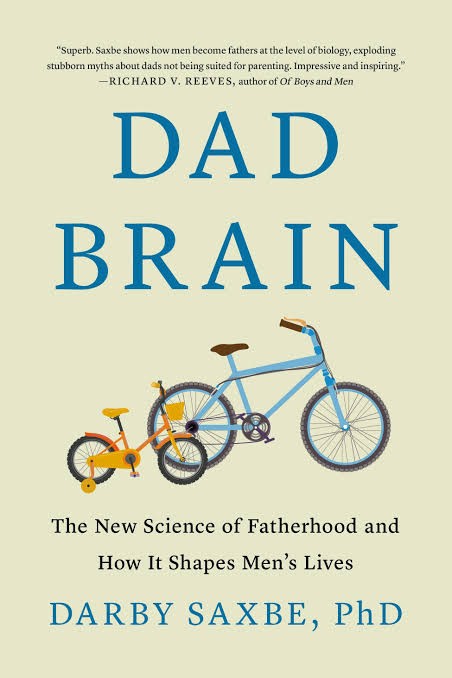
I recently had the privilege of interviewing Darby Saxbe, PhD, author of Dad Brain: The New Science of Fatherhood and How It Shapes Men’s Lives. I learned about her work from my colleagues Gary Barker founder and CEO of the Equimundo Center for Masculinities and Social Justice and Richard V. Reeves, founder and President of The American Institute for Boys and Men.
Dr. Saxbe is a clinical psychologist and professor at the University of Southern California. She has published more than eighty scientific articles in peer-reviewed journals.
Dr. Saxbe and I had a lively discussion about our interest in boys and men and the importance of fathering. She shared her own experiences with her father growing up and what changed when her dad became a full-time parent of her and her siblings. We discussed the long-time studies of women like Dr. Susana Carmona and Dr. Sarah Blaff Hrdy. I had interviewed Dr. Hrdy following the publication of her book, Father Time: A Natural History of Men and Babies. I wrote about Dr. Hrdy and her work in an article, “Father Time: How Dads Are Being Called to Change the World for Good.”
Fatherhood, like motherhood, has always been central to life but in recent years has taken center stage. In a recent article by Richard V. Reeves author of, Of Boys and Men: Why The Modern Male is Struggling, Why It Matters, and What to Do About It, titled Modern Fatherhood, My New Obsession, he said,
“I’ve come to believe that if there is a one-word solution to the challenges of boys and men it is this: fatherhood.”
“Over the last decade, we’ve learned more about the transformative power of parenthood — biologically, psychologically, and socially — than ever before,” says Dr. Saxbe. “But while the experience of motherhood has attracted well-deserved attention, fatherhood has remained overlooked and, often, misunderstood.”
Darby Saxbe’s interest in fatherhood is personal as well as professional.
“Research is me-search,” she told me. “I became a psychologist who studies family relationships, had my own babies as I completed my training and remain endlessly curious about how fathers tick more than twenty years later.”
I learned that Dr. Saxbe is one of the few researchers in the world to has collected longitudinal neuroimaging research on men as they become fathers. She also interviews new dads in her lab and asks them about their expectations and experiences of parenthood.
In writing the Dad Brain, Dr. Saxbe got questions about why we should put dads in the spotlight when women shoulder most of the unsung caregiving? She says,
“I’d answer that parenthood is not a zero-sum game. Acknowledging the role of dads doesn’t devalue the contribution of moms. In fact, both mothers and children benefit when fathers invest in parenting.”
She goes on to say,
“Humans evolved to depend on a variety of caregivers. When asked what matters most for healthy child development, Urie Bronfenbrenner, the psychologist who helped create Head Start (and a dad himself), said it best: ‘Somebody’s got to be crazy about that kid. That’s number one. First, last and always.’ Standing up for fathers helps us build the tag team of adults who are crazy about their kids. That, I hope, is a cause we can all champion.”
I described my own experiences as a father and a son in my book, My Distant Dad: Healing the Family Father Wound which was published in 2018.
“There is one problem that surpasses all others in its impact on men, women, and society, it is the family father wound. We focus on the importance of mothers in determining the well-being of children. Yet, without the support of their fathers, men become puppets on a string, disconnected from their true selves, feeling that others are controlling their lives. The family father wound may be the most pervasive, most important, and least-recognized problem facing men and their families today.”
The New Science of Fatherhood and How It Shapes Men’s Lives
Part 1 of Dad Brain is titled, “The Science of Fatherhood: Building a Dad Brain.” In ten engaging and enlightening chapters Dr. Saxbe covers the following topics:
1. What Makes a Good Dad?
- Human fathers are not like other mammals.
- The evolving story of fatherhood.
2. Who’s Your Daddy?
- False paternity rate — the number of men raising children they erroneously believe to be biologically their — has been estimated at 1 to 2 percent or nearly one in every fifty births.
- A few Indigenous societies believe in partible paternity where multiple males may be the father recalling the musical Mamma Mia where Sophie (Amanda Seyfried) secretly invites three men from her mother’s (Meryll Streep) past to her wedding to find out who her real father is.
3. Birth of a Dad: How Fathers Experience Childbirth
4. The Incredible Shrinking Father Brain (which is good thing)
5. Dad Brain in Action
6. The Trouble with Testosterone (High T is not always good)
7. Hormonal Stew
8. Sad, Mad, and Misunderstood
9. Dad Bods and Cat Naps
10. A Crisis for Couples
Part 2 of Dad Brain is titled, “The Practice of Fatherhood: Life With a Dad Brain” and covers the following topics:
11. Dads on the Move: Parenting, Play, and Sports
12. Fathering Beyond Biology
13. Fatherhood, Interrupted: Separation and Trauma
14. Man Enough to Be a Dad
15. Dads at Work
16. Fatherhood as Public Good
17. Fatherhood and the Good Life
Fatherhood changed my life when Jemal was born in 1969. I was twenty-five years old. It continued to change my life when our daughter Angela was born three years later. My first wife and I divorced in 1976 and our daughter came to live with me. Being a full-time dad took my experiences of fatherhood to an even deeper level.
When I met Carlin and we married in 1980, she had three sons from a previous marriage. Her younger son and my daughter eventually came to live with us and I experienced the challenges and joys of a blended family.
I still have vivid memories of the day my own father left. I was five years old. I learned that he had what was called a “nervous breakdown” and was committed to Camarillo State Mental Hospital, north of our home in Los Angeles. I learned later that he had taken an overdose of sleeping pills after becoming increasingly depressed because he couldn’t support his family doing the work he loved.
After two years in the hospital the doctors told my mother he would likely have to stay for many years and might never recover. She eventually filed for divorce. But my father never accepted life behind bars. After seven years in the hospital, he escaped and never returned.
My father never gave up on me and I never gave up on him. I share our healing journey in my book My Distant Dad: Healing the Family Father Wound.
At the end of Darby Saxbe’s wonderful book, which I highly recommend, she says,
“About a decade ago, I received a letter from my father about those years when he transformed from absentee dad to primary parent. In it, he wrote that my mother’s departure wrecked him, but caring for us — my brothers, my sister, and me — kept him going. We gave him purpose and helped him put one foot in front of the other when he wanted to give up.”
If you would like to learn more about Darby Saxbe, PhD and her work, you can visit her at https://www.darbysaxbe.com/
If you would like to watch the in-depth interview I had with Darby, you can view it here.
If you would like to know more about me and my work, please visit me at:
https://menalive.com/. I would love to hear from you.
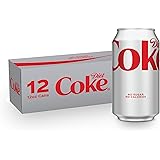
Diet Coke Soda Soft Drink Cans, 12 fl oz, 12 Pack | No sugar, no calories, 46 mg caffeine per can
$7.68 (as of October 19, 2026 03:10 GMT +00:00 - More infoProduct prices and availability are accurate as of the date/time indicated and are subject to change. Any price and availability information displayed on [relevant Amazon Site(s), as applicable] at the time of purchase will apply to the purchase of this product.)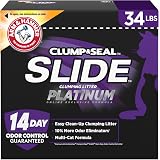
ARM & HAMMER Slide Platinum Easy Clean-Up Clumping Cat Litter, 34 lbs | 24/7 Odor Control, Triple-Action Freshness, Non-Stick, Low Tracking, Multi-Cat Formula, Scented, Online Only
$34.99 (as of October 19, 2026 03:22 GMT +00:00 - More infoProduct prices and availability are accurate as of the date/time indicated and are subject to change. Any price and availability information displayed on [relevant Amazon Site(s), as applicable] at the time of purchase will apply to the purchase of this product.)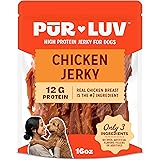
Pur Luv Dog Treats, Chicken Jerky Dog Treat with Real Chicken Breast, 16 oz | High protein and low fat, Limited ingredient recipe, No artificial flavors or preservatives, Satisfies instinct to chew
$14.99 (as of October 19, 2026 03:12 GMT +00:00 - More infoProduct prices and availability are accurate as of the date/time indicated and are subject to change. Any price and availability information displayed on [relevant Amazon Site(s), as applicable] at the time of purchase will apply to the purchase of this product.)
Automatic Bark Control Box, Smart Dog Bark Deterrent Device, Anti Barking Device for Dogs Stop Neighbor’s Dog Barking, Owl Design Ultrasonic Bark Silencer with 2X Emitters 50FT, Waterproof for Outdoor
$37.99 (as of October 19, 2026 03:22 GMT +00:00 - More infoProduct prices and availability are accurate as of the date/time indicated and are subject to change. Any price and availability information displayed on [relevant Amazon Site(s), as applicable] at the time of purchase will apply to the purchase of this product.)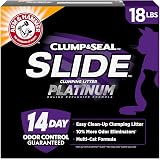






Post Comment