
Why Did $4 Billion Vanish From Stablecoin Reserves Just When Everyone Expected a Surge?
Stablecoins — not just the quiet workhorses of crypto, but real-time barometers of market mojo. Curious how a $4 billion dip in these reserves can send shockwaves through the risk asset landscape? Well, in the high-stakes game of risk-on versus risk-off, sentiment is king. When traders get jittery, they don’t just sit tight; they squirrel away liquidity like it’s prepping for a financial winter. And with Bitcoin cruising near $80k, this contraction in stablecoin liquidity is screaming “bearish” louder than a stadium crowd. What’s fueling this nervous energy? Rising Treasury yields, oil prices spiking over $110 a barrel — all the classic signs of a tightening macro grip. So, is this just a hiccup or a harbinger of structural shifts ahead? Dive in as we unravel why stablecoin swings aren’t just market noise but a signal you can’t afford to miss. LEARN MORE
Stablecoins are a key signal for both sentiment and network adoption.
For risk assets, sentiment is what matters most. The logic is simple: In risk-on phases, liquidity rotates into risk assets; in risk-off phases, investors shift into defensive positioning, holding liquidity as dry powder.
In this context, the drop in stablecoin reserves stands out as a bearish signal. According to a prominent crypto analyst, reserves fell by $4 billion, aligning with Bitcoin [BTC] hovering near $80k.
This suggests liquidity is actively contracting across exchanges, with investors showing a classic flight-to-safety behavior.

Looking at the macro setup, this behavior isn’t a one-off move.
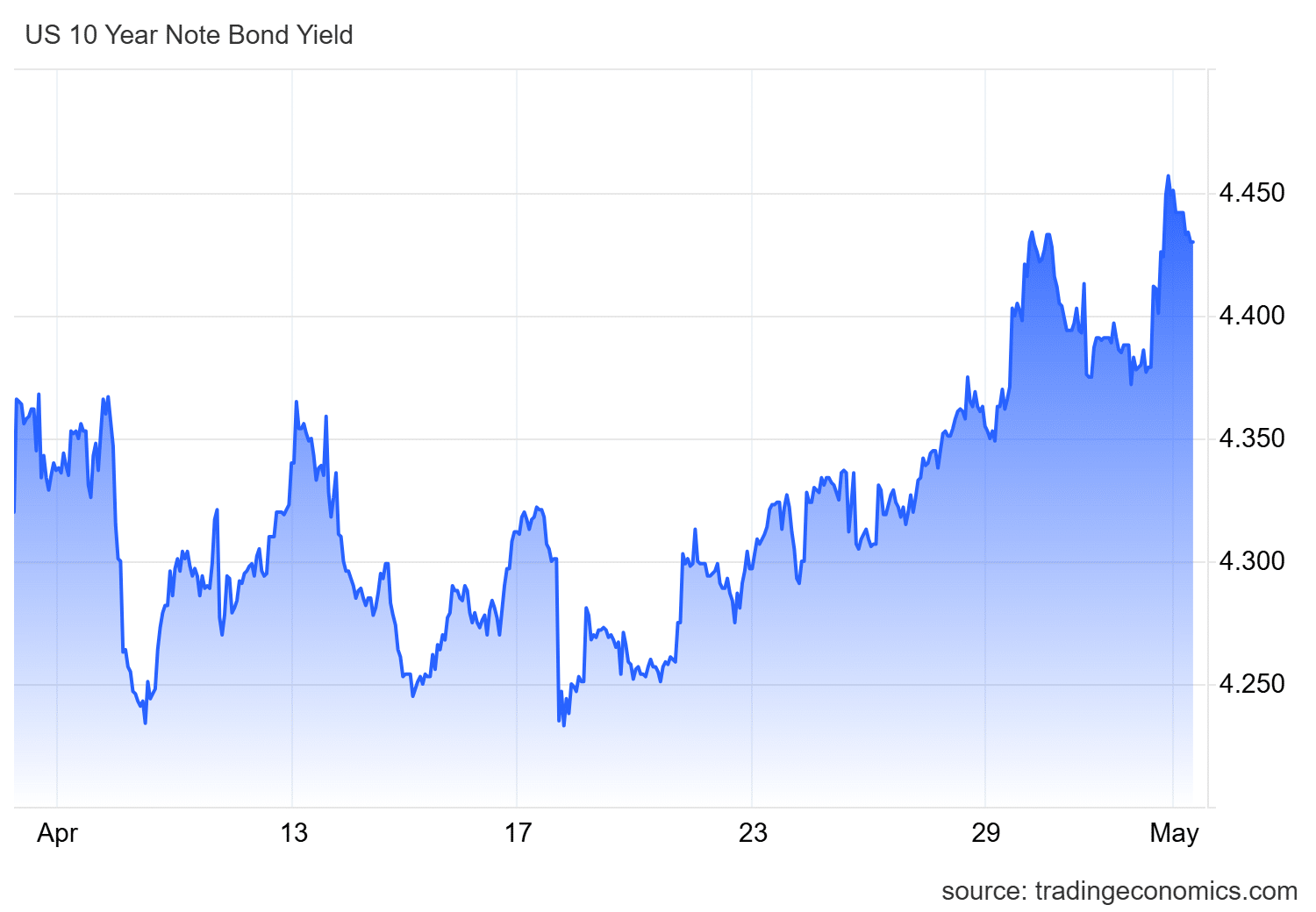
As the chart shows, global yields are rising, with the US 10-year Treasury yield back near 4.5% and the 30-year yield above 5%. For context, higher yields mean better returns on safe government debt, which naturally pulls capital toward bonds.
At the same time, oil prices moving back above $110 per barrel adds another layer of inflation pressure, keeping yields elevated and financial conditions tighter.
Against this backdrop, the drop in stablecoin reserves by 5.18% to around $66.37 billion over the past week doesn’t look random. Instead, it could be an early sign of investors positioning ahead of a more volatile macro environment.
For risk assets, this naturally feeds into tighter liquidity and weaker structural support.
In this context, does the recent stablecoin projection act as a bearish signal for risk assets?
A $719T stablecoin projection
In terms of network adoption, the Chainalysis report is broadly bullish for the market.
The logic is simple: beyond acting as a liquidity engine, stablecoins function as a settlement layer for on-chain transactions. In this context, a growing stablecoin market directly points to increased network activity.
As the chart below shows, adjusted stablecoin volume is projected to reach $719 trillion by 2035. In fact, Chainalysis reports that stablecoin payment volumes are on track to match Visa and Mastercard sometime between 2031 and 2039.
This comes amid a broader shift toward stablecoin infrastructure, with Western Union, USDPT, Fidelity (FIDD), Meta, and several other Fortune 500 companies preparing launches.

In short, the Chainalysis report is bullish for network growth and long-term DeFi adoption.
However, for risk assets, the setup can look very different. As noted earlier, stablecoins are a key sentiment signal for Bitcoin and other speculative assets.
In this context, rising stablecoin volume can support networks that use these assets as a settlement layer. However, for risk assets like Bitcoin, the impact depends on whether that liquidity is actively flowing into markets or staying on the sidelines.
According to AMBCrypto, that’s where the $4 billion drop in stablecoin reserves comes in.
During periods of volatility, investors often rotate out of risk assets into stablecoins, making the Chainalysis projection more of a potential early warning signal for risk assets like Bitcoin as markets transition into tighter macro conditions.
Final Summary
- Stablecoin growth is bullish for network adoption and on-chain activity.
- For risk assets like Bitcoin, it can be cautious if liquidity is sitting on the sidelines in a risk-off environment.

Purina ONE Tender Selects Dry Cat Food, Salmon, 7 lb Bag | Real salmon is the #1 ingredient made with carrots, peas, vitamins A and E for bright eyes, strong muscles and digestion
$17.46 (as of October 15, 2026 03:11 GMT +00:00 - More infoProduct prices and availability are accurate as of the date/time indicated and are subject to change. Any price and availability information displayed on [relevant Amazon Site(s), as applicable] at the time of purchase will apply to the purchase of this product.)
OneBug Super Absorbent Leakproof Disposable Dog Pee Pads, 100 Count | Puppy Training Pads 28x34in,XL Size,6-Layer,Quick-Dry, Odor Control,Suitable for All Breeds , All Ages of Dogs
$29.99 (as of October 15, 2026 03:21 GMT +00:00 - More infoProduct prices and availability are accurate as of the date/time indicated and are subject to change. Any price and availability information displayed on [relevant Amazon Site(s), as applicable] at the time of purchase will apply to the purchase of this product.)
Smart Dog Bark Collar with Advanced Bark Detection, 4 Adjustable Training Modes, Beep, Vibration, USB-C Rechargeable Barking Collar, IP67 Waterproof, No Bark Collar for Small, Medium & Large Dogs
$29.99 (as of October 15, 2026 03:21 GMT +00:00 - More infoProduct prices and availability are accurate as of the date/time indicated and are subject to change. Any price and availability information displayed on [relevant Amazon Site(s), as applicable] at the time of purchase will apply to the purchase of this product.)
FUJIFILM Instax Mini Instant Film Twin Pack (White), 20 Photos | The instax film ensures sharp
$18.17 (as of October 15, 2026 03:21 GMT +00:00 - More infoProduct prices and availability are accurate as of the date/time indicated and are subject to change. Any price and availability information displayed on [relevant Amazon Site(s), as applicable] at the time of purchase will apply to the purchase of this product.)













Post Comment