
Why Ethereum’s 91% Leverage Crash Didn’t Break Its Price — The Hidden Forces Investors Can’t Afford to Ignore
When Ethereum [ETH] soared toward the $2500 mark, it seemed like every trader with a pulse was piling on leverage, especially on Binance and Bybit. Imagine a $1.12 billion bet in just a week chasing that breakout—yeah, the stakes were sky-high. But here’s the plot twist: that boiling pressure valve suddenly blew off, tumbling a jaw-dropping 90.9% by the end of August. Binance’s leverage nosedived from $843 million to a mere $94 million, and Bybit wasn’t far behind. Now, what’s fascinating is that despite this massive pullback in derivatives, ETH stubbornly hovers near $2500. Could it be that the rally is steering away from the wild ride of leverage and is instead rooted in something sturdier—real, growing demand? Oh, and don’t underestimate the quiet but powerful surge from institutional spot ETF buyers snapping up about $1.5 billion worth of ETH in just ten days. As leveraged trading cools off, it seems these big players are quietly rewriting the script—and maybe even putting a more sustainable spin on this rally. So, what happens next when whales start moving millions of ETH onto exchanges, testing this newfound demand? Buckle up—it’s turning into quite the market thriller. LEARN MORE
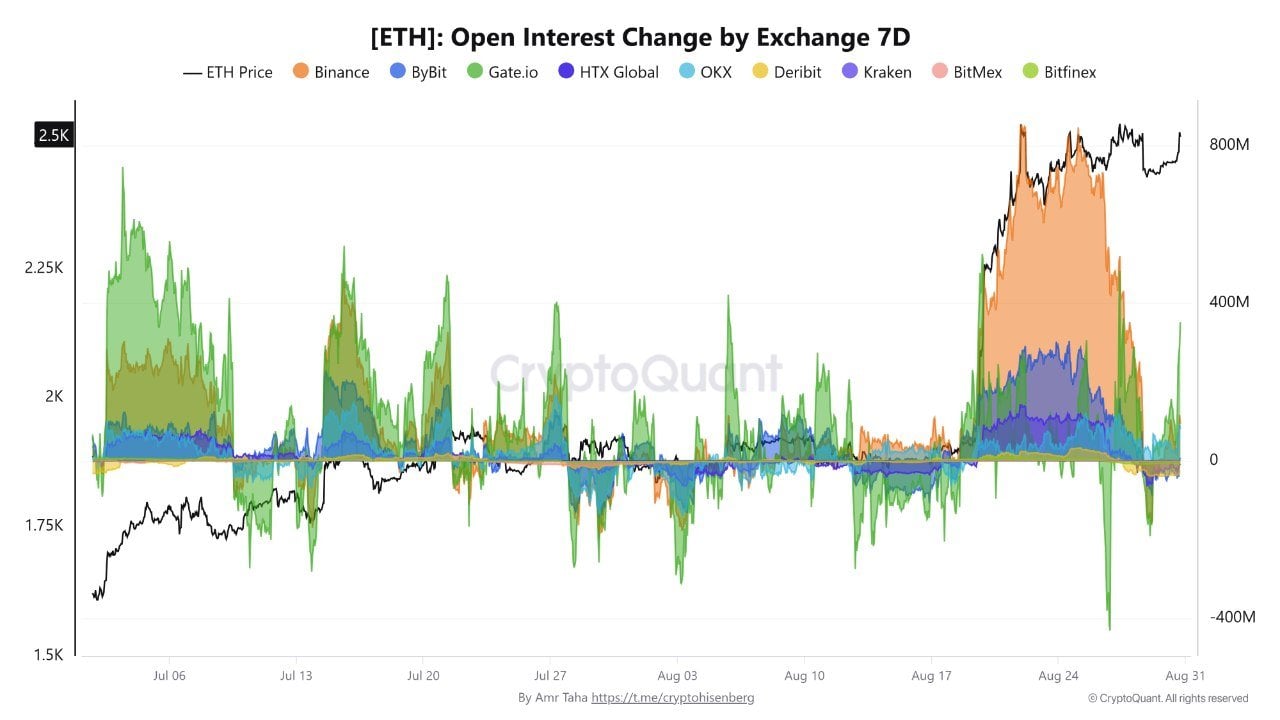
As Ethereum [ETH] advanced toward $2500, traders went all-in, adding massive amounts of leverage on both Binance and Bybit.
The combined Open Interest (OI) on these two exchanges grew by $1.12 billion over the seven days ending on the 22nd of August, after traders began to chase Ethereum’s breakout.
Recently, that momentum has dramatically fallen off. As of the 30th of August, the leverage collapsed 90.9% to just $102 million. Binance fell from $843 million to $94 million, while Bybit plunged from $277 million to $8 million.
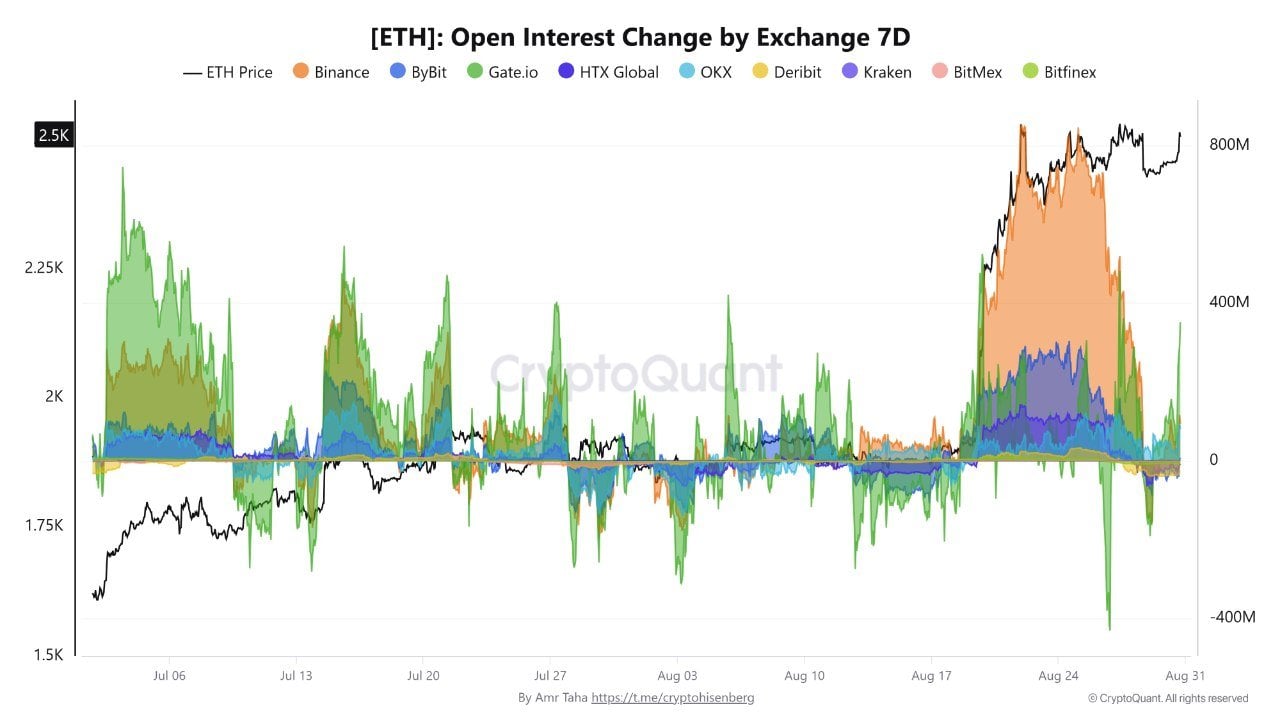
However, ETH is still trading near $2500, even though derivatives are being added by much smaller margins. In other words, this means that the rally is now relying less on rapid expansion of derivatives in order to continue supporting the price.
Ultimately, if Ethereum holds $2500 while leverage decreases, then this would likely indicate a rally based on growing demand.
With leveraged trading cooling, Ethereum’s support is increasingly coming from spot ETFs.
The volume of ETH being bought by institutions through spot ETFs has grown with each session since the 15th of August. Since then, U.S.-based Ethereum ETFs have had approximately $1.5 billion in investment over 10 days.
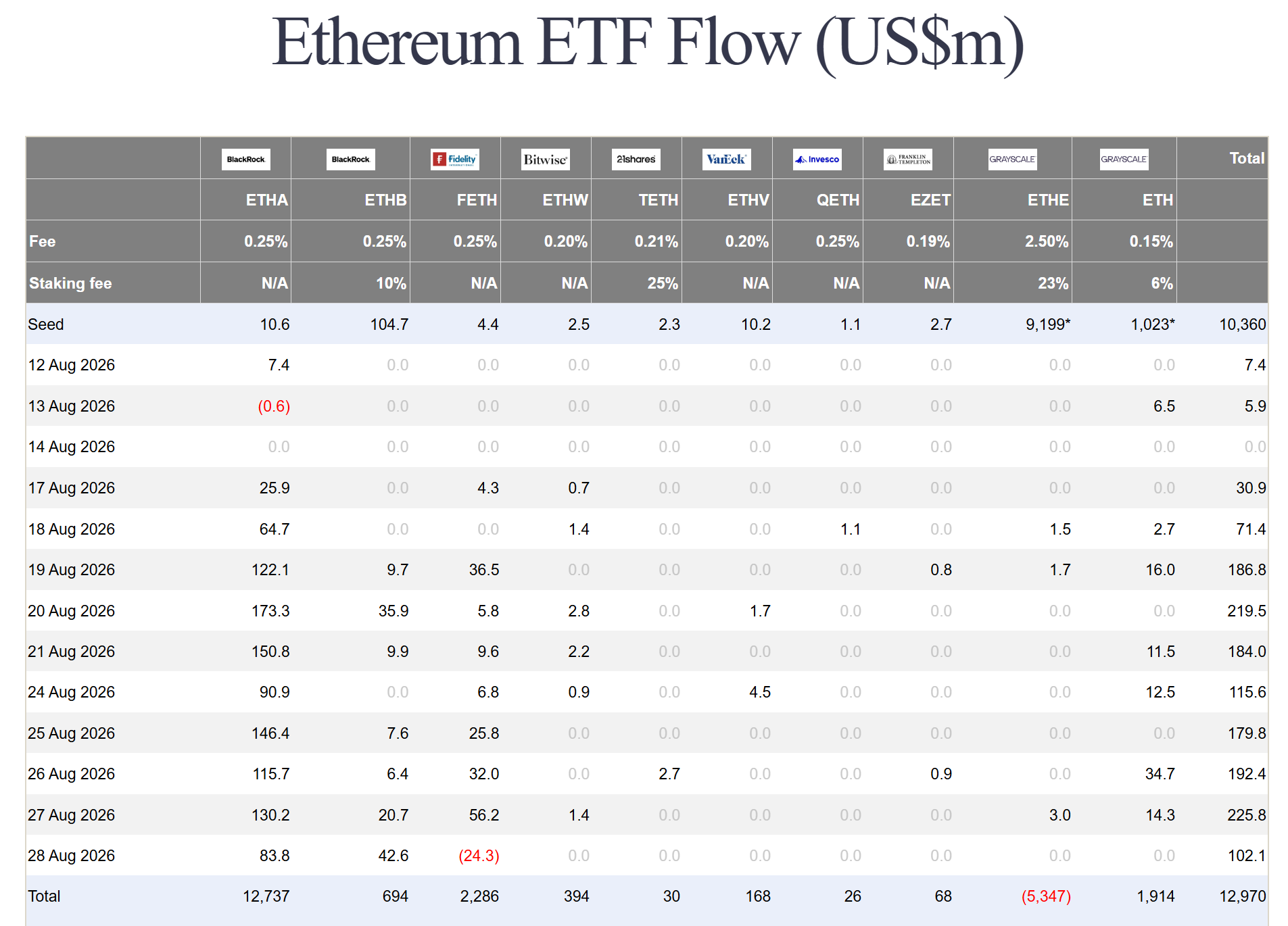
Over this same period BlackRock’s ETHA accounted for 71.9%, or approximately $1.02 billion, of total investment in all U.S.-based Ethereum ETFs. At an ETH price level of $2,400-$2,500, these investments would represent approximately 570,000-630,000 ETH worth of net purchases.
More importantly, ETF inflows matter because they create direct demand for ETH in the spot market without adding leverage through futures. All in all, it is likely that continued ETF inflows will support ETH’s stabilization even if derivative positions continue to be reduced.
Whale selling tests ETH demand
That institutional demand now faces a direct supply test, as whale 0x2Ea2 has moved substantial ETH onto major exchanges. Over two days, the wallet deposited 40,881 ETH worth $100.67 million, spreading transfers across Binance, OKX, Bybit, Kraken, and Gate.
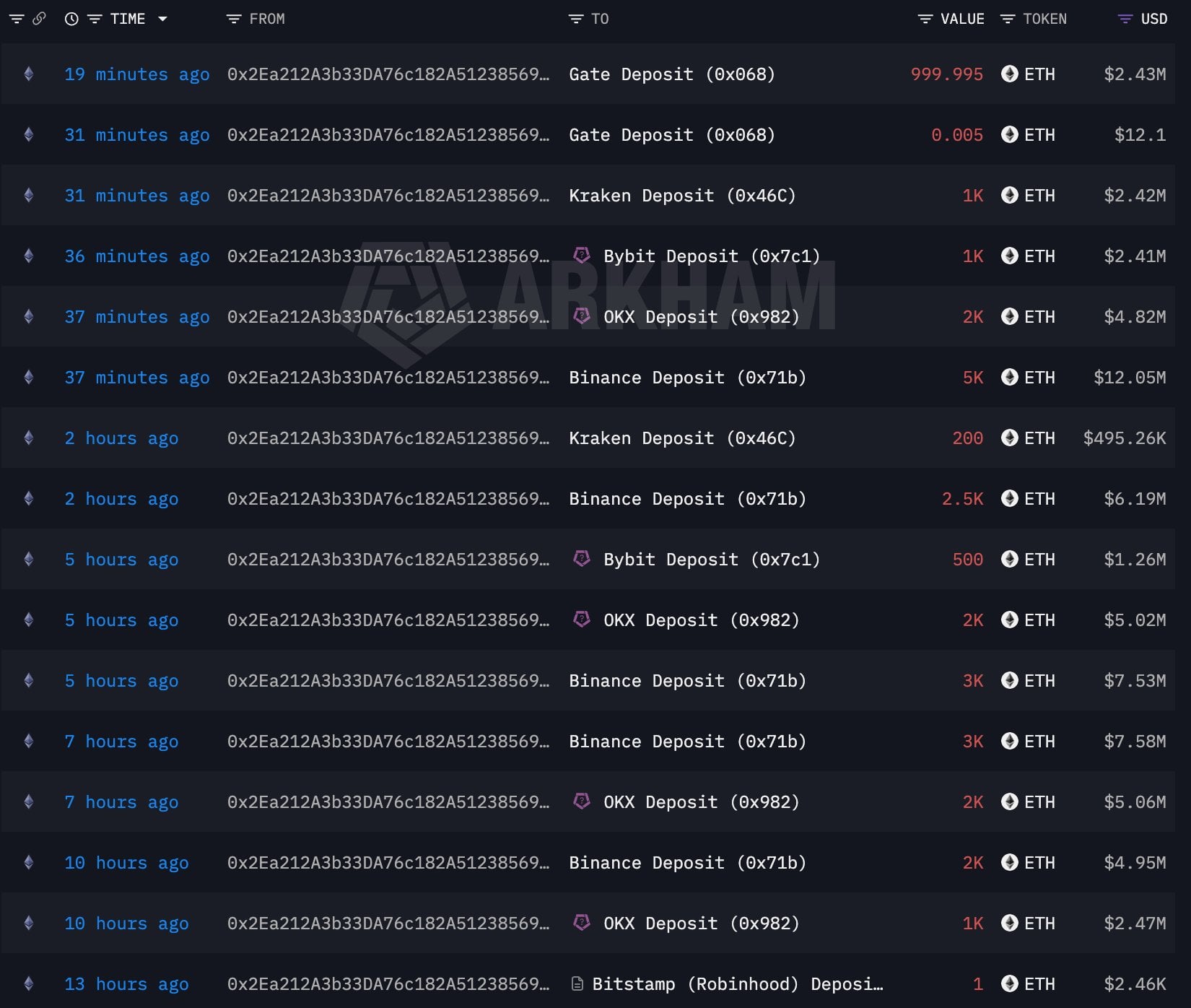
Several deposits reached thousands of ETH, including 8,629 ETH sent to Binance within one day. This does not necessarily mean that whale 0x2Ea2 sold this amount of ETH.
However, placing ETH directly on an exchange makes it immediately available to be traded. This is important since continued sales of ETH could potentially absorb some of the spot demand for ETH currently at around $2,500.
Meanwhile, the whale still possesses 10,506 ETH worth roughly $25.52 million, and thus there are additional potential supplies. If that balance follows, ETF demand must absorb heavier selling to maintain price stability.
Final Summary

Hamster Ball for Cats, Cat Hamster Ball for Outside, Outdoor cat Ball, 17″ | Rolling Catio Outdoor Cat Enclosure, Foldable Breathable Mesh Pet Playpen with Zipper, Portable Lightweight, Lawn & Backyard
(as of October 15, 2026 03:21 GMT +00:00 - More infoProduct prices and availability are accurate as of the date/time indicated and are subject to change. Any price and availability information displayed on [relevant Amazon Site(s), as applicable] at the time of purchase will apply to the purchase of this product.)
Purina Pro Plan Sensitive Skin & Stomach Dry Dog Food, Salmon, 30 lb Bag | Real Salmon & Rice Formula, with prebiotic fiber, easily digestible with omega-6 fatty acids for a healthy skin and coat
$77.48 (as of October 15, 2026 03:11 GMT +00:00 - More infoProduct prices and availability are accurate as of the date/time indicated and are subject to change. Any price and availability information displayed on [relevant Amazon Site(s), as applicable] at the time of purchase will apply to the purchase of this product.)
DaVinci Gourmet Classic Blue Raspberry, 25.4 Fluid Ounces (Pack of 1)
$7.99 (as of October 15, 2026 03:09 GMT +00:00 - More infoProduct prices and availability are accurate as of the date/time indicated and are subject to change. Any price and availability information displayed on [relevant Amazon Site(s), as applicable] at the time of purchase will apply to the purchase of this product.)
Ridge Tracker Card Compatible with Apple Find My, Compatible with Android Slim Tracking Card - Wallet Finder, Item Locator for Luggage Tags, Passports, Phone - MFi Certified, IP68 Water Resistance
$39.00 (as of October 15, 2026 03:32 GMT +00:00 - More infoProduct prices and availability are accurate as of the date/time indicated and are subject to change. Any price and availability information displayed on [relevant Amazon Site(s), as applicable] at the time of purchase will apply to the purchase of this product.)













Post Comment