
Why Kevin Warsh’s Next Move on the Fed’s 2% Inflation Target Could Make—or Break—Markets Overnight

Picture this: The Federal Reserve just got a new captain at the helm—Kevin Warsh—and Wall Street’s buzzing like it’s waiting for the next big episode of a thriller series. Warsh, sworn in on May 22, 2026, is about to sail into his very first FOMC meeting, and the million-dollar question hanging over everyone’s head is whether he still pledges allegiance to the sacred 2% inflation target. It’s funny how a seemingly simple number can dictate everything from mortgage rates to hedge fund moves, right? But make no mistake, this isn’t just a rerun—Warsh’s openness to rethinking how inflation is measured could flip the script entirely. Will he stick to the old faithful core PCE, or will he champion the trimmed-mean measure that paints a softer inflation picture? Depending on his call, this could either free the Fed to cut rates or keep the pressure tight. If you’re rubbing your hands wondering what this means for stocks, crypto — especially Bitcoin — and even your next mortgage payment, you’re not alone. Warsh’s first act as Fed Chair isn’t just a policy decision; it’s a signal shot that could ripple through the entire financial cosmos. Buckle up, ’cause this Fed chair is already shaking things up before even stepping into the spotlight. LEARN MORE
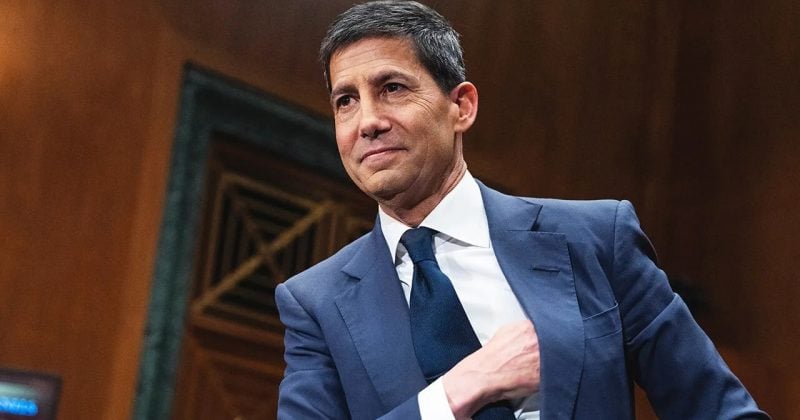
The Federal Reserve has a new boss, and Wall Street is trying to figure out what he actually believes. Kevin Warsh, sworn in as Fed Chair on May 22, 2026, is days away from his first FOMC meeting, and the central question is deceptively simple: does he still think 2% inflation is the number that matters?
The inflation metric shuffle
The Fed has used 2% as its North Star since 2012. It’s the number that drives interest rate decisions, shapes forward guidance, and anchors the expectations of everyone from hedge fund managers to homebuyers.
Warsh appears open to changing how that target is measured. During his April 2026 confirmation hearing before the Senate, he emphasized the importance of trimmed-mean inflation measures over the traditional core PCE metric. Instead of stripping out food and energy prices (which is what core PCE does), trimmed-mean PCE removes the most extreme price changes on both ends and averages the rest.
Right now, those two numbers tell very different stories. Core PCE sits at roughly 3.3%, well above the Fed’s target. Trimmed-mean inflation, meanwhile, is hovering around 2.3%. If Warsh leans toward the trimmed-mean reading as his preferred gauge, it gives the Fed significantly more room to hold rates steady or even cut. If he sticks with core PCE, the math argues for keeping policy tight.
From Wall Street to the Oval Office
President Trump nominated Warsh on March 4, 2026, and the Senate confirmed him in mid-May. He previously served as a Fed governor during the 2008 financial crisis, from 2006 to 2011, before spending the intervening years in the private sector.
His confirmation hearing signaled a willingness to adjust interest rates based on productivity trends rather than adhering rigidly to inflation targets. Warsh has also publicly criticized recent Fed communication strategies, suggesting a need for more clarity and adaptability in how inflation is measured, and has described inflation as a “choice” that requires ongoing attention.
Warsh’s first FOMC meeting is scheduled for June 16-17, 2026.
What crypto investors are watching
Warsh described digital assets as part of the fabric of the financial services industry and expressed comfort with Bitcoin specifically. Bitcoin is currently trading in a tight range between $65,800 and $66,000 as markets wait for signals from his first policy meeting.
Markets are currently pricing in either a hold or potential rate hikes at the upcoming FOMC meeting. A dovish surprise — Warsh signaling comfort with trimmed-mean inflation as his preferred metric — could unlock a move higher for risk assets. A hawkish stance anchored to the 3.3% core PCE reading would likely pressure both equities and crypto.
The bigger picture for investors
The gap between core PCE at 3.3% and trimmed-mean PCE at 2.3% has rarely been this wide. If Warsh formally adopts trimmed-mean PCE as the Fed’s primary inflation gauge, the Fed would be closer to its target without changing a single policy setting.
For crypto investors specifically, Warsh’s openness to digital assets adds a second layer of significance. A Fed chair who views Bitcoin as legitimate financial infrastructure is less likely to support restrictive regulatory frameworks that could hamper adoption.

Apple AirPods 5 Wireless Earbuds with Active Noise Cancellation | Bluetooth Headphones, Personalized Spatial Audio, Live Translation, USB-C Charging Case, H2 Chip
$129.00 (as of October 15, 2026 03:21 GMT +00:00 - More infoProduct prices and availability are accurate as of the date/time indicated and are subject to change. Any price and availability information displayed on [relevant Amazon Site(s), as applicable] at the time of purchase will apply to the purchase of this product.)
Beats Solo 4 - Wireless On-Ear Bluetooth Headphones, Up to 50-Hour Battery Life, Ultra-Lightweight Comfort, Powerful and Balanced Sound, Apple & Android Compatible - Matte Black
$149.95 (as of October 15, 2026 03:21 GMT +00:00 - More infoProduct prices and availability are accurate as of the date/time indicated and are subject to change. Any price and availability information displayed on [relevant Amazon Site(s), as applicable] at the time of purchase will apply to the purchase of this product.)
Amazon Kindle Paperwhite Signature Edition 32GB (newest model), Thinner, new aluminum design, 7" display, Auto-adjusting front light, Seaglass Green
$249.99 (as of October 15, 2026 03:32 GMT +00:00 - More infoProduct prices and availability are accurate as of the date/time indicated and are subject to change. Any price and availability information displayed on [relevant Amazon Site(s), as applicable] at the time of purchase will apply to the purchase of this product.)
Nespresso Vertuo, Barista Flavored Pack, Medium Roast, 30-Count Coffee Pods | Medium-Roast Coffee Capsules, Caramel, roasted hazelnut and sweet vanilla flavors
$42.00 (as of October 15, 2026 03:09 GMT +00:00 - More infoProduct prices and availability are accurate as of the date/time indicated and are subject to change. Any price and availability information displayed on [relevant Amazon Site(s), as applicable] at the time of purchase will apply to the purchase of this product.)












Post Comment