
Why Turkey’s New Defense Alliance with Pakistan and Saudi Arabia Could Shake Global Power Like NATO’s Article 5—And What It Means for Your Investments
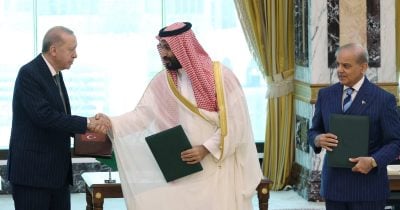
Who would’ve thought the world’s most powerful Muslim-majority nations—Turkey, Saudi Arabia, and Pakistan—would pull off a modern-day version of “you scratch my back, I scratch yours,” on such a massive scale? On August 7, 2026, in the heart of Mecca, these heavyweight players sealed the Mecca Joint Defense Agreement, promising if you mess with one, you mess with all. Think of it as the Muslim world’s answer to NATO’s Article 5—minus the European brass, but with plenty of muscle and geopolitical spice. What does this mean for global power dynamics? For starters, a nuclear-armed Pakistan, a financial powerhouse Saudi Arabia, and Turkey—with one of NATO’s largest militaries—are sending a clear message: unity is the new strategy in a region that’s anything but predictable. Oh, and did I mention they signed this pact right in Islam’s holiest city? That symbolic backdrop isn’t just for show—it’s a bold statement on identity and resolve. Curious how this pact could rewrite the regional playbook? Buckle up. LEARN MORE

Three of the most militarily and economically significant Muslim-majority states in the world just agreed that an attack on one of them is an attack on all of them. Turkey, Saudi Arabia, and Pakistan signed the Mecca Joint Defense Agreement on August 7, 2026, in Mecca, Saudi Arabia, formalizing a collective defense commitment that Turkish officials are openly comparing to NATO’s Article 5.
Turkish President Recep Tayyip Erdoğan, Saudi Crown Prince Mohammed bin Salman, and Pakistani Prime Minister Shehbaz Sharif all put their signatures on the agreement in person.
What the pact actually says
The core clause is straightforward: armed aggression against any one of the three signatories will be treated as aggression against all three. That is almost word-for-word the logic behind NATO’s foundational mutual defense guarantee, the one that has underpinned Western security architecture since 1949.
The three nations bring meaningfully different assets to the arrangement. Turkey operates the second-largest military in NATO. Pakistan is a nuclear-armed state, which adds a category of deterrence that neither Turkey nor Saudi Arabia currently possesses. Saudi Arabia contributes substantial financial resources and sits at the geographic heart of the Gulf.
How this came together
The agreement builds on nearly a year of trilateral negotiations, which themselves grew out of a bilateral Strategic Mutual Defence Agreement that Saudi Arabia and Pakistan signed in September 2025. That earlier deal established the foundational legal and diplomatic architecture that the Mecca agreement now expands to include Turkey.
Turkey has been explicit that the new pact does not conflict with its NATO obligations.
Why this changes regional calculations
The agreement arrives against a backdrop of elevated tensions across the Middle East, with Iran’s military posture drawing increasing concern from Gulf states and their partners.
The agreement’s name carries its own signal. Signing in Mecca, Islam’s holiest city, frames the pact in terms of shared civilizational identity.
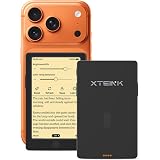
XTEINK X4 Pro 4.3" ebook Reader with Front Light & Touchscreen, Space Black | 4.3" E-Book reader with adjustable front light, touch/gesture control, physical buttons, 1100mAh battery & magnetic charging
$99.00 (as of October 16, 2026 03:33 GMT +00:00 - More infoProduct prices and availability are accurate as of the date/time indicated and are subject to change. Any price and availability information displayed on [relevant Amazon Site(s), as applicable] at the time of purchase will apply to the purchase of this product.)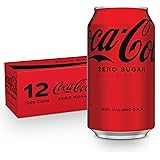
Coca-Cola Zero Sugar Soda Soft Drink Fridge Pack Cans, 12 fl oz, 12 Pack | Carbonated cola soda pop with zero calories
$7.68 (as of October 17, 2026 03:10 GMT +00:00 - More infoProduct prices and availability are accurate as of the date/time indicated and are subject to change. Any price and availability information displayed on [relevant Amazon Site(s), as applicable] at the time of purchase will apply to the purchase of this product.)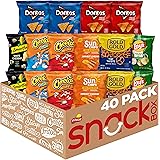
Frito-Lay Fun Times Mix Variety Pack, 40 Count
$21.31 (as of October 17, 2026 03:10 GMT +00:00 - More infoProduct prices and availability are accurate as of the date/time indicated and are subject to change. Any price and availability information displayed on [relevant Amazon Site(s), as applicable] at the time of purchase will apply to the purchase of this product.)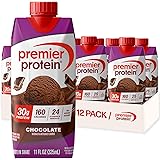
Premier Protein 30g High Protein Shake, Chocolate, 12 Pack | 160 Calories, 24 Vitamins & Minerals, No Added Sugar, Supports Muscle Health, Gluten-Free, 11 oz
$23.97 (as of October 17, 2026 03:10 GMT +00:00 - More infoProduct prices and availability are accurate as of the date/time indicated and are subject to change. Any price and availability information displayed on [relevant Amazon Site(s), as applicable] at the time of purchase will apply to the purchase of this product.)










Post Comment