
Why Vasyl Zahorodniuk’s Investment Rule Will Change How You Pick Winners Forever—And It’s Not What You Think
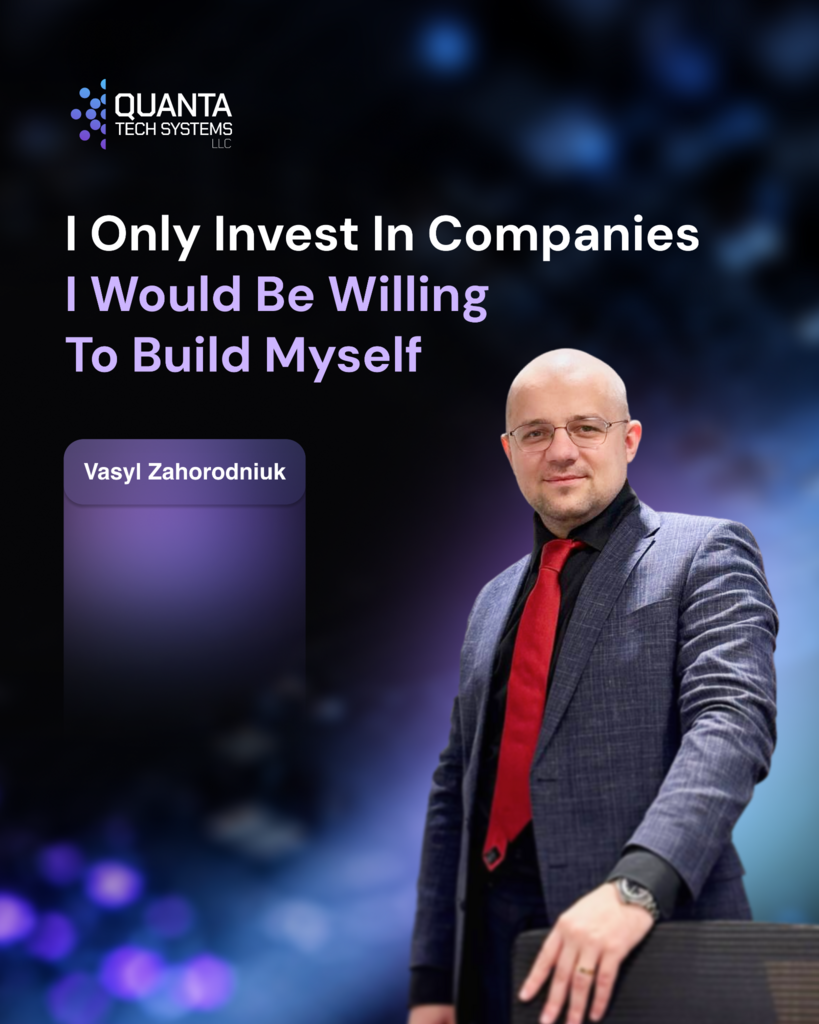
What if every investment you made hinged not on spreadsheets or market hype, but on a simple, gut-check question: “Would I want to build this company myself?” Vasyl Zahorodniuk isn’t just tossing around a catchy phrase — this mindset is the backbone of his entire approach to investing. As Founder and CIO of UEX Capital Holdings, he’s thrown out the typical playbook, insisting that capital should come bundled with ongoing, hands-on operating experience in the same field. No relics of past glories here — it’s about staying in the trenches, making the same tough calls as the founders he backs every single day. Sounds almost too straightforward, right? But therein lies the genius. Zahorodniuk’s formula filters out noise and hype, homing in on companies with real, load-bearing problems and scalable solutions — the kind that don’t just survive but thrive under regulatory pressure. If you’re curious how this operator-investor blurs the lines between running businesses and funding them — and why he walks away from plenty of tantalizing deals — buckle up. This isn’t your usual investment thesis; it’s a masterclass in building value where it really counts. LEARN MORE
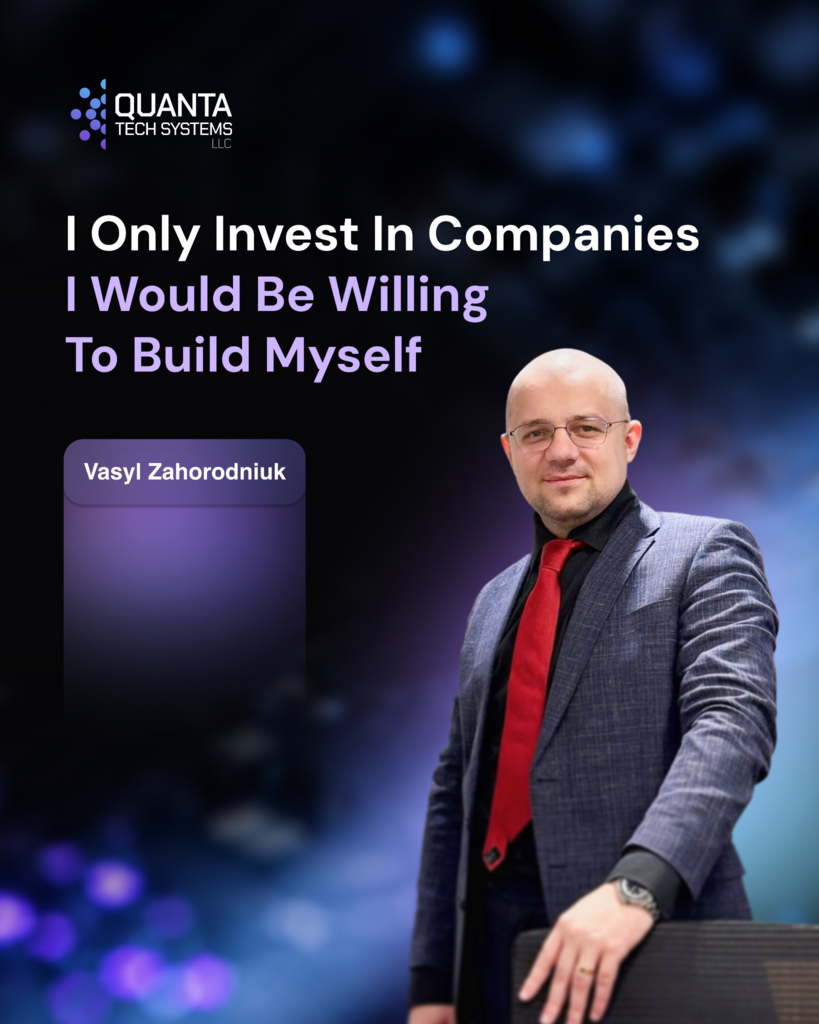
Before every deal, Vasyl Zahorodniuk asks himself one question — not about market size, not about the financial model. He asks: would I want to build this company? If the answer is no, the conversation ends.
This test is not intuition. It is a system that Zahorodniuk, Founder and CIO of UEX Capital Holdings, has been building since the firm’s inception. Behind it sits a straightforward conviction: capital that arrives with genuine operating experience in the same category performs differently than capital without it. And for that experience to be real, it must be maintained continuously — not in the past tense.
“Most investors in fintech and cybersecurity evaluate companies the way a general practitioner evaluates a specialist’s diagnosis: they can ask the right questions, but they cannot verify the answers. I can — because I make the same decisions every day as the founders I back.”
The Operator Who Did Not Move Fully Into Investment
Alongside running UEX Capital Holdings, Zahorodniuk holds the role of CEO of Quanta Tech Systems — a US-based venture studio building secure software in cybersecurity, fintech, and enterprise infrastructure. The studio’s flagship product, DeepLock, is an AI-powered personal safety application that predicts threats and warns users before a situation becomes dangerous. This is not a former operator monetizing past experience from a fund. This is an active CEO simultaneously deploying capital.
That distinction is the foundation of his investment thesis. “When a founder says their product is enterprise-ready, I can ask what that means for complex environments. When they say compliance-forward, I ask which frameworks they’ve been audited against. Not to catch anyone — to understand. My capital comes with a board seat, and I would rather know everything before the check is written.”
Four Questions That Decide Everything
Zahorodniuk’s framework runs on four filters applied sequentially — before a financial model is ever opened.
First: is the problem load-bearing? Not just real — but one the organization is compelled to solve regardless of budget pressure, because the consequences of leaving it unsolved are regulatory or operational, not merely competitive. Companies solving load-bearing problems retain clients even through difficult periods. The rest lose them first.
Second: does the architecture scale to the next version of the regulatory requirement? A product compliant with today’s standards but requiring a rewrite for tomorrow’s is not infrastructure — it is a point solution with an expiration date.
Third: who has actually deployed this in difficult conditions? Reference customers are table stakes. What matters more are the stories of hard deployments — where integration was messier than the pilot suggested, where the client almost churned and did not. “Those stories show whether a product is genuinely ready,” he says. “A polished success slide does not.”
Fourth and last: would I want to build this myself? “It sounds subjective, but in practice it is the most precise of the four. I am not asking whether I find the problem interesting in the abstract. I am asking: if I were starting fresh tomorrow, would I choose this problem? If the answer is no — my operating experience is not engaged here. Which means my capital’s value to this company is below market.”
The Deals He Passes On
Zahorodniuk deliberately limits the scope of his framework. There is a category of companies — with real problems, credible teams, and attractive financial cases — that he declines to fund. The reason: their market is far enough from his operating experience that he would be evaluating the deal on the same terms as any other investor. That is, without the advantage.
“A framework that admits its own limits is more useful than one that claims to be universal. I invest where I can sit across from a founder and talk about a specific technical decision — not about general market dynamics. That specificity is the product.”
UEX Capital Holdings: Infrastructure as Investment Thesis
The portfolio of UEX Capital Holdings is built around one thesis: regulated financial and security infrastructure in the US market is the most durable category for long-term investment. The portfolio includes UEX.US Inc, a crypto exchange with its own CEO operating within US regulatory requirements. Zahorodniuk does not manage the exchange operationally; his role is at the holding level.
“The US market is where serious operators build serious infrastructure. Compliance is not a constraint. It is a structural choice that determines what class of clients and partners you work with,” he says.
What Comes Next
In the coming months, Zahorodniuk plans to publish an expanded version of his investment framework — not as an investment solicitation, but as an intellectual contribution to the operator-investor conversation. In parallel, Quanta continues to deepen its position in regulated industries where barriers to displacement are highest.
“The version I am trying to avoid is being known primarily for one company or one deal. The operating work and the capital work are the same work from different angles. Building that kind of credibility takes longer than a press cycle. But it is also harder to displace.”
Vasyl Zahorodniuk is CEO of Quanta Tech Systems and Founder and CIO of UEX Capital Holdings. Quanta Tech Systems is a US-based venture studio developing secure software in cybersecurity, fintech, and enterprise infrastructure. UEX Capital Holdings is a Wyoming investment firm whose portfolio includes the crypto exchange UEX.US Inc.
<!–
–>

INABA Churu Cat Treats, Lickable, Squeezable Creamy Purée Cat Treat with Green Tea Extract & Taurine, 0.5 Ounces Each Tube, 50 Tubes, Tuna & Chicken Variety
$32.96 (as of October 23, 2026 03:13 GMT +00:00 - More infoProduct prices and availability are accurate as of the date/time indicated and are subject to change. Any price and availability information displayed on [relevant Amazon Site(s), as applicable] at the time of purchase will apply to the purchase of this product.)
Cat Deterrent Spray 2 Pack, Natural Non-Toxic Plant Based Anti-Scratch & Anti-Marking Spray for Cats & Kittens, Orange Scent Pet Training Aid, Safe for Pets, Indoor Outdoor Furniture, Protector 7.0 Oz
$22.99 (as of October 23, 2026 03:23 GMT +00:00 - More infoProduct prices and availability are accurate as of the date/time indicated and are subject to change. Any price and availability information displayed on [relevant Amazon Site(s), as applicable] at the time of purchase will apply to the purchase of this product.)
Wireless Earbuds, Bluetooth 5.4 Headphones Bass Stereo Ear Buds with Noise Cancelling Mic, LED Display in Ear Earphones 50H Playtime Ear Buds, IP7 Waterproof for Laptop Pad Phones Workout Black
$19.99 (as of October 23, 2026 03:33 GMT +00:00 - More infoProduct prices and availability are accurate as of the date/time indicated and are subject to change. Any price and availability information displayed on [relevant Amazon Site(s), as applicable] at the time of purchase will apply to the purchase of this product.)
Apple iPad 11-inch: A16 chip, 11-inch Model, Liquid Retina Display, 128GB, Wi-Fi 6, 12MP Front/12MP Back Camera, Touch ID, All-Day Battery Life — Silver
$399.99 (as of October 23, 2026 03:23 GMT +00:00 - More infoProduct prices and availability are accurate as of the date/time indicated and are subject to change. Any price and availability information displayed on [relevant Amazon Site(s), as applicable] at the time of purchase will apply to the purchase of this product.)













Post Comment