
These Fearless Women of the Bund Risked Everything to Break Chains – Discover Their Untold Story!
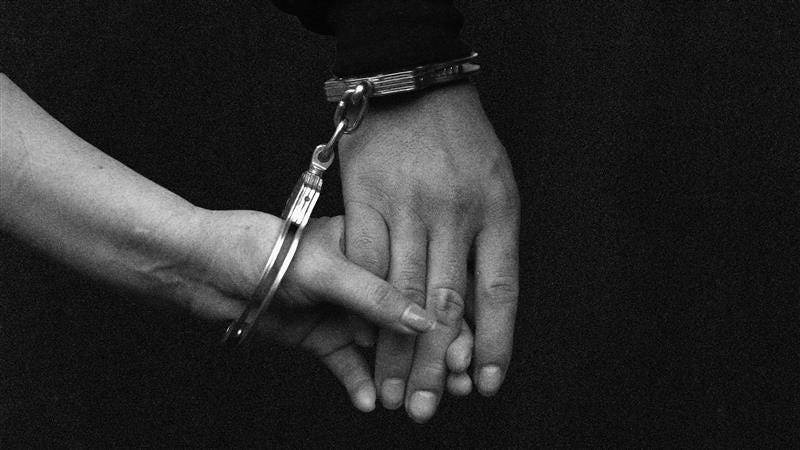
Ever hopped on the visitor’s bus to Rikers Island and noticed—wait, where are all the men? It’s almost like a secret club of women, right? Mothers, sisters, lovers braving the scrutiny of guards who treat their presence as a nuisance, all to touch the lives of those behind bars. These visits—grueling, demeaning, yet profoundly vital—are nothing short of lifelines. You might wonder, why such a fierce determination from these women? How does a simple visit become an act of rebellion against a system built on erasure? Years later, while diving into a story about a radical past—the Jewish Labor Bund’s fierce activists—I found echoes of these women’s unwavering resolve. From cold prison visits to hushed organizing efforts, these female champions stitch together the fragile fabric of resistance. So, what can the past teach us about the battles waged beyond prison walls today? And who are the unsung heroines whose courage keeps the flame alive, even when history barely leaves a trace? Let’s unravel it all. LEARN MORE
 6 min read
If you have ever taken the visitor’s bus to Rikers Island, you’ve probably noticed that you seldom see a man onboard. The passengers are almost entirely women. Once on the island, these wives, sisters, mothers, and lovers will wait for hours to have guards take their fingerprints, shine flashlights beneath their tongues, and watch them shake out their bras. They pay this price to see their loved ones. The visits keep prisoners alive.
In the times I took that bus to interview inmates, I always noted the contempt with which jailhouse authorities treated these women. Lifetimes wasted in mendacious bureaucracy and quotidian humiliation. This is how our country does it, I thought. Yet I also noticed the women’s strength, their camaraderie and solidarity. Their visits were political as well as personal, even if they didn’t identify them as such. To see a jailed human face-to-face breaks through the erasure upon which America bases its prison system. This is why visitation is always under siege: contested, canceled, given impossible hurdles to clear.
Years later, I had the occasion to think of the Rikers bus in another context. This time, I was writing about a far-off rebel past.
I spent the last seven years writing Here Where We Live Is Our Country: The Story of the Jewish Labor Bund. Founded in 1897 in the Russian Empire, and reaching its height in interwar Poland, the Bund was a sometimes-clandestine political party whose tenets were humane, socialist, secular, and defiantly Jewish. Bundists fought the czar, battled pogroms, and built vast networks of political and cultural institutions out of little more than love and grit. Ultimately, they helped lead the Warsaw Ghetto Revolt. Though the group was largely obliterated by Nazi Germany and the Soviet Union, their opposition to Zionism better explains their absence from current consciousness. The Bund celebrated Eastern European Jews as a people but irreconcilably opposed the establishment of a Jewish state in Palestine. The diaspora was home, the Bund argued. Jews could never escape their problems by the dispossession of others. Instead, Bundists created the doctrine of do’ikayt, or “hereness.” Jews had the right to live in freedom and dignity wherever it was they stood.
For most Bundists, who were revolutionaries operating in repressive countries, a jail cell was a second home. They knew midnight arrests, brutal interrogations, and death-defying escapes from the clutches of myriad empires. As they passed through the archipelago of cages, Bundists relied on their friends and lovers on the outside. By this, I usually mean women.
“Ask any incarcerated or formerly incarcerated people who supported them through that experience and they will mostly likely name a woman in their life,” says the activist and educator Mariame Kaba of America today. She could also be speaking of the world of the Bund.
I think of a moment in 1919, at Warsaw’s infamous Mokatow Prison, when the Bundist poet Sophia Dubnova lined up to see her man.
Born in 1895 in Vilna, then part of the Russian Empire, Dubnova was a sharp-eyed bohemian, a reader of decadent literature who adored costume parties, looked askance at pompous leftists, and crushed on her girlfriends with sapphic élan. She joined the Bund in her teens. For years, she crisscrossed Russia’s borderlands under false identities, hiding fugitives, inciting soldiers, and smuggling illegal pamphlets taped to her body. After her marriage to a Bundist leader, the brilliant lawyer Henryk Erlich, the couple moved to St. Petersburg. She threw herself into the feverish artistic world of the capital, reading her verses in the smoky basement cabarets that defined the literary epoch now known as the Russian Silver Age. When not writing her husband’s speeches and dealing with his arrests, Dubnova made a name for herself as a poet.

Sophia Dubnova, as drawn by Molly Crabapple
When the Russian Revolution began in March 1917, Dubnova and Erlich found themselves on the front lines, with Erlich and his socialist comrades trying to steer a newborn democratic state. The Bolshevik Revolution put an end to that. By 1918, Dubnova and Erlich were political refugees in Poland.
There, Erlich was an important man. He helmed trade unions, pounded out newspaper editorials, and gave fiery speeches to the Warsaw City Council. Dubnova, meanwhile, kept the family alive. Her own art fell by the wayside.
Things grew harder when Erlich took a public stand against Poland’s rapidly multiplying wars of conquest. The Polish government banned the Bund and arrested its activists. Erlich went into hiding. When the police ransacked the Erlich home, they found Dubnova in his place. “My husband’s away in the provinces,” she lied. After her interrogation, she stood silently amongst the wreckage, her eyes fixed on her scattered poems. She was a revolutionary. So was Erlich. This was the deal that they had made with life.

Lukiskis prison, Vilnius as illustrated by Molly Crabapple
The police caught Erlich a few weeks later. His arrest thrust Dubnova into the ranks of women who love caged men. They crowded in front of Mokatow prison, sagging the same anxious exhaustion that women feel when they wait for the bus to Rikers. Dubnova observed her sisters. They were every age. Some cried. Others kept a stony silence. All of them had the same bewilderment in their eyes. How could they navigate this bureaucracy? How could they get lawyers for their men or even permission to visit? Everything was against them.
Dubnova knew what to do. After 15 years in radical circles, she’d been around this block before. She explained the visiting procedure. A crowd gathered around her. She passed out her address so she could help them file paperwork. Sophia Dubnova may have lost her country, but she hadn’t lost her sense of self. She was still the same girl who had incited a military mutiny in Grodno, who smuggled pamphlets taped to her body. She was a revolutionary. She would do what revolutionaries did. She organized.
Stories like these are often elided in political histories. Jail support is seldom noted in speeches, nor in newspapers, so it goes unremarked upon in the archives, like other acts of care. It is relegated to memoir or merely to memory. Such is the fate of so much women’s work.
And yet. I think of the women who take the bus to Rikers Island in an attempt to keep their loved ones whole. I think of the extraordinary Shandre Delany, who I met while covering the jailhouse activism of her son, Carrington Keys. For the long years of Carrington’s imprisonment, Shandre refused to let him go. She sent him books on Egypt, wrote him letters, organized with prison families, fought for the press to tell his story. I think of a sex-columnist friend who stuffs packages for Books Through Bars or a group of Muslim aunties in Chicago who send Eid packages to imprisoned men. This work is as precious as the declarations of any conference.
For months, Sophia Dubnova ran an office to help the prisoners’ wives from her dining-room table, ignoring the undercover cops outside her door. When she visited Henryk in prison, he passed her fistfuls of notes his fellow prisoners slipped him, which she smuggled out for their wives. Kites, they called these notes, in the prison slang of the era. Kites, which can transcend bars.
When I wrote my book about the Bund, I made sure to focus on the women. Some were barricade fighters and orators. Some shot guns, wrote theoretical treatises, and pulled their friends off of boxcars bound for Treblinka. Sophia Dubnova herself would become the Bund’s sex columnist in interwar Poland. But I tried to pay attention to the humbler work of life. The women’s vigils alongside Mokotow prison. The women on the bus to Rikers. The aunties who pack the packages. The hands that keep movements alive.

Organic Banana Bunch (4-5 Count)
(as of October 4, 2026 03:06 GMT +00:00 - More infoProduct prices and availability are accurate as of the date/time indicated and are subject to change. Any price and availability information displayed on [relevant Amazon Site(s), as applicable] at the time of purchase will apply to the purchase of this product.)
Blink Outdoor XR+ and Battery Doorbell 2K+ — Extended range wireless Outdoor 4 camera and 2K battery doorbell. Sync Module XR+ included — 2 camera system + doorbell
$69.99 (as of October 4, 2026 03:26 GMT +00:00 - More infoProduct prices and availability are accurate as of the date/time indicated and are subject to change. Any price and availability information displayed on [relevant Amazon Site(s), as applicable] at the time of purchase will apply to the purchase of this product.)
Banana Bunch (4-5 Count)
(as of October 4, 2026 03:06 GMT +00:00 - More infoProduct prices and availability are accurate as of the date/time indicated and are subject to change. Any price and availability information displayed on [relevant Amazon Site(s), as applicable] at the time of purchase will apply to the purchase of this product.)
DaVinci Gourmet Classic Blue Raspberry, 25.4 Fluid Ounces (Pack of 1)
$7.99 (as of October 4, 2026 03:06 GMT +00:00 - More infoProduct prices and availability are accurate as of the date/time indicated and are subject to change. Any price and availability information displayed on [relevant Amazon Site(s), as applicable] at the time of purchase will apply to the purchase of this product.)














Post Comment