Inside the Multi-Billion Dollar Machine Fueling the Obesity Epidemic—And Why Investors Can’t Look Away
Ever stop and wonder how the food industry went from just tempting us with a quick sugar fix to actually engineering our cravings — then casually selling the “cure” for the problems they helped create? Wild, right? Back in 2012, Brian Lian, a savvy Wall Street analyst, had a life-altering meeting that made him pivot from chasing financial stories to diving headfirst into pharmaceuticals — hitting gold in the booming weight-loss drug market. This shift isn’t just a one-off; it’s a glaring signal of how the ultra-processed food crisis morphed our diets into a battleground where convenience trumps nutrition. Giants like Nestlé and Unilever aren’t just sitting on the sidelines anymore — they’re playing both sides, profiting from the very epidemic they helped ignite. It’s a high-stakes game of food-to-pharma roulette, where the house always wins, and consumer health often takes a backseat. So, what’s the real price we pay when the problem and solution come from the same pocket? Buckle up — it’s a tale of corporate chess moves, sly marketing, and a system designed to keep the cash flowing, no matter the human cost. LEARN MORE
Once, food businesses wanted us hooked on their products. Now, as the side effects settle in, they are commodifying their next trick, writes Kate Demolder
Back in 2012, Wall Street analyst Brian Lian took a chance meeting that changed his life.
According to Forbes, Lian had been looking for the next big financial story and met with pharmaceutical executives to discuss his options.
While there, he discovered an opportunity for licensing some recently acquired diabetes drug candidates, prompting him to leave Wall Street, invest $2.5 million and launch San Diego-based Viking Therapeutics (which today boasts a $4bn-plus market cap).
Though Lian — who now has an estimated net worth of $72m — got in on the ground floor, his pivot from finance to pharma is becoming less uncommon in the booming weight-loss space. In fact, he is simply one of a few who noticed a lucrative ‘fix’ to the chronic obesity crisis.
This follows what some nutrition experts are calling the ultra-processed food (UPF) crisis, a wide-ranging shift that saw products labelled low-fat, zero sugar and healthy come to constitute daily food.
“Over the past few decades, daily life has changed in ways that fundamentally reshaped how we eat,” says Timo Boldt, founder and CEO of the fresh recipe box subscription Gousto.
“More dual-income households, longer working hours and persistent time pressure have made convenience one of the strongest drivers of food choice.
“In response, we saw the industrialisation of our food system, with a growing focus on volume-driven, cheap, high-margin meals that often lack real nutritional value.”
This shift allowed corporations like Nestlé, Danone, McDonald’s and Unilever to explode in popularity, as they created food that prioritised ease rather than satiation.
“There’s reams written about what the cocktail of salt, fat and sugar, what we typically find in processed foods, does to your body,” says Aimee Donnellan, a Reuters journalist and author of Off the Scales: The Inside Story of the Race to Develop Ozempic.
“It makes you even hungrier, and doesn’t fill you like whole food does, which means you’re eating more and more of it, and your portion sizes are getting bigger.”
Naturally this resulted in weight gain, both chronic and at pace.
So much so that, according to the World Health Organisation (WHO), more than one billion adults worldwide are obese today.
Reacting to this immediately were those same corporations, who on a dual-aspect agenda began to cater to the problems they created.
“The same people profiting off making people sick [through obesity] are also profiting off helping them,” says Dr Margaret Steele, a postdoctoral researcher at the Food Policy Research Hub, School of Public Health, UCC.
“That’s the scandal, that’s the epidemic.”
Though globalised convenience food began in the 1960s, obesity only swelled to become a global health issue in the late 1990s.
It was then that the food industry’s biggest players started buying into obesity itself, either by tackling claims that their products were unhealthy, or creating solutions for those dealing with the diagnosis.
A number of them went one further and aligned themselves with the health sector itself, investing handsomely in studies and institutes that would eventually deliver reports funded by their money.
Take Unilever (key brands: Knorr, Hellmann’s and Marmite) for example, whose team just posted about their recent endeavour, investing €1bn in their Health & Wellbeing business portfolio.
Or Nestlé, who regularly invest in Nestlé Health Science, targeting nutritional therapies, microbiome research and medical diagnostics to bridge food and pharmaceuticals and address chronic conditions like diabetes and obesity.
Meanwhile, Danone’s CEO Antoine de Saint-Affrique told Food Ingredients First in 2024 that he sees his products as “complementary” to Ozempic and Wegovy as they contain proteins that people who use these slimming agents cannot get through regular food.
“You know the cliché of the elegant swan that’s furiously paddling underneath?” Dr Steele says.
“This is what’s happening. They’re working really hard under the surface to prevent change to food systems on a global scale.”
Unfortunately, precedent exists for such tactics. Lest we forget, Heinz bought WeightWatchers in 1999, and Unilever bought SlimFast the following year.
In fact, a number of experts insist that the bigger UPF players are actually taking direct strategies from the heyday of Big Tobacco. That said, according to Donnellan, the food industry’s tactics could be worse.
“Big Tobacco could never market to children, right?” she says.
“The food industry, however, very aggressively went after children. They flooded Saturday morning TV with lots of ads and they also created characters for their cereals which make eye contact with children when they’re doing the food shop with their parents.”
One link, however, between both industries’ strategies is their ability to evade regulatory scrutiny.
“Big Tobacco realised that regulations and laws were coming in stringently in places like America and Europe,” Donnellan says.
“So they went to Africa, Southern Asia, and anywhere else where laws were weaker to sell more of their products. Nestlé is doing that today, in places like Malaysia and Indonesia, where childhood obesity is going up and up and up.”
In an attempt at credibility, both the food and dieting industries have relied heavily on influencer marketing.
Social media searches for any of the associated terms — Ozempic, weight loss, fat-free — today yield a slew of often unqualified influencer posts, with nutritionists (another unregulated term) insisting upon their power. The bigger businesses hire superstars, like telehealth company Ro which last year placed tennis champion Serena Williams in a spokesperson role.
“I lost over 31 pounds using my GLP-1 and I was really excited about that weight loss,” Williams says in the highly publicised advertisement.
Sharing with another audience entirely was Tesla founder Elon Musk, who also made no secret of how he shed weight.
“Fasting. And Wegovy,” Musk responded to a query on his platform, X.
With the omnipresence of semaglutide injections and diet products, the weight-loss conversation has evolved from one traditionally spoken about behind closed doors to the zeitgeist.
As such, the pressure on consumers to shed pounds has never been greater.
“Weight-loss medications, including GLP-1 treatments, are now part of the public conversation and reflect the scale of the challenge,” Boldt says.
“As does research in the Journal of Public Health Nutrition (2025) which indicates that 54.9 per cent of calories consumed in Ireland now come from ultra-processed foods.”
According to Steele, reports coming from these corporations’ health institutes tend to single out the individual, not the system, as the problem.
“They try to push us away from looking at patterns, because if you do, it becomes very obvious what has changed in the last 40 years,” she says.
“It’s not people suddenly becoming lazier or greedier, it’s that what’s affordable, accessible and advertised has changed radically to become much more ultra-processed, much more easy to eat more of and more occasions for eating now exist.
“The majority of people in Ireland are no longer practising Catholics, but by God, the food industry will not let us forget about Pancake Tuesday.”
As hospital waiting lists get ever-longer, those who feel they need to drop weight for health reasons tend to find themselves in the trap of exactly the kind of foods these companies are creating.
And business is booming. In 2025, Unilever reported a full-year turnover of €50.5bn, Danone reported full-year 2025 sales of €27.28bn, and Nestlé reported total sales of CHF 89.49bn (approximately €98bn).
Their primary objectives? To sell products.
But by creating both the problem and solution to obesity, they have also created the so-called “food-to-pharma” loop and squared a unique circle.
As such, diet forms of drinks, cheeses, crisps and even cakes have all become so commonplace as to be ordinary.
“Coca-Cola’s diet drinks now have green flags on them,” Donnellan laughs.
“Which is adhering to the traffic light system in terms of no sugar, but there’s nothing green about them.”
Naturally, those behind this metric will insist it is simply business, and nothing personal. But for those trying and failing to emerge from what feels like a vicious circle, nothing more personal can exist. Particularly, according to Steele, in the global south.

“Occasionally you’ll read a news story about how avocado growing has caused water shortages in such a place, or beef production has caused a clearing of the Amazon.
“These feel like isolated things, but they’re all part of a system that’s been organised to bring us here.” She pauses.
“The only people benefiting are the shareholders. And we’ve accepted that as normal, even though it doesn’t have to be this way.”
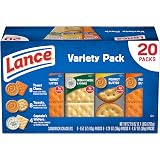
Lance Assorted Sandwich Crackers, 20 Count Variety Pack
$8.42 (as of September 4, 2026 03:10 GMT +00:00 - More infoProduct prices and availability are accurate as of the date/time indicated and are subject to change. Any price and availability information displayed on [relevant Amazon Site(s), as applicable] at the time of purchase will apply to the purchase of this product.)
Amazon Kindle 16 GB (newest model) - Lightest and most compact Kindle, now with faster page turns, and higher contrast ratio, for an enhanced reading experience - Matcha
$149.99 (as of September 4, 2026 03:23 GMT +00:00 - More infoProduct prices and availability are accurate as of the date/time indicated and are subject to change. Any price and availability information displayed on [relevant Amazon Site(s), as applicable] at the time of purchase will apply to the purchase of this product.)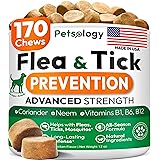
Flea and Tick Prevention for Dogs Pills - 170 Soft Chewables - Oral Defense | Dog Flea & Tick Control - Oral Defense Treatment for Dogs Supplement - Vet Formulated Chews - All Breeds & Ages - Made in USA
$19.99 (as of September 4, 2026 03:07 GMT +00:00 - More infoProduct prices and availability are accurate as of the date/time indicated and are subject to change. Any price and availability information displayed on [relevant Amazon Site(s), as applicable] at the time of purchase will apply to the purchase of this product.)
Sony ZX Series Wired On-Ear Headphones, Black MDR-ZX110
$9.99 (as of September 4, 2026 03:08 GMT +00:00 - More infoProduct prices and availability are accurate as of the date/time indicated and are subject to change. Any price and availability information displayed on [relevant Amazon Site(s), as applicable] at the time of purchase will apply to the purchase of this product.)










Post Comment