This Silent Produce Menace Is Spreading Quickly—Master This Simple Washing Hack to Stay Safe Now!
Ever found yourself wondering if your beloved fresh produce could be harboring something nastier than just dirt? Well, right now, a pesky gastrointestinal illness called cyclosporiasis is crashing dinner tables in 34 states across the U.S., making it clear that a simple rinse might not always cut it. This sneaky parasite, Cyclospora, has a history of tagging along with raspberries, basil, and lettuce — basically your salad’s usual suspects. And yes, while washing fruits and veggies feels like second nature, experts are waving a red flag, reminding us that routine chemical washes don’t stand a chance against this crafty bug. So, what’s the game plan to keep your gut happy and downtime from becoming a dash to the bathroom? Let’s dive into why cooking and expert washing techniques might just be your best defense against this outbreak—because no one’s got time for explosive diarrhea. Ready to get the lowdown on the smartest ways to clean your greens and berries? LEARN MORE
 3 min read
- The gastrointestinal illness, cyclosporiasis, has been detected in 34 states.
- Previous outbreaks have been associated with produce like raspberries, basil, and lettuce.
- Our health editors advise washing and cooking all produce to lower your risk of contracting the illness.
WHETHER YOU’VE READ the headlines, seen the memes on social media, or heard about it through your group chat, we’re sure you are well aware of the diarrhea-causing illness spreading across the U.S. right now. A large number of cyclosporiasis cases have been detected in 34 states as of Tuesday, according to the Centers for Disease Control and Prevention (CDC).
While the source is still under investigation, previous U.S. outbreaks of cyclosporiasis (the gastrointestinal affliction caused by the parasite Cyclospora) have been associated with raspberries, basil, cilantro, snow peas, and lettuce, according to the Food and Drug Administration.
If you’re worried about contracting the illness (nausea, fatigue, and explosive diarrhea? No, thank you!), public health officials advise washing and cook all fresh produce. According to recent CDC guidance, “routine chemical disinfection or sanitization of food or water is unlikely to kill Cyclospora.” Heat and cooking are effective methods for killing the parasite, according to the Colorado Department of Public Health and Environment.
While washing isn’t a guarantee against cyclosporiasis, it’s still a good food safety habit to practice every day. Below, our editors outline how to wash each type of produce—from leafy greens and root vegetables to berries—and the best kitchen products to use.
How to Wash Your Produce
Don’t buy a special produce wash—there is no evidence that they’re more effective than water alone. According to the FDA, washing fruits and vegetables under clean, running water is the best way to reduce and often remove residues and contaminants. You can invest in tools like a salad spinner or vegetable brush to help you get the job done.
Tip: Wait to wash. Store the produce in your fridge and rinse it just before eating.
Leafy Greens
Try to opt for a whole head of lettuce instead of bagged lettuce or salad, if you can. “Heads of lettuce are safer than bagged lettuce for now,” Amesh A. Adalja, MD, an adjunct assistant professor and infectious disease expert at the Johns Hopkins Bloomberg School of Public Health, previously told Women’s Health. “Bags of lettuce might have lettuce from different places mixed together, increasing the chance of contamination.” The chopping process and bag itself are also a more conducive environment for microbial growth than, say, a head of lettuce, he says.
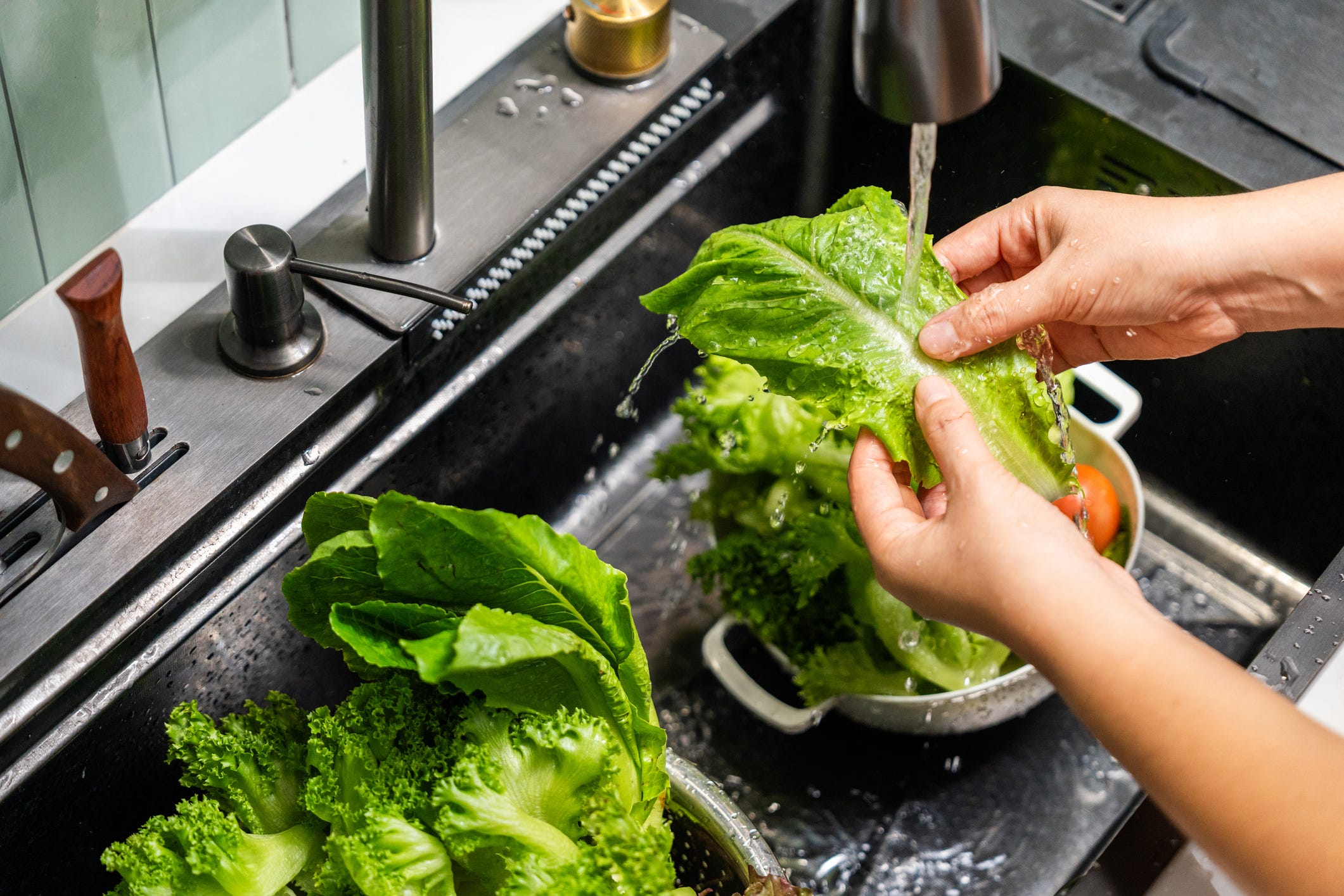
Rinse in a strainer under cold running water. Then use a salad spinner to remove excess water.

Berries
Rinse under cold water right before eating. If you want to go the extra mile, a cold-water soak with baking soda can also work: Go for one teaspoon of baking soda per two cups of cold water and soak for 12 to 15 minutes. You can also soak berries in a mixture of three cups of water to one cup of apple cider vinegar to extend freshness (rinse and dry thoroughly before refrigerating).
Note: Do not mix baking soda with vinegar when washing produce. The acidic nature of vinegar will neutralize the alkaline properties of the baking soda, rendering both cleaning agents ineffective.
Rinsing Basket

Chef’n Bramble Berry Basket and Colander
Extends Freshness


Bragg Organic Raw Apple Cider Vinegar
Now 24% Off
Removes Residues

Arm & Hammer Pure Baking Soda
Soft-Skinned Fruits
Soft-skinned fruits include produce like peaches, plums, and tomatoes. Gently run them under soft water pressure. Avoid harsh scrubbing that can damage their nutrient-rich skin.

Root Vegetables
These grow underground and often carry visible dirt (think potatoes, carrots, beets, etc.). If you’re not peeling them, use a soft brush under cold running water to scrub away soil.
Wash then Peel

KitchenAid Classic Euro Peeler

OXO Good Grips Vegetable Brush
Now 20% Off
Made from Bamboo

Full Circle The Ring
Thick-Skinned Produce
Even if you plan to peel avocados, bananas, onions, or oranges, wash them first. When you slice through unwashed skin, bacteria or residues can transfer from the knife into the edible portion.
Sidney Lee is the Editor, Deals and Trends, for Best Products, Popular Mechanics, Runner’s World, Biography, Women’s Health, Men’s Health, and Oprah Daily. She loves keeping up on the latest social media trends and viral pop culture moments to recommend only the best products to readers. Previously, Sidney was the Assistant Home Editor at HGTV Magazine as well as contributing editor at Food Network and The Pioneer Woman Magazines, covering home, food, style, and more. She is based in Manhattan, and outside of work you can find her trying all the latest restaurants the city has to offer.
Premier Protein 30g High Protein Shake, Chocolate, 12 Pack | 160 Calories, 24 Vitamins & Minerals, No Added Sugar, Supports Muscle Health, Gluten-Free, 11.5 oz
$26.70 (as of September 21, 2026 03:04 GMT +00:00 - More infoProduct prices and availability are accurate as of the date/time indicated and are subject to change. Any price and availability information displayed on [relevant Amazon Site(s), as applicable] at the time of purchase will apply to the purchase of this product.)
Cat Water Fountain Stainless Steel 74oz/2.2L with 3 Filters & 3 Sponges | Indoor Pet Water Dispenser-Automatic Silent Small Dog Fountains for Drinking-Auto Metal Watering Bowls-Gifts for Kitty Animal
$19.98 (as of September 21, 2026 03:10 GMT +00:00 - More infoProduct prices and availability are accurate as of the date/time indicated and are subject to change. Any price and availability information displayed on [relevant Amazon Site(s), as applicable] at the time of purchase will apply to the purchase of this product.)
Amazon Echo Show 5 (newest model), Smart display, Designed for Alexa+, 2x the bass and clearer sound, Charcoal
$99.99 (as of September 21, 2026 03:10 GMT +00:00 - More infoProduct prices and availability are accurate as of the date/time indicated and are subject to change. Any price and availability information displayed on [relevant Amazon Site(s), as applicable] at the time of purchase will apply to the purchase of this product.)
Roku TV Remote Control (Official Manufacturer Product) | Simple Setup & Pre-Set App Shortcuts - Replacement Remote Compatible with RokuTV Models ONLY (Not Roku Players)
$9.99 (as of September 21, 2026 03:12 GMT +00:00 - More infoProduct prices and availability are accurate as of the date/time indicated and are subject to change. Any price and availability information displayed on [relevant Amazon Site(s), as applicable] at the time of purchase will apply to the purchase of this product.)














Post Comment