
ERCOT’s Dark Warning: How Crypto Miners and Data Centers Could Trigger Texas Blackouts and What It Means for Your Investments
Picture this: Texas — the land of big hats, bigger steaks, and now, a ginormous problem humming inside chilly warehouses packed with cryptomining rigs. Yep, those very same servers that crunch through mountains of cryptocurrency transactions are quietly shaking the foundation of the Lone Star State’s power grid. ERCOT, the brain behind keeping the lights on for 27 million Texans, just dropped a bombshell report on May 21 revealing an alarming trend: massive data centers and crypto mining operations routinely flunking essential voltage ride-through tests. And no, this isn’t just tech jargon — when these hulking facilities abruptly pull the plug during everyday voltage hiccups, they risk dragging the whole grid down with them. Imagine blacking out millions of homes not because of a holdup in fossil fuels, but thanks to a digital power play. As booming crypto ambitions clash head-on with grid reliability, one can’t help but wonder — will Texas’s grid survive its own bitcoin bonanza, or are we staring at a rollout of mandatory upgrades and growing uncertainties that could stall billions in investments? Buckle up — the sparks are just starting to fly. LEARN MORE
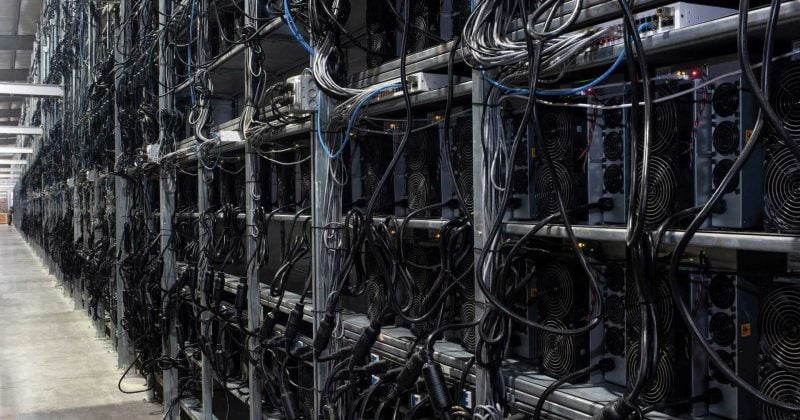
Texas’s power grid has a new vulnerability, and it’s sitting inside air-conditioned warehouses full of servers and mining rigs. ERCOT, the operator responsible for keeping the lights on for roughly 27 million Texans, published a report on May 21 revealing that large data centers and cryptocurrency mining facilities are routinely failing voltage ride-through tests.
The consequences aren’t theoretical. ERCOT identified four groups of large users that risk tripping over 5,000 MW of load each during normal voltage disturbances. For context, 5,000 MW is enough to power millions of homes on a mild day. When these facilities suddenly disconnect, they don’t just go dark themselves. They can destabilize the entire grid.
A pattern of abrupt disconnections
This isn’t a one-off concern. Since 2023, ERCOT has recorded at least 26 incidents where large loads abruptly disconnected during routine voltage fluctuations. Not extreme weather events. Not once-in-a-generation storms. Normal, everyday grid disturbances that equipment is supposed to handle without flinching.
The most dramatic example predates the current wave of concern. In December 2022, nearly 400 facilities tripped offline simultaneously, shedding roughly 1,700 MW of load. That represented about 5% of total electricity demand at the time.
A pipeline of power-hungry projects
Here’s the thing. The problem is about to get significantly worse before it gets better. ERCOT is currently reviewing approximately 20 GW of large-load interconnection requests. Of those, 3.9 GW of projects are expected to come online before July 1, 2026.
ERCOT has acknowledged the growing tension between economic development and grid reliability. Discussions around mandatory voltage ride-through requirements are expected in the near term, which could force non-compliant facilities to either upgrade their equipment or face disconnection.
What this means for crypto miners and investors
For cryptocurrency mining operations in Texas, the regulatory landscape is shifting under their feet. Mandatory ride-through standards would likely require significant infrastructure upgrades, meaning new power conversion equipment, better inverters, and more sophisticated grid-interface systems.
With 3.9 GW of new projects trying to energize before July 2026, any new requirements could create bottlenecks in the interconnection queue, delaying projects that have already committed capital.
For investors in publicly traded mining companies with significant Texas exposure, the key variable is uncertainty. ERCOT hasn’t finalized its new protocols yet, and that ambiguity creates risk that’s difficult to price, particularly for companies that haven’t disclosed detailed information about their ride-through compliance status.

HONEY CARE All-Absorb A26 Male Dog Wrap, 50 Count, Small
$17.99 (as of October 23, 2026 03:13 GMT +00:00 - More infoProduct prices and availability are accurate as of the date/time indicated and are subject to change. Any price and availability information displayed on [relevant Amazon Site(s), as applicable] at the time of purchase will apply to the purchase of this product.)
Amazon eero Signal 5G cellular backup for eero systems, annual eero Plus subscription is required for connectivity - available in app (newest model)
$179.99 (as of October 23, 2026 03:33 GMT +00:00 - More infoProduct prices and availability are accurate as of the date/time indicated and are subject to change. Any price and availability information displayed on [relevant Amazon Site(s), as applicable] at the time of purchase will apply to the purchase of this product.)
Coca-Cola Soda Soft Drink Fridge Pack Cans, 12 fl oz, 12 Pack | Carbonated drink with classic cola flavor
$7.68 (as of October 23, 2026 03:13 GMT +00:00 - More infoProduct prices and availability are accurate as of the date/time indicated and are subject to change. Any price and availability information displayed on [relevant Amazon Site(s), as applicable] at the time of purchase will apply to the purchase of this product.)
Milk-Bone Flavor Snacks Mini’s Dog Treats, 36 Oz. | 5 calories per treat, 15% protein, 3 flavors per canister (beef, chicken & bacon, naturally & artificially flavored)
$11.48 (as of October 23, 2026 03:13 GMT +00:00 - More infoProduct prices and availability are accurate as of the date/time indicated and are subject to change. Any price and availability information displayed on [relevant Amazon Site(s), as applicable] at the time of purchase will apply to the purchase of this product.)













Post Comment