
How Nazata Bio Turned Crushing Pressure Into Its Greatest Competitive Weapon—And What That Means for the Future of Startups
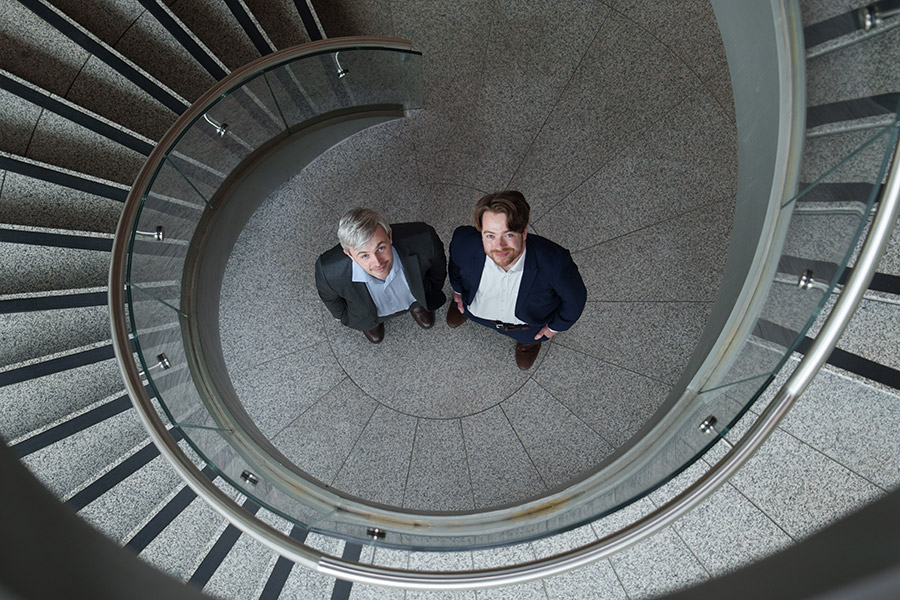
Ever wonder what happens when two sharp minds from a Biomedical Engineering class at Trinity College Dublin reconnect after nearly a decade, only to set out on a mission to tackle one of the world’s stealthiest killers—hypertension? Well, meet Tom McCartan and Shane O’Neill, the duo who didn’t just reminisce about old times but teamed up to launch Nazata Bio, a medtech startup that’s rewriting the playbook on digital therapeutics. They zeroed in on Germany’s pioneering healthcare market, leveraging a smart digital app, HeartShield, aimed at empowering millions battling high blood pressure. It’s a tale of timing, tech mastery, and a shared passion for making an impact where it counts most. Curious how they pulled this off and why Germany is the battleground of choice? Stick around—there’s a lot to unpack here. LEARN MORE
Tom McCartan and Shane O’Neill first met on the Biomedical Engineering programme in TCD. They tell George Morahan how they ended up teaming up to co-found Nazata Bio and why they have focused on Germany as a prime market for their HeartShield digital therapeutic app that targets hypertension
Nazata Bio co-founder Tom McCartan was seeking a chief technology officer when he called former classmate Shane O’Neill to seek recommendations. At the time, O’Neill was preparing to return to Ireland from Japan, where he had worked in software for several years.
It was perfect timing for O’Neill, who put himself forward and saved himself a job search.McCartan and O’Neill had met nearly a decade earlier at Trinity College Dublin on the Biomedical Engineering MSc course, and we meet at the Trinity Business School on a slightly muggy Friday afternoon.
The pair took diverging paths in the years after graduating. McCartan, a doctor, worked on a smart inhaler during the course that would be spun out as Phyxiom. The project also led to him becoming part of the team that developed the state’s Covid early warning system at the outset of the pandemic.
In 2021, McCartan sought a new medical device project and spent six months researching the most severe health conditions in terms of debt and disability caused and economic cost. He landed on high blood pressure, which, according to The Lancet’s Global Burden of Disease study, affects 1.4 billion people and causes a sixth of all deaths worldwide.
Sitting in a colourful meeting pod at Trinity Business School as the campus winds down for the weekend, McCartan says it is the condition that causes the most damage to global health and the problem he could potentially impact most, which is exactly what he was looking for.
With the assistance of his brother-in-law Niall Carson, European CEO for CoinJar and former managing director of Freenow, he founded Nazata Bio. Following a period of further research, he ultimately decided to develop a digital therapeutic app to help people with high blood pressure effectively manage their health.
“It’s a metabolic disease like diabetes, high cholesterol [or] obesity, and the core drivers aren’t addressed,” he explains. “There’s no real diet support or exercise support given to patients as standard, partially because it’s a third of all adults worldwide. If we could provide that digitally, especially if you could crack the behavioural science, then it would be huge.”
By mid-2023, McCartan had a version of the app that was being tested by patients. He describes it as being held together with shoelaces and chewing gum, leading him to reach out to O’Neill.
McCartan had always respected O’Neill’s software engineering capabilities, describing him as the sharpest in their class. He was the first person McCartan contacted for advice about hiring a CTO.
O’Neill deepened his skillset during his time in Japan, rising to technical lead for e-commerce and fintech giant Rakuten. McCartan called him specifically for his experience with React Native, the software framework upon which the Nazata Bio digital therapeutic HeartShield is now based.
“He called me up and started explaining about his vision and the landscape. It was really appealing to be able to go back to one of my core passions, which is medicine, therapeutics and helping people,” O’Neill says.“I wanted to become a biomedical engineer and then I tried to go down a different career path. I went back to software for different reasons, but itwas always in the back of my mind — to go back.
“It was just a great opportunity to work with Tom. I was really impressed with him in the Biomedical Engineering Masters. He was always top of the class.“It was brilliant to connect and hear his vision, and it just made more and more sense as he went into it.”
McCartan recalls O’Neill having “an incredible eye” and firm ideas about how to make “a real product that would be life-changing”, while O’Neill shares McCartan’s strong work ethic and grand ambitions.
“The bigger the impact on health outcomes the better,” says O’Neill.
O’Neill started with the company in early 2024 and they set about rebuilding HeartShield, completing their first demo in a matter of months.
“We’d try to craft out our best guess for what would satisfy patients and affect real-world behavioural change and then test that out,” O’Neill says. “We’d iterate on the feedback and behaviour and build another version.
“Technically, we were super-aligned from day one.”
The pair spent their first year of product development cataloguing “the most effective and clinically validated interventions for hypertension”, prioritising the easiest ones that would deliver the most benefit.
Users input information such as blood pressure over time, wearables and exercise data, and food frequency questionnaires to measure nutritional elements important to blood pressure such as sodium, potassium and oral nitrates.
Users can select from ‘domains’ such as food and exercise. The app will prompt themand ask questions before formulatinga plan for what interventions will be most effective.
“We try to bridge the gap between this enormous body of research thatwas done that’s very effective butnot clinically deployed effectively,” O’Neill says.“There’s a lot of pamphlets, and a lot of efforts have been made to educate patients, but fundamentally patients aren’t really following through and doing it.
“I guess you could think of it as a translation layer, so trying to simplify this extraordinary amount of complex and varying information and filtering it down into a personalised sort of answer for the patient.”
Medical device companies tend to target the US market to scale, but Nazata Bio has trained its focus on Germany, where there are 22 million hypertension patients and doctors can prescribe digital health applications under the Digitale Gesundheitsanwendungen (DiGA) reimbursement scheme.Developers receive a standard €225 fee for a three-month prescription in their first year.
“For us, it’s a huge opportunity to provide public good and make a viable business,” McCartan says.
HeartShield has been undergoing trials with partner clinics in Germany as well as in Ireland and the UK with assistance from the Irish and British Heart Foundations.
Nazata Bio is in the process of raising €900,000 to fund a large-scale randomised control trial in Germany and a single-arm study at St James’s Hospital in Dublin next year, adding to the €400,000 raised to date.
The company will also add at least one more staff member to handle day-to-day operations. McCartan and O’Neill are the only full-time employees, but they are joined on a part-time basis by behavioural scientist Padraig Walsh and CFO Darren Cunningham as well as contractors.
Of course, people’s phones are littered with unused apps and taking steps to improve our health can be stressful. So how are McCartan and O’Neill hoping to get people to use HeartShield?On the clinical side, the app has the backing of doctors. So the thinking goes that patients would be compelled to use it in the same way they would take a medication they had been prescribed.
But on the technical side, HeartShield is underpinned by behavioural science.The idea is to transition patients from extrinsic (“my doctor or spouse told me to”) to intrinsic motivation. This should convince users that their goals are aligned with these outside ideas and they can easily incorporate small changes into their lifestyle to improve their health.
“A lot of the core ideas of the app are based on what’s called self-determination theory, a motivational theory for behavioural science. One of [its] core tenets is patient autonomy, so as much as possible we try to empower patients to self-direct their treatment,” O’Neill says.
High blood pressure disproportionately affects people from lower socioeconomic backgrounds and people with less education. McCartan recognises there are systemic factors that may hamper targeted users.
“I think fundamentally one of the most important things you do as a doctor is understand the patient’s life, the context of it, what they can realistically change, how you can empower that,” he says.
In terms of the metrics being used to measure success, Nazata Bio is focusing on systolic blood pressure (i.e., the top number in a blood pressure reading) and qualitative feedback from users.
Both co-founders were taken by a nine-page letter from one patient effusing about what a difference HeartShield had made to their lives.
O’Neill is wary of falling back on metrics of retention and monthly active users, which he thinks are “a trap” for medical device companies. Instead, Nazata Bio will consider the jobs-to-be-done framework, a design theory that people use products for specific jobs.
For example, people use WhatsApp to message friends and family but may be put off as they are spammed with AI features.“You have to talk to many, many different people, discover what their desires are, their unmet needs, and that’s not something that readily emerges from the sort of basic crude metrics,” he says.HeartShield now has EASA Class 1 Medical certification in Europe, but isn’t yet generating revenue.
“We’re focused on building up clinical evidence and then national reimbursement in Germany,” McCartan says.
The planned randomised controlled trial in Germany is expected to take 16 months, and the company is aiming for HeartShield to be available under DiGA by 2029. In future, Nazata Bio could potentially apply HeartShield’s technical and behavioural science architecture to other digital therapeutics, embracing complexity when the trend is towards simplicity.
“I do think that the potential for improvement is almost infinite, like it’s almost difficult to know when to stop in some way,” O’Neill says. “But I think there is a current popular business model, which is to identify a need in the market and to fulfil it in a very limited and sort of simple way.
“There’s a trend [in] apps to make them very, very simple, cut down to just do one function. I think this is a direct result of the difficulty in trying to harmonise many different things inside one [user interface].

“The ‘everything’ app has been tried and failed many, many times. But I think there’s an interesting middle ground, which is an app that can fulfil many, many different functions for your health, for instance. That could be effective with much more work, care and iteration.
“But I think the reason companies don’t attempt it is because it’s very time consuming and very difficult. I think it’s much easier to identify a tiny problem that you could solve and then move on to the next one. So that’s where I see the future going, particularly with the proliferation of AI tools.”
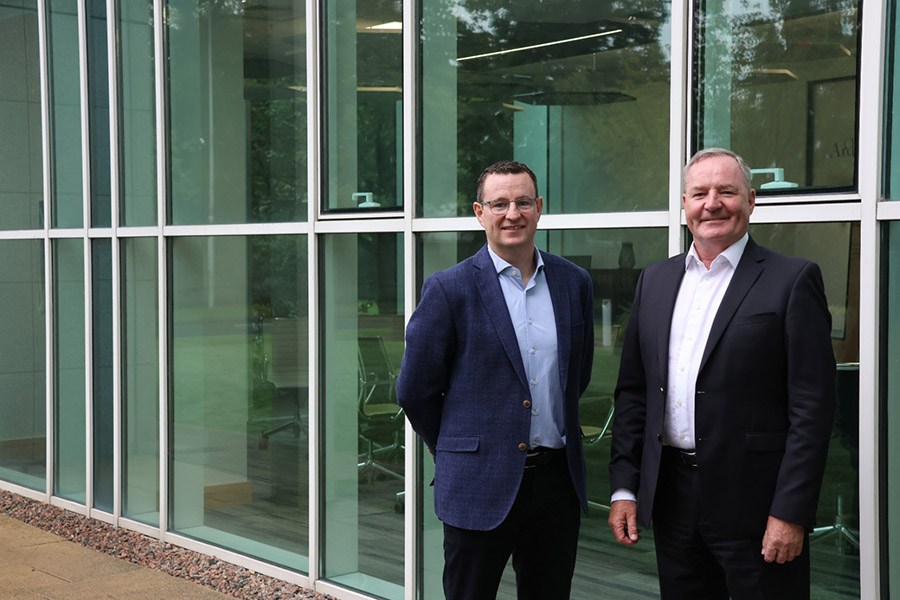
Photo: Tom McCartan and Shane O’Neill from medtech start-up Nazata Bio. (Pic: Fran Veale)
Apple AirPods 5 Wireless Earbuds with Active Noise Cancellation | Bluetooth Headphones, Personalized Spatial Audio, Live Translation, USB-C Charging Case, H2 Chip
$129.00 (as of October 15, 2026 03:21 GMT +00:00 - More infoProduct prices and availability are accurate as of the date/time indicated and are subject to change. Any price and availability information displayed on [relevant Amazon Site(s), as applicable] at the time of purchase will apply to the purchase of this product.)
Medium Hass Avocado
(as of October 15, 2026 03:09 GMT +00:00 - More infoProduct prices and availability are accurate as of the date/time indicated and are subject to change. Any price and availability information displayed on [relevant Amazon Site(s), as applicable] at the time of purchase will apply to the purchase of this product.)
Strawberries, 1 Lb
(as of October 15, 2026 03:09 GMT +00:00 - More infoProduct prices and availability are accurate as of the date/time indicated and are subject to change. Any price and availability information displayed on [relevant Amazon Site(s), as applicable] at the time of purchase will apply to the purchase of this product.)
Meow Mix Original Choice Dry Cat Food, 6.3 Pound Bag
$8.99 (as of October 15, 2026 03:11 GMT +00:00 - More infoProduct prices and availability are accurate as of the date/time indicated and are subject to change. Any price and availability information displayed on [relevant Amazon Site(s), as applicable] at the time of purchase will apply to the purchase of this product.)









Post Comment