
Inside Helix Digital’s Game-Changing $10B Power Play: How KKR, NVIDIA, and Sovereign Wealth Are Rewriting the Rules of US Data Center Domination
Ever wonder what happens when you mix a $10 billion war chest with the brains behind Amazon Web Services and the chip titan NVIDIA? No, it’s not the plot of the next Silicon Valley blockbuster — it’s Helix Digital Infrastructure stepping onto the AI battleground with a serious bang. These folks aren’t just dabbling in data centers; they’re rewriting the playbook by marrying hyperscale facilities with power and connectivity under one roof. Imagine needing just one call to handle what usually takes a dozen—sweet deal, right? With heavy hitters like KKR, the Kuwait Investment Authority, and Vistra fueling the mission, Helix is positioned to dominate the next wave of AI rollout across the U.S., and that’s got echoes far beyond just tech geeks and investors. Trust me, when a former AWS CEO is at the helm, you know this ship is headed straight for prime real estate and power grids with a vengeance—and that’s a shift Bitcoin miners and digital asset markets won’t ignore. Ready to dive deeper into how this new colossus might just reshape the AI and crypto infrastructure landscape? LEARN MORE
A new infrastructure giant just entered the AI arms race, and it brought serious firepower. Helix Digital Infrastructure launched on June 11 with over $10 billion in committed long-duration capital, backing from KKR, NVIDIA, the Kuwait Investment Authority, and energy company Vistra, and a mandate to acquire US data centers to fuel the next wave of artificial intelligence deployment.
The company tapped former Amazon Web Services CEO Adam Selipsky to lead the operation.
What Helix is actually building
Helix isn’t just another data center company. The pitch is more comprehensive: bundle hyperscale data centers with power generation, transmission infrastructure, and connectivity under a single operator. Instead of forcing AI companies to negotiate separately with landlords, utilities, fiber providers, and equipment vendors, Helix wants to be the one phone call that handles everything.
No specific US acquisition target has been publicly disclosed yet. But the company’s focus on hyperscale facilities, the kind of massive campuses that serve cloud providers like AWS, Google Cloud, and Microsoft Azure, narrows the playing field considerably. Pre-launch planning reportedly began as early as May 2026, suggesting that deal conversations are likely already underway.
The backers tell the story
KKR brings the financial muscle and deal-making expertise. The private equity firm has been aggressively expanding its infrastructure portfolio for years, and a $10 billion-plus commitment to AI-enabling assets fits squarely within that strategy.
NVIDIA’s involvement is arguably the most strategically interesting. As the dominant supplier of AI training chips, NVIDIA has a vested interest in ensuring that the physical infrastructure exists to actually run its hardware at scale. The company’s role as a strategic partner, not just a financial backer, suggests Helix facilities could be optimized specifically for NVIDIA’s silicon.
The Kuwait Investment Authority, one of the world’s oldest sovereign wealth funds, brings long-duration capital that matches the timeline of infrastructure assets. Data centers aren’t flipped in eighteen months. They’re built, expanded, and operated over decades.
Vistra, a major US power generation company, rounds out the consortium by addressing what might be the single most critical constraint in AI infrastructure: electricity. Having an energy producer as a founding partner addresses the power availability and grid constraints that have emerged as critical barriers to large-scale AI training.
Where crypto fits, or doesn’t
Helix’s launch is a pure-play AI infrastructure story with no direct crypto component. But the ripple effects for digital asset markets are worth watching closely.
The most obvious connection is energy. Bitcoin mining operations and AI data centers compete for many of the same resources: cheap electricity, grid access, cooling capacity, and favorable regulatory environments. As well-capitalized entities like Helix aggressively pursue US data center acquisitions and power assets, the competitive landscape for Bitcoin miners could shift meaningfully.
Several publicly traded Bitcoin mining companies have already begun pivoting toward AI hosting as a higher-margin use of their existing infrastructure. Firms like Core Scientific and Iris Energy have marketed their data center capacity to AI clients willing to pay premium rates. A $10 billion competitor entering the space with NVIDIA as a strategic partner and a former AWS CEO at the helm raises the bar considerably for those miners-turned-AI-hosts.
The appointment of Selipsky deserves extra scrutiny from anyone following this space. During his time leading AWS, Amazon’s cloud division generated hundreds of billions in revenue and became the profit engine that subsidized the rest of the company.
The over $10 billion in committed capital also sets a new benchmark for AI infrastructure ventures. That figure dwarfs what most data center developers and even some publicly traded REITs have access to, giving Helix the ability to move quickly on acquisitions and outbid competitors for prime assets.
Meow Mix Original Choice Dry Cat Food, 6.3 Pound Bag
$8.99 (as of October 20, 2026 03:12 GMT +00:00 - More infoProduct prices and availability are accurate as of the date/time indicated and are subject to change. Any price and availability information displayed on [relevant Amazon Site(s), as applicable] at the time of purchase will apply to the purchase of this product.)
Diet Coke Soda Soft Drink Cans, 12 fl oz, 12 Pack | No sugar, no calories, 46 mg caffeine per can
$7.68 (as of October 20, 2026 03:12 GMT +00:00 - More infoProduct prices and availability are accurate as of the date/time indicated and are subject to change. Any price and availability information displayed on [relevant Amazon Site(s), as applicable] at the time of purchase will apply to the purchase of this product.)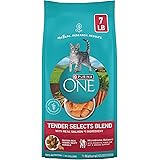
Purina ONE Tender Selects Dry Cat Food, Salmon, 7 lb Bag | Real salmon is the #1 ingredient made with carrots, peas, vitamins A and E for bright eyes, strong muscles and digestion
$17.46 (as of October 20, 2026 03:12 GMT +00:00 - More infoProduct prices and availability are accurate as of the date/time indicated and are subject to change. Any price and availability information displayed on [relevant Amazon Site(s), as applicable] at the time of purchase will apply to the purchase of this product.)
Amazon Fire TV Stick HD (newest model), free & live TV, Alexa Voice Remote, powered by the TV, effortless setup, find shows faster with Alexa+
$39.99 (as of October 20, 2026 03:22 GMT +00:00 - More infoProduct prices and availability are accurate as of the date/time indicated and are subject to change. Any price and availability information displayed on [relevant Amazon Site(s), as applicable] at the time of purchase will apply to the purchase of this product.)











Post Comment