
Is Ripple Poised to Dominate Stablecoin Payments by Turning XRPL into the Ultimate Infrastructure Powerhouse?
Ever wonder why despite all the buzz around blockchain, it’s the humble payment system that’s stealing the spotlight in the DeFi revolution? It’s no secret—stablecoins thrive when they’re zipping around in quick, fuss-free transactions. Payments aren’t just another use case here; they’re the very bedrock where stablecoins and blockchain networks flex their mainstream muscle. Think of it this way: the magic happens when value is on the move constantly, settling, shifting liquidity, and answering real-world demands. Enter Ripple, whose savvy moves—like snapping up GTreasury—show a clear blueprint: weave blockchain right into the fabric of corporate treasury workflows. What’s fascinating is how this isn’t about putting all eggs in one basket; XRP’s just one rail in a multi-lane highway that includes traditional giants like SWIFT. Ripple’s latest Treasury Management System is the game changer, offering corporate treasurers a panoramic view and the freedom to choose their settlement speed and cost. In a world racing towards seamless TradFi-to-DeFi integration, these shifts nudge us to rethink: Could payments be the secret passage for blockchain’s broad adoption? Dive in and see why this matters now more than ever. LEARN MORE.
The payments market remains the largest avenue for blockchains to expand the DeFi sector.
The logic behind this is simple: Stablecoin utility works best when users move them frequently in low-friction transactions. Payments naturally create that environment, as they involve continuous settlement, liquidity movement, and real-world demand for value transfer.
In this context, payments are not just a use case for DeFi. Instead, they are the foundational layer through which stablecoins and blockchain networks can achieve mainstream utility.
Ripple’s [XRP] recent partnerships reflect this strategy.

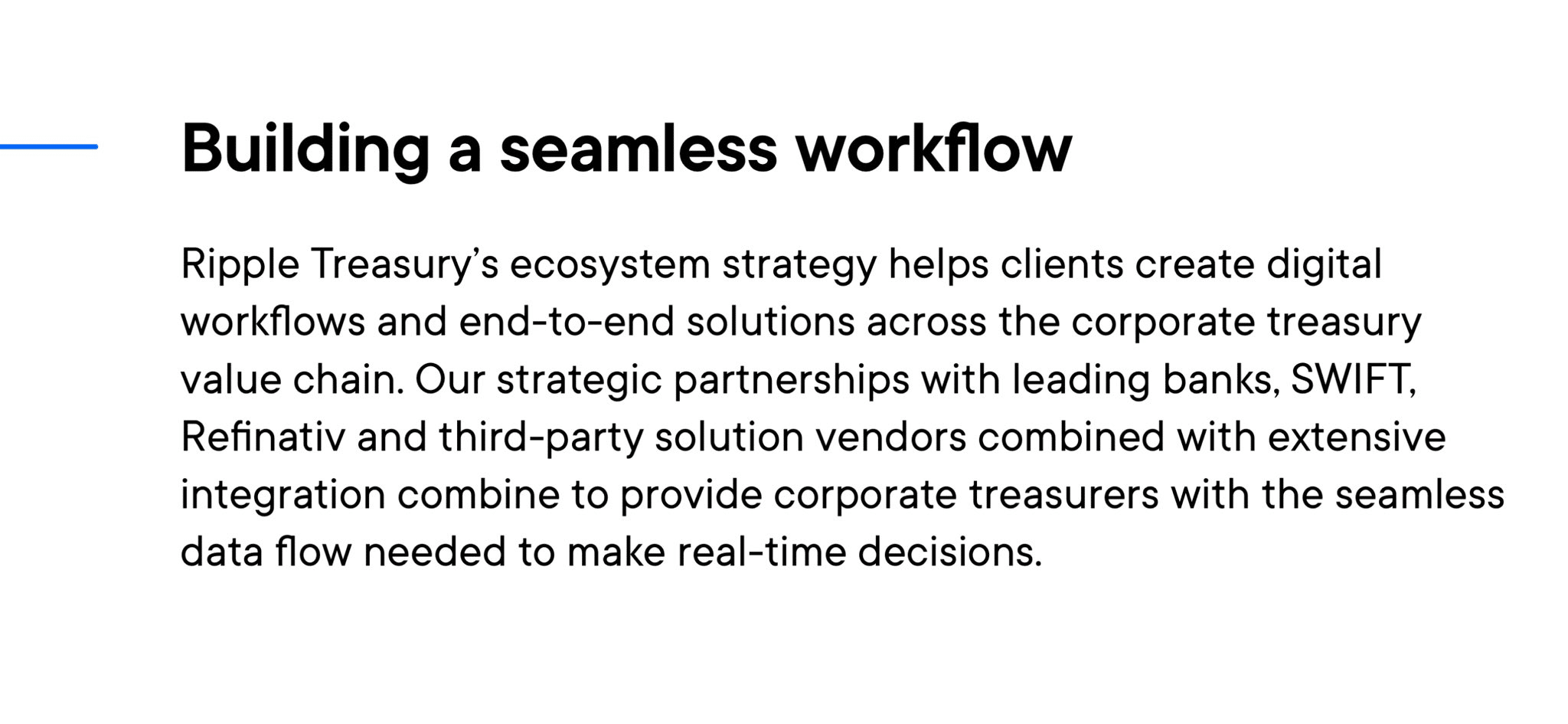
For context, Ripple’s acquisition of GTreasury last year expanded its reach into corporate treasury management, which is where large companies control cross-border payments. The key detail in the deal is that, by bringing GTreasury under Ripple, the idea is to embed blockchain into the same treasury workflow.
Ripple, Visa, and DeFi growth: Is XRPL becoming the next base layer?
The TradFi-to-DeFi expansion now looks to be moving into a more mature phase. Recent Visa move highlights this shift.
Visa has expanded its stablecoin-linked credit card program in partnership with Bridge, scaling from an initial rollout in 18 countries to plans covering 100+ countries. These cards let users spend stablecoin balances directly at Visa’s global merchant network, which already supports over 175 million merchants worldwide.
With such a strong merchant base already in place, stablecoin flows are now entering a new phase of utility, where usage is driven by credit card networks.
That’s where Ripple’s recent treasury move starts to become more relevant, as it targets the infrastructure layer where these liquidity flows are actually managed.

Looking at Ripple’s native stablecoin, RLUSD’s growth further supports this trend.
According to DeFiLlama, RLUSD’s market cap was up nearly 13% year-to-date, as of press time.
Moreover, the stablecoin now accounts for around 24% of XRPL’s stablecoin market share, while also rising nearly 7% this month alone. This further reinforces Ripple’s growing on-chain liquidity.
Taken together, these developments point to a broader shift.
Instead of separate rails competing in isolation, Ripple is moving toward a multi-rail environment where SWIFT, stablecoins like RLUSD, and blockchain networks like XRPL can operate side by side depending on cost, speed, and liquidity needs. This positions Ripple as a key hub in the ongoing TradFi-to-DeFi transition.
Final Summary
- Payments are becoming the core entry point for DeFi adoption, with stablecoins driving transaction flows through existing infrastructure like card networks, banks, and treasury systems.
- Ripple is positioning itself as a multi-rail hub where SWIFT, XRP/XRPL, and stablecoins like RLUSD coexist.

Benebone Tongue Twister & Peanut Butter Treat Pod Refill 2 Pack, 9 Count | Peanut Butter Flavor, Treat Pod Refills, 9 Count, Puzzle Toy Enrichment, No Prep or Mess, Keeps Dogs Busy
$16.96 (as of October 11, 2026 03:20 GMT +00:00 - More infoProduct prices and availability are accurate as of the date/time indicated and are subject to change. Any price and availability information displayed on [relevant Amazon Site(s), as applicable] at the time of purchase will apply to the purchase of this product.)
Amazon Fire TV Stick HD (newest model), free & live TV, Alexa Voice Remote, powered by the TV, effortless setup, find shows faster with Alexa+
$39.99 (as of October 11, 2026 03:20 GMT +00:00 - More infoProduct prices and availability are accurate as of the date/time indicated and are subject to change. Any price and availability information displayed on [relevant Amazon Site(s), as applicable] at the time of purchase will apply to the purchase of this product.)
Ring Battery Doorbell (newest model), Speckled Gray with Chime (newest model), White
$119.99 (as of October 11, 2026 03:20 GMT +00:00 - More infoProduct prices and availability are accurate as of the date/time indicated and are subject to change. Any price and availability information displayed on [relevant Amazon Site(s), as applicable] at the time of purchase will apply to the purchase of this product.)
Petcarex Dog Dental Powder, Dog Teeth Cleaning Breath Freshener | Pet Tartar and Plaque Remover for Teeth, Tooth Cleaning Powder with Probiotics for Dogs of All Breeds, Duck Flavor
$21.99 (as of October 11, 2026 03:20 GMT +00:00 - More infoProduct prices and availability are accurate as of the date/time indicated and are subject to change. Any price and availability information displayed on [relevant Amazon Site(s), as applicable] at the time of purchase will apply to the purchase of this product.)













Post Comment