
Morpho Crypto Rockets 12% After Smashing $2B RWA Milestone — Could $2.26 Be Just the Beginning?
So, here’s a burning question for you: can the world of tokenized real-world assets (RWAs) break free from the “buy-and-hold” inertia and actually start working for us? Morpho’s recent landmark achievement—crossing the $2 billion mark in RWA deposits—might just be the answer we’ve been waiting for. This isn’t your everyday crypto headline. No, it’s a monumental shift where institutions are no longer just parking their money but actively leveraging tokenized assets, like BlackRock’s BUIDL or Ondo Finance’s USDY, to unlock capital and drive real DeFi utility. Think about it—over $2 billion locked in, nearly $900 million borrowed, and a utilization rate soaring at 42%! When you consider that the broader DeFi RWA space is sitting at a meager 14%, Morpho is not just playing the game; it’s leading it. This compelling story of financial alchemy, brought to life by Morpho’s CEO Paul Frambot’s vision of making every RWA productive, isn’t just about numbers. It’s about flipping the script on how we perceive, use, and multiply value in the tokenization era. Curious how this powerhouse is stirring the pot in DeFi, challenging giants like Aave, and what it all means for the MORPHO token? Well, buckle up, because this ride might just redefine the future of digital finance. LEARN MORE
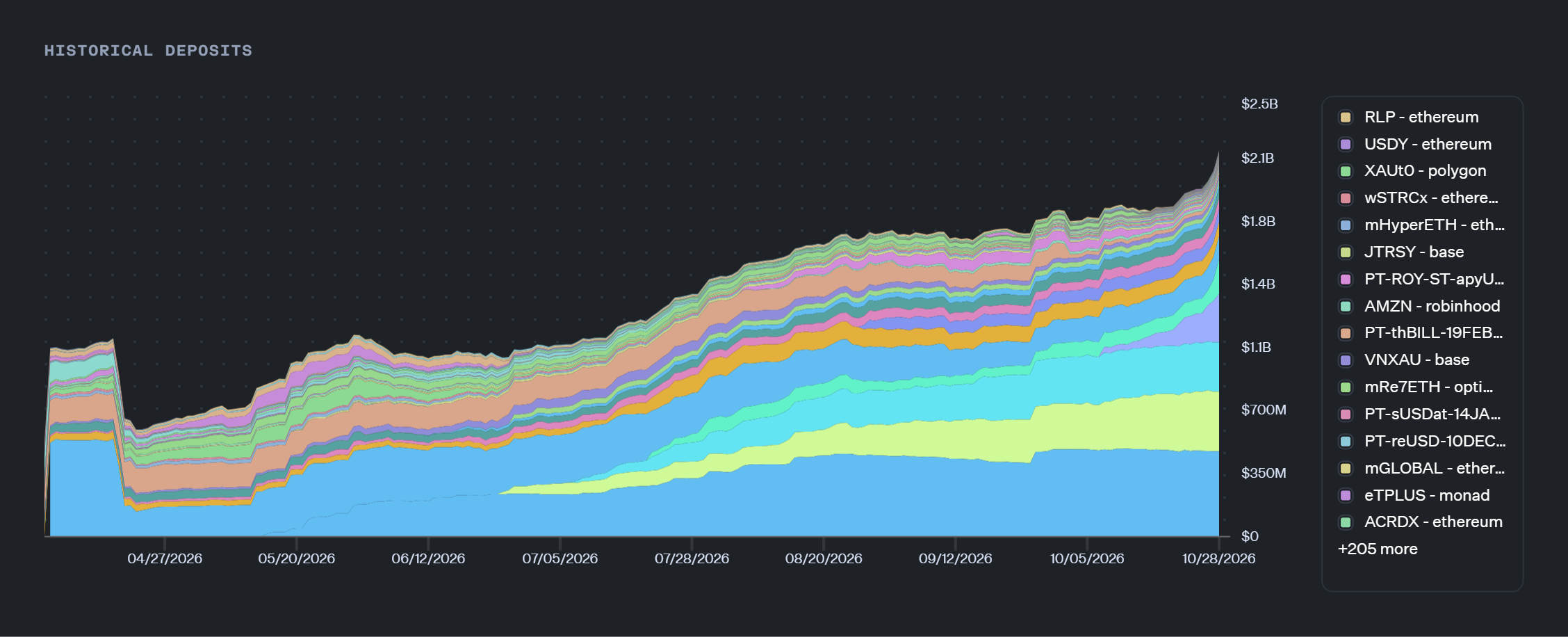
DeFi lending protocol Morpho’s [MORPHO] RWA deposits have crossed the $2 billion milestone, underscoring that the tokenized assets have grown beyond a typical buy-and-hold strategy.
Morpho allows institutions to deposit collateral and borrow against it. As such, the $2.14 billion milestone means institutions bought over $2 billion in tokenized real-world assets (RWA), such as BlackRock’s BUIDL or Ondo Finance’s USDY.
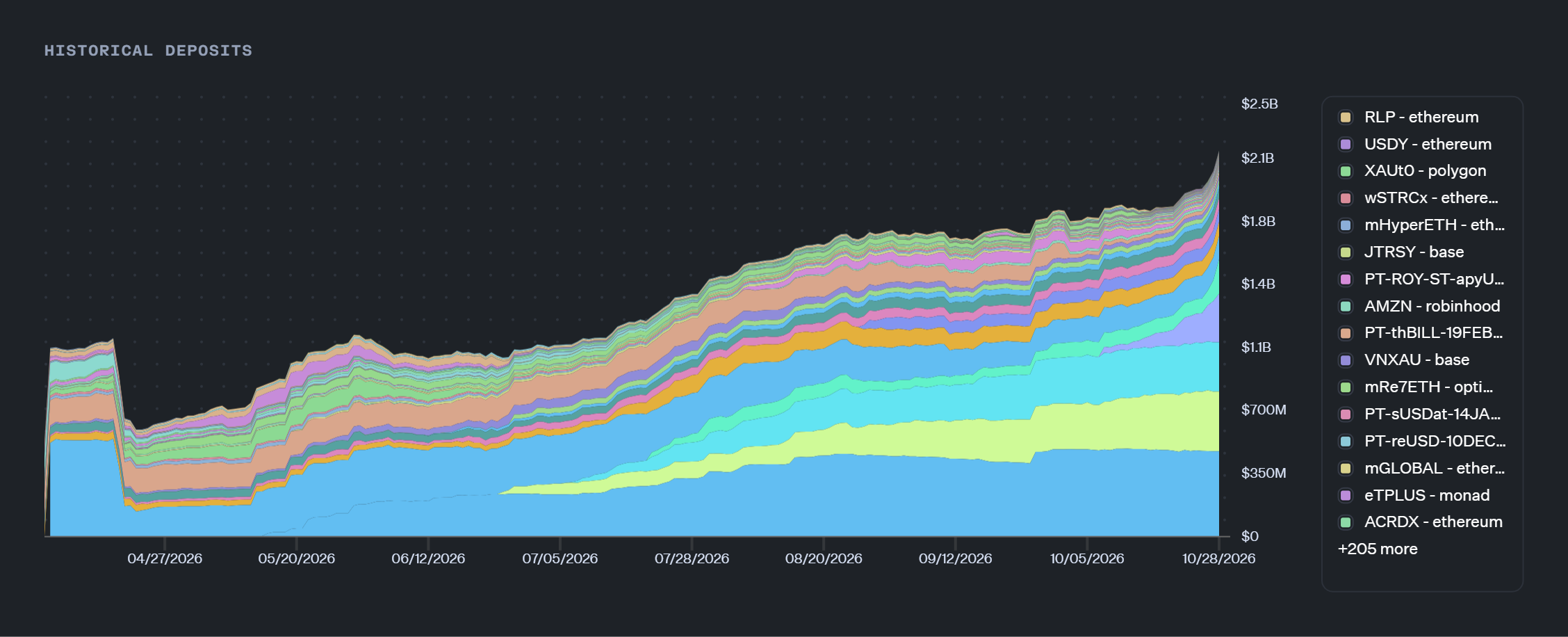
In return, they’ve requested loans worth $894 million, using the $2.14 billion deposits as collateral. That translates to a 42% utilization rate, underscoring the utility and productive use of RWAs.
The borrowed capital is used to amplify low-risk yield strategies like buying more tokenized U.S. Treasury bonds for more interest. According to Morpho Co-Founder and CEO Paul Frambot, this is the second phase of tokenized asset adoption.
Morpho’s RWA markets just crossed $2B in deposits. Tokenizing assets was step 1. Using them to unlock financing and build cheap, global, credit markets onchain is step 2. Morpho will make every RWA productive.
Morpho leads DeFi RWA utility
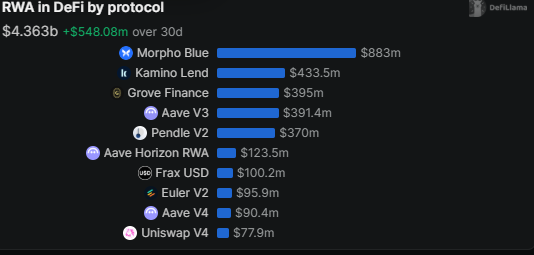
As of Q4 2026, Morpho had a clear lead in making RWA productive on-chain. The broader DeFi active TVL (total value locked) for RWA assets stood at $4.36 billion with an average utilization rate of 14%.
Compared to Morpho’s 42% utilization rate, the lending protocol was driving nearly 4x more RWA utility.
In terms of borrowed loans, Morpho topped the list, followed by Solana-based Kamino Lend’s $433 million, and Grove Finance came in third with $395 million. Aave’s V3 ranked fourth at $391 million, implying a 2x lower RWA utility compared to Morpho.
Interestingly, Morpho’s lead has triggered some clashes with Aave as the two giants push to influence the classification of on-chain vaults and how to approach the regulatory framework for them. That said, the strong traction may influence market sentiment on MORPHO, the protocol’s native token.
However, the traction has no direct value accrual to the token. The protocol’s fee is currently switched off to attract more users as the cheapest lending alternative. So it generates zero revenue to consolidate market share.
Perhaps, if Morpho turns the fee switch on alongside MORPHO buybacks, the token may have a direct value boost.
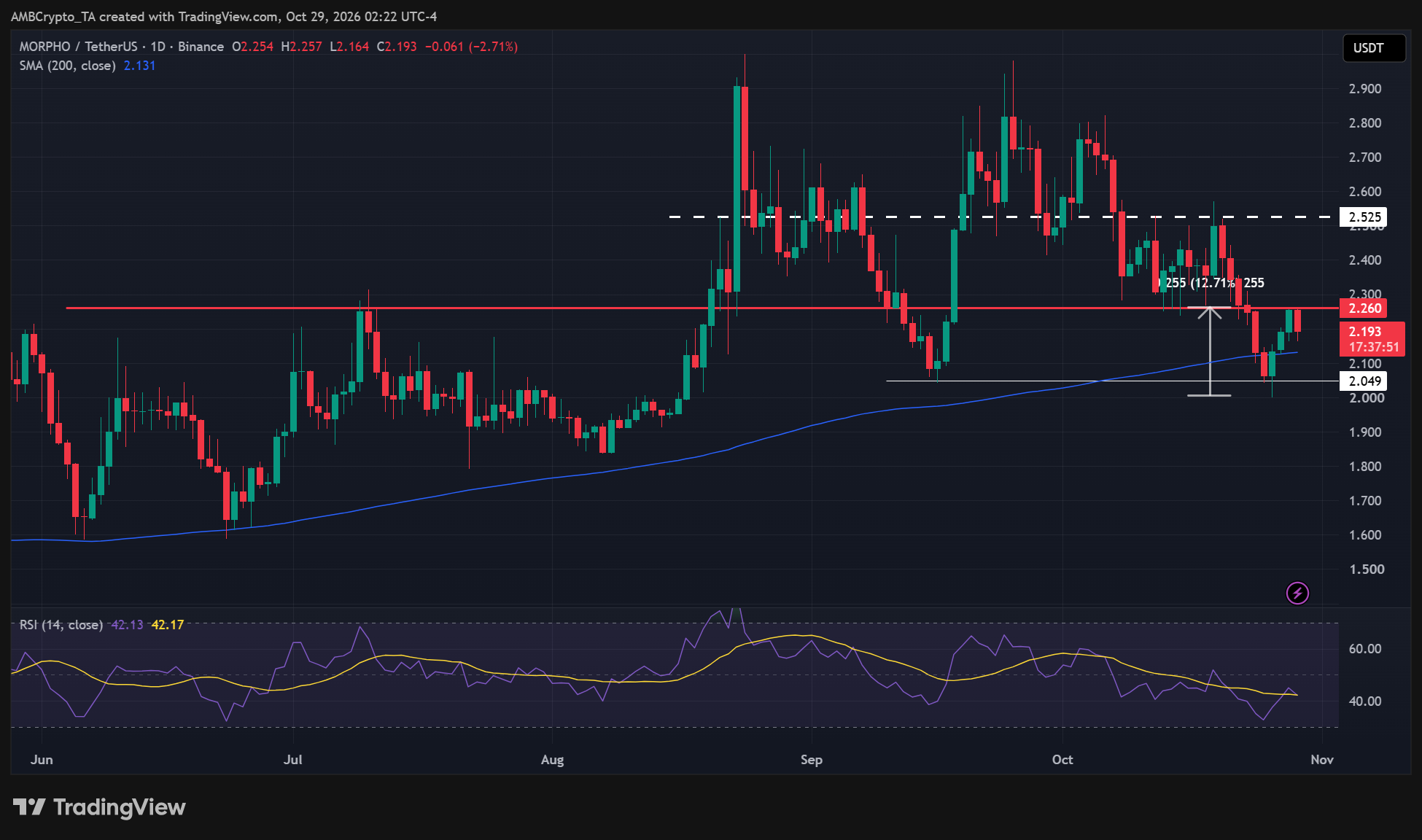
As such, the token’s value depends more on broader market sentiment than the protocol’s growth. On price charts, MORPHO defended $2.0, recovering 12% in the past three days. But it must clear the $2.26 hurdle to extend the recovery.
Final Summary
- Morpho’s RWA deposits hit $2.14B with nearly $900M in loans, implying a 42% utilization rate.
- Morpho CEO believes that making RWA productive will drive more adoption.

Premier Protein 30g High Protein Shake, Chocolate, 12 Pack | 160 Calories, 24 Vitamins & Minerals, No Added Sugar, Supports Muscle Health, Gluten-Free, 11 oz
$26.74 (as of October 30, 2026 03:14 GMT +00:00 - More infoProduct prices and availability are accurate as of the date/time indicated and are subject to change. Any price and availability information displayed on [relevant Amazon Site(s), as applicable] at the time of purchase will apply to the purchase of this product.)
Peakeep NOAA Emergency Weather Radio Alert with Crank Solar Battery Powered | Portable Radio AM FM, Rechargeable Battery Backup, SOS, Flashlight Lamp USB Port for Home Outdoor Camping Storms Blackouts
(as of October 30, 2026 03:34 GMT +00:00 - More infoProduct prices and availability are accurate as of the date/time indicated and are subject to change. Any price and availability information displayed on [relevant Amazon Site(s), as applicable] at the time of purchase will apply to the purchase of this product.)
Puppy Pee Pads with Pheromones, Washable Puppy Training Pads for Dogs Reusable Puppy Potty Pads for Dogs and Cats(with Pet Hair Removal Gloves)
$23.79 (as of October 30, 2026 03:23 GMT +00:00 - More infoProduct prices and availability are accurate as of the date/time indicated and are subject to change. Any price and availability information displayed on [relevant Amazon Site(s), as applicable] at the time of purchase will apply to the purchase of this product.)
HUGEME Monster Dog Halloween Toy for Gifts, Stuffed Dog Plush Toy | Crinkle Squeaky, Soft Lightweight Toy for Fetch and Chew, Interactive Outdoor Indoor Play for Tug, For Puppy Small Medium Dog
$8.99 (as of October 30, 2026 03:23 GMT +00:00 - More infoProduct prices and availability are accurate as of the date/time indicated and are subject to change. Any price and availability information displayed on [relevant Amazon Site(s), as applicable] at the time of purchase will apply to the purchase of this product.)













Post Comment