
Nvidia’s Forbidden Chips Resurface—What Lava Just Revealed About China Telecom’s Secret Hardware Play

Ever wonder how a simple slip-up—like leaving a monitoring dashboard wide open—can unravel a $100 million secret? That’s exactly what happened when Israeli security firm Lava stumbled upon 32 Nvidia Blackwell Ultra B300 chips linked to China Telecom, a state-owned carrier in China. With U.S. export controls strictly barring these advanced GPUs from landing in Chinese hands, this discovery throws a spotlight on the ever-shifting chessboard of global tech and security. But here’s the kicker: these powerful chips weren’t seized in some dramatic raid or snagged at customs; they were uncovered thanks to a tech oversight, exposing how even the most sophisticated equipment can slip through the cracks when cybersecurity isn’t airtight. This isn’t just a story about chips and IP addresses—it’s a wake-up call for operators and regulators alike about the tangled web of export controls and international intrigue in the AI era. Ready to dive deeper into this high-stakes saga? LEARN MORE
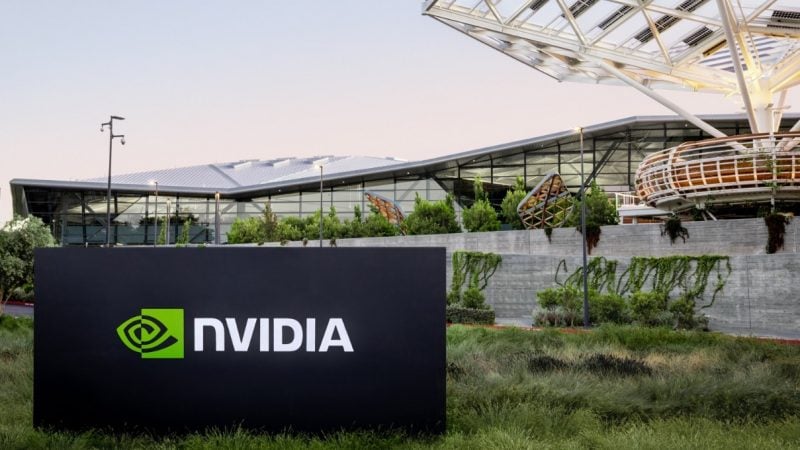
Israeli security firm Lava has identified 32 Nvidia Blackwell Ultra B300 chips linked to IP addresses connected to China Telecom, the state-owned carrier. US export controls bar the sale of these chips to China on national security grounds.
The chips weren’t found through a raid or a customs seizure. Lava spotted them because someone left a monitoring dashboard open to the internet.
The findings were first reported by The Information on October 22, 2026.
How a monitoring tool gave the game away
Lava traced the chips through publicly exposed instances of Nvidia’s DCGM Exporter. This is a monitoring tool that operators use to keep tabs on their GPUs.
Many operators leave the tool unsecured, according to the research. Those exposed endpoints reveal what hardware is running behind them. In this case, the hardware included 32 B300 chips, and the associated IP addresses pointed back to China Telecom.
There is an important distinction worth keeping in view. Lava’s work links the chips to IP addresses connected to the carrier. That is a network association, and it is a different thing from confirming who physically owns the hardware or exactly where it sits.
The research describes the B300s and similar advanced GPUs as purportedly valued at over $100 million.
Lava’s earlier report set the stage
The China Telecom discovery builds on a broader study Lava released on October 9, 2026. Lava identified approximately 2,100 exposed DCGM Exporter hosts globally in that earlier work.
The same report flagged a vulnerability in Nvidia’s systems tracked as CVE-2026-47483. It carries a severity rating of 8.2, and Lava’s research indicated it could allow remote disruption of affected AI infrastructure.
The export control enforcement problem
The research points to evidence of rising prices for advanced AI chips on gray and black markets in China.
Lava’s discovery suggests that some of that hardware may be reaching networks tied to a major Chinese state enterprise. It also shows that detection can come from unexpected places, such as a security researcher scanning for misconfigured software.
What this means for Nvidia, operators and regulators
Nothing in Lava’s findings indicates Nvidia itself sold the chips into China.
For data center operators, if your GPU monitoring tool is reachable from the open internet, assume someone is cataloguing it. Locking down those endpoints and addressing CVE-2026-47483 are the obvious first steps.

Petcarex Dog Dental Powder, Dog Teeth Cleaning Breath Freshener | Pet Tartar and Plaque Remover for Teeth, Tooth Cleaning Powder with Probiotics for Dogs of All Breeds, Duck Flavor
$24.99 (as of October 22, 2026 03:22 GMT +00:00 - More infoProduct prices and availability are accurate as of the date/time indicated and are subject to change. Any price and availability information displayed on [relevant Amazon Site(s), as applicable] at the time of purchase will apply to the purchase of this product.)
New! Sceptre Curved 27-inch Prime Gaming Monitor DisplayPort x2 180Hz HDMI x2 180Hz 1500R 1ms Build-in Speakers, Machine Black 2027 (C275B-FW180T Series)
$99.97 (as of October 22, 2026 03:33 GMT +00:00 - More infoProduct prices and availability are accurate as of the date/time indicated and are subject to change. Any price and availability information displayed on [relevant Amazon Site(s), as applicable] at the time of purchase will apply to the purchase of this product.)
ALOHA Organic Plant Based Protein Bar | Peanut Butter Chocolate Chip, 12 Ct | 14g Plant-Based Protein, 10g Fiber, 5g Sugar | No Sucralose or Stevia | Non-GMO, Vegan & Dairy Free
$20.55 (as of October 22, 2026 03:12 GMT +00:00 - More infoProduct prices and availability are accurate as of the date/time indicated and are subject to change. Any price and availability information displayed on [relevant Amazon Site(s), as applicable] at the time of purchase will apply to the purchase of this product.)
Cable Zip Ties,400 Pack Black Assorted Sizes 12+8+6+4 Inch,Multi-Purpose Self-Locking Nylon Cable Cord Management,Plastic Wire Ties for Home,Office,Garden,Workshop. By HAVE ME TD
$6.29 (as of October 22, 2026 03:23 GMT +00:00 - More infoProduct prices and availability are accurate as of the date/time indicated and are subject to change. Any price and availability information displayed on [relevant Amazon Site(s), as applicable] at the time of purchase will apply to the purchase of this product.)













Post Comment