
The Carnivore Craze: What Our Shift to Meat-Only Wellness Reveals About the Future of Health
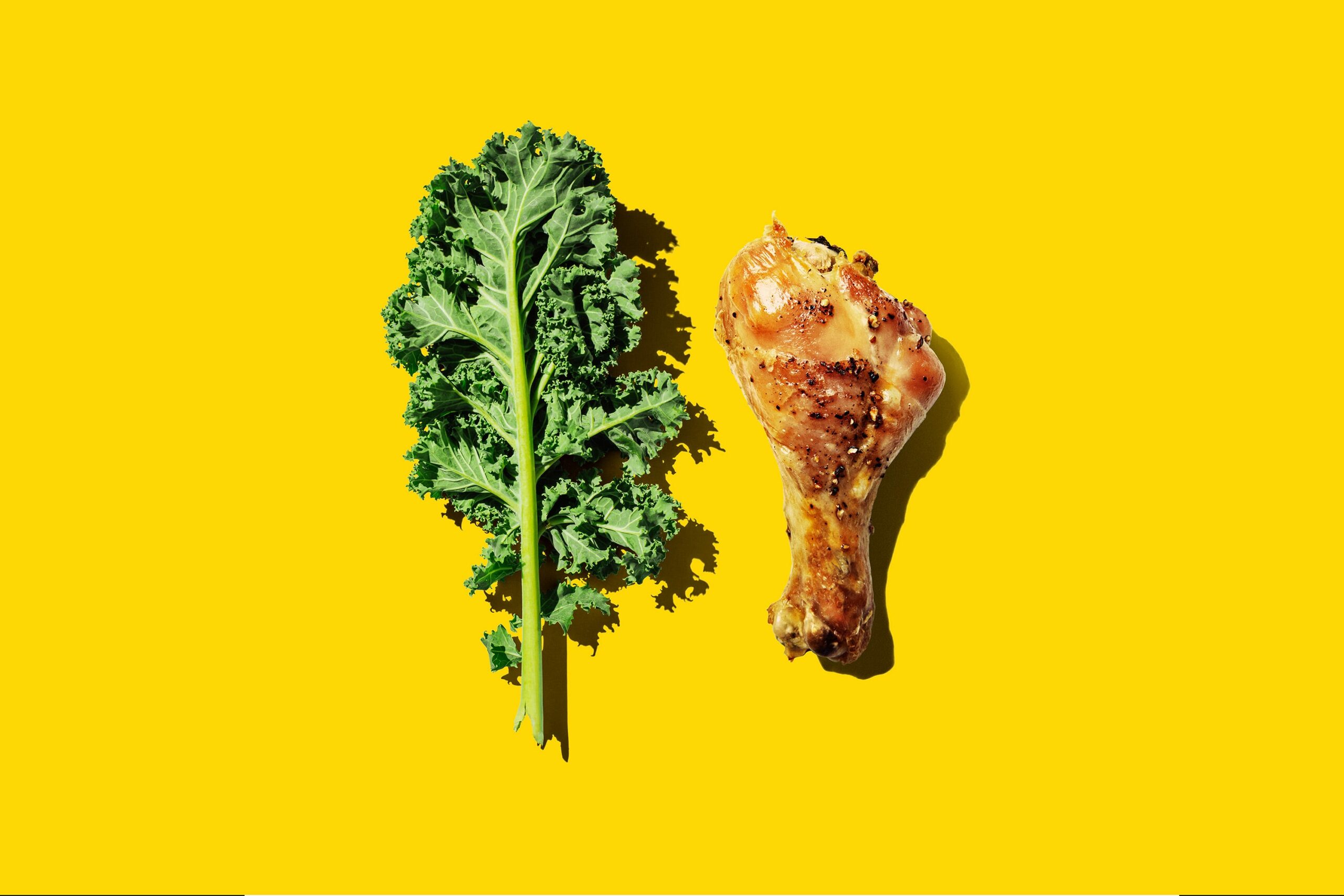
Ever found yourself scrolling through wellness feeds, wondering if the secret to radiant skin and boundless energy lies not in kale and quinoa, but in a sizzling steak and a dollop of butter? It’s wild how fast the wellness world flips the script. Take Lauryn Bosstick, for instance—her glow isn’t just from sunrise yoga but from a daily ritual of bone broth, grass-fed butter, and yes, red meat. If you thought green juice ruled the roost, think again: organ meat smoothies and raw milk are crashing the party. This isn’t just a fad; it’s a deep dive into how we’ve swung from plant-based devotion back to embracing animal products—and why this “rewilding” of the American diet is shaking up everything we thought we knew about health. So, are we witnessing the comeback of meat as medicine, or just a clever marketing spin? Stick with me—this 11-minute read will unravel the buzz, the science, and the stories behind this juicy turnaround. LEARN MORE
 11 min read
The beauty and wellness influencer Lauryn Bosstick has the long, lithe limbs of a ballerina, and skin so dewy that she has the perpetual look of someone who has just returned from a sunrise yoga practice.
Her growing brand, The Skinny Confidential, offers a blueprint for anyone yearning to get the look. Bosstick’s morning routine generally includes ice-rolling her face, “circadian walks,” and cold plunges, and her nighttime habits include wearing mouth tape to promote nasal breathing.
Diet, of course, is also a big part of the Skinny Confidential protocol. According to a story highlight created for the benefit of her some 2 million Instagram followers, what Bosstick eats in a day includes: a cup of bone broth, iced coffee with raw milk, three eggs, bread (often sourdough) with grass-fed butter, a heaping plate of ground beef with raw cheese and sauerkraut, venison sticks, and steak.
Until recently, one might have assumed that a figure like Bosstick was devoted to cauliflower rice and tofu scrambles as the key to good health and great skin. But seemingly overnight, raw milk and red meat have replaced the likes of oat milk and jackfruit as the hot diet staples du jour. Goodbye, green juice; hello, organ meat smoothies.
Alex Clark, who hosts the popular wellness podcast Culture Apothecary, swears (and is sponsored) by Cowboy Colostrum, a supplement made from the nutrient-loaded milk that cows produce immediately after giving birth. Bella Ma has amassed more than 500,000 followers on Instagram, where, as @steakandbuttergal, she showcases the fatty beef, eggs, and animal fat–based diet that she says healed her brain fog, cystic acne, and psoriasis.
And Hannah Neeleman’s more than 10 million Instagram followers know all about how smitten the radiant, rail-thin blonde is with the grass-fed dairy cows on her Utah homestead, Ballerina Farm. “For the last few years I’ve been fixed on butter,” Neeleman wrote in one caption. “With gusto I milk my cow each day, separate off the cream and churn the contents into a golden homespun butter that I lather on everything.”

From Kale to Cow: The Massive Rebrand
You could be forgiven if you’ve found this recent full-on embrace of animal products by many in the wellness world to be nothing short of bewildering. After all, interest in plant-based eating had been on the rise since the early 2010s—when Obama was president, Instagram was in its infancy, and documentaries like Food, Inc. and Forks Over Knives turned the pitfalls of eating animal products into water cooler conversation.
At the time, Gwyneth Paltrow was following a macrobiotic diet; celebrities from Natalie Portman to Ariana Grande to Bill Clinton were loudly and proudly converting to veganism. In 2012, Rich Roll released Finding Ultra, a memoir about his transformation from alcoholic to plant-powered ultra-endurance athlete, which went on to become very popular. The plant-based mania only grew from there.

By 2014, meat consumption in the U.S. had hit an all-time low, and nondairy milks like almond and soy were edging out old-fashioned cow’s milk for space in the dairy case. Venture-backed faux-meat start-ups swooped in, and some people were forecasting the end of animal agriculture. In 2016, the celebrity chef David Chang began serving the buzzy, plant-based Impossible Burger in one of his New York restaurants, and Burger King took it nationwide three years later. That same year, in 2019, Beyond Meat went public, its stock price hitting a jaw-dropping $234 per share. Two years later, the chef Daniel Humm announced that his elite fine-dining restaurant, Eleven Madison Park, would stop serving animal products altogether. For a moment, it seemed as if the barnyard cow might be relegated to the history books.
And then it wasn’t. Sales of plant-based meat alternatives and plant milks both began to slump in 2022. Today, venison is trending; so is bison, and beef tallow. Americans are drinking more cow’s milk for the first time since 2009. We’re also eating record quantities of red meat and poultry—an estimated 24 pounds more per person in 2025 than in 2014. The salad chain Sweetgreen has added red meat to its menu. And Eleven Madison Park? The end of its four-year experiment with strict veganism came in August 2025, when the restaurant announced its plans to reintroduce animal products.
The Great Rewilding of the American Diet
What’s driving this whiplash reversal? In part, it’s likely a reaction to a decade of kale smoothies, pea protein, and synthetic burgers that promised health and virtue but too often didn’t deliver.
Over the past few years, new research has shed light on the dangers of ultra-processed foods—a designation that applies to foods that are made using industrial ingredients and many steps of processing, resulting in products that are far removed from their original state. The category includes not only chips and soda but many plant milks and plant-based meat substitutes too. A number of studies have linked diets heavy in ultra-processed foods to obesity, cardiovascular disease, and even depression, leading more Americans to scrutinize their buys for the presence of additives like dyes and preservatives.
Yuka, a product-scanning app that rates foods’ healthfulness based upon (among other things) the additives they contain, is now among the most downloaded health and fitness titles in the Apple app store and counts 80 million global users. Spotting the presence of emulsifiers in soy milk, as well as oils and protein isolates in burger substitutes, has led consumers to question whether these foods really do make for a healthier alternative to the animal products they are meant to replace.
In researching the 2025 book Happy Meat,which she cowrote, the sociologist Josée Johnston used survey responses and interviews to explore the thoughts and emotions that drive people to eat meat, despite its ethical drawbacks. “What I found is that people saw highly manipulated, plant-based products as suspicious, and some meat-based products, especially when they’re connected conceptually to small-scale agriculture, as more healthy and natural,” Johnston says. Another common sentiment she heard in focus groups: that people were drawn to eating meat—lean meat in particular—because they believed it was important for weight control.
Meanwhile, the meat and dairy industries have seized on the moment, amplifying the message that their products are the antidote to heavily processed food. “There’s plenty of evidence that the meat and dairy industries are doing everything they can to protect the economic value of their products,” says public health advocate Marion Nestle, PhD, MPH, who has authored, coauthored, or coedited 16 books on nutrition. “There’s so much dairy-funded research. They’ve sunk fortunes.”
Beef producers spent about $38 million in 2025, according to public disclosures, on promotion, research, consumer and industry information, foreign-market development, and communications. The dairy industry’s 2025 marketing budget was over $120 million. That viral 2023 parody ad for “wood milk” starring Aubrey Plaza? It was paid for by milk marketers. And celebrities like Emily Ratajkowski, Kelly Ripa, and TikTok star Charli D’Amelio are on the dairy payroll too.
Then, of course, there’s simply the matter of taste. The Impossible Burger may mimic beef’s sizzle, but the flavor is, frankly, flat. Almond milk and oat milk can’t quite replicate the creamy mouthfeel of dairy. And after taking fake bacon and soy sausages out for a spin, some people find that the taste of butter and beef offer comfort, satisfaction, and a sense of nostalgia. “We have evidence from our conversations and focus groups that people connect meat-based meals to their own culture, their sense of who they are, and their identity,” Johnston says. “And that’s really hard to shake.”
When Wellness Gets Political
The current meat-centric moment is also a cultural recalibration that’s as much about identity and ideology as it is about flavor and nutrition.
At the center of the shift is a growing fixation on what’s natural—a word that, in the wellness economy, has become both a marketing tool and a moral judgment. The rise of Robert F. Kennedy Jr.’s Make America Healthy Again (MAHA) movement has united a loose coalition of holistic moms, alternative health practitioners, and self-styled “ancestral eaters” under the shared belief that our modern ailments, such as obesity, type 2 diabetes, and mental health disorders, stem from our estrangement from nature. Their prescription is a return to preindustrial habits that can include “grounding” (barefoot walking), cold plunges, sunlight exposure, and, increasingly, raw milk and animal fats.
On social media, MAHA adherents share reels of creamy, unpasteurized milk pouring into mason jars and raw liver cubes glistening on cutting boards. Their now-common (and somewhat controversial) health claims include assertions that seed oils (like canola and soybean) are toxic, raw milk can protect children against allergies and asthma, and beef tallow contains fat-soluble vitamins and is anti-inflammatory when used on skin. “Animal foods are clearly superior to plant food in every way, shape, or form,” said the animal-based-diet influencer Paul Saladino, MD, during a 2020 podcast appearance.

But the fact that animal products are trending in this way may have as much to do with identity politics as it does with the pursuit of wellness. Since at least the 1960s, plant-based diets have been associated with progressive beliefs; tofu and brown rice took root in hippie communes during the counterculture movement of the ’60s.
With the rise of right-wing influence in American life, meat eating has become a way for many to symbolically reject concerns about climate change and project traditional, conservative values: the classic midcentury meat-and-potatoes supper of yore. “You have red and blue diets, just like you have red and blue everything else,” says Nestle. “In the middle of all that is standard dietary advice that hasn’t changed.”

Sorting Fact from Fad
So where does this leave the average eater who’s trying to eat well, feel good, and not fall down a TikTok rabbit hole?
First, know this: Nutrition science doesn’t change as fast as your social feed. While new findings are constantly refining what we know, the broad consensus about what the healthiest diets look like has held steady for years, according to Federica Amati, PhD, MPH, nutrition topic lead at Imperial College London School of Medicine and the head nutritionist for the nutrition company Zoe. “If anything, we’ve had some of the biggest studies come out [recently] that confirm what we’ve been saying for a while around Mediterranean dietary patterns,” she says.
That means that for all the noise about carnivore cleanses and seed oil–free living, a lot of experts agree that the healthiest dietary pattern isn’t extreme; it’s balanced, varied, and largely plant-based, with room for animal foods.
Nutrition is a notoriously tricky area of scientific research, since diets are complex and intertwined with so many other lifestyle factors that influence health. On top of that, because tightly designed randomized controlled trials are impractical for studying long-term eating habits, most nutrition studies are “observational”: They rely on participants self-reporting their eating habits, and those reports can be unreliable. For these reasons, it’s hard to put too much stock in any single research study.
But there’s strength in numbers, and large-scale studies have linked the Mediterranean diet—a flexible eating style rich in vegetables, whole grains, legumes, nuts, fruits, olive oil, and fish, with modest amounts of dairy and lean meat—to lower rates of heart disease, cancer, and cognitive decline. For instance, in 2025, a study published in the prestigious journal Nature found that among the more than 100,000 participants, those who ate a diet rich in plants lived longest and aged the best. Participants reporting meat-heavy diets fared the worst in terms of chronic disease rates, cognitive decline, mental health, and lifespan.
Recent research has also added nuance to the decades-old demonization of saturated fat, particularly saturated fat from dairy products like whole milk and butter. Several contemporary studies have found that full-fat dairy may have neutral, or even slightly positive, effects on heart health, likely due to its matrix of nutrients, including calcium and bioactive compounds. Those findings support the idea that dairy—especially fermented dairy, like yogurt and kefir—can be a part of a healthy diet. Is raw milk even better? “I would say the evidence there is not convincing,” says Nestle, the public health nutritionist. “Pasteurization does so little to change milk beyond changing its flavor.”
And while the benefits of consuming raw milk might be debatable, the potential health risks are not. “The raw milk thing freaks me out,” says Rachel Naar, RDN, a registered dietitian based in Hoboken, New Jersey. Naar says she frequently hears from clients who are curious about what she calls “ancestral eating patterns,” which include not just unpasteurized milk but an emphasis on red meat and beef tallow. Naar cautions that consuming raw milk might result in life-threatening bacterial infections, and, like Nestle, she sees little benefit.

When it comes to meat-heavy diets overall, she has added concerns. “There’s a risk of nutrient deficiencies within that,” Naar says. “You’re missing out on fiber and antioxidants, which play into the microbiome’s diversity.”
Some nutritionists are revising their opinions of dairy for the better, but when it comes to red and processed meats, consuming those in large quantities is still associated with worse overall health. “People who have the most red meat in their diet have higher incidences of colorectal cancer, cardiovascular disease, type 2 diabetes, and all-cause mortality,” says Amati.
The World Health Organization classifies processed meat, a category that includes bacon, deli meats, hot dogs, and meat sticks, as a Group 1 carcinogen, meaning it is known to cause cancer in humans. Processed meats are specifically linked to an increased risk of colorectal cancer. In paleo and carnivore diet circles, much is made about the health difference between grass-fed and grain-fed beef. But Amati says that while grass-fed beef is definitely superior in terms of nutrition (and animal welfare), that doesn’t suddenly make eating huge quantities of the stuff a good idea.
“If you can afford to have a pasture-raised, organically farmed piece of meat, that’s great,” Amati says. “But I don’t think that the differences are so big that it would decrease your disease risk.” The American Institute for Cancer Research continues to recommend eating no more than three servings of red meat per week (regardless of whether it’s grass- or grain-fed).
Real Science (and the Spin)
If evidence in favor of eating a varied, plant-forward diet is so consistent and long-standing, why haven’t we accepted it as settled fact?
The challenge, perhaps, is psychological. Ana Valenzuela, PhD, a professor of marketing at City University of New York – Baruch College’s Zicklin School of Business, studies consumer choices and decision-making. She says that when people face a complex topic (like how to maintain a healthy diet), they typically respond by looking for a simple rule to follow. This strategy gives a sense of control, Valenzuela says. “If there’s one rule that’s easy to implement, that seems to be the way to manage the complexity.”
Naar, the registered dietitian, says that it can get confusing for clients to navigate. “Unfortunately, social media can be a really black-and-white place where the more controversial and intense you are, the more traffic you get,” she says. “We’re in a time where it’s not sexy to do the slower, longer work and look at your overall relationship with food. It’s not buzzy, and it may not help you drop 15 pounds before your wedding. People sometimes get frustrated with that.”
Extremes are easy to market too: Raw milk is good, seed oils are poison, meat is medicine. Moderation doesn’t make for a viral reel. But the truth, inconveniently, is nuanced. A well-sourced steak can be part of a healthy diet; so can tofu. Raw milk may be “natural,” but it also carries a real risk of bacterial contamination.
If you want to eat more naturally—never a bad idea—start by focusing on how much processing your food goes through, not whether it comes from a cow or a cauliflower. Choose foods with short ingredient lists. Aim for color and variety. Cook at home when you can.
As the pendulum swings from vegan to carnivore, from green juice to bone broth, it’s worth remembering that what’s truly “natural” is balance—the ability to adapt, to evolve, to eat in ways that sustain both body and planet. In the end, the smartest diet might be the least hashtag-friendly one: mostly plants, some animal foods, minimal processing, and a little common sense.
Food Styling by Olivia Mack Mccool.

30 PCS Cable Organizer for Desktop, Data Cable Management Ties, Wire & Network Routing Fixer
$2.70 (as of October 16, 2026 03:33 GMT +00:00 - More infoProduct prices and availability are accurate as of the date/time indicated and are subject to change. Any price and availability information displayed on [relevant Amazon Site(s), as applicable] at the time of purchase will apply to the purchase of this product.)
Milk-Bone Soft & Chewy Dog Treats, 25 Oz. Canister | Made with real beef & filet mignon, tender dog treats, easy to chew, for dogs of all ages and sizes
$14.48 (as of October 16, 2026 03:11 GMT +00:00 - More infoProduct prices and availability are accurate as of the date/time indicated and are subject to change. Any price and availability information displayed on [relevant Amazon Site(s), as applicable] at the time of purchase will apply to the purchase of this product.)
TAGRY Bluetooth Headphones True Wireless Earbuds 60H Playback LED Power Display Earphones with Wireless Charging Case IPX5 Waterproof in-Ear Ear buds with Mic for TV Smart Phone Laptop Computer Sports
$25.98 (as of October 16, 2026 03:21 GMT +00:00 - More infoProduct prices and availability are accurate as of the date/time indicated and are subject to change. Any price and availability information displayed on [relevant Amazon Site(s), as applicable] at the time of purchase will apply to the purchase of this product.)
Fresh Step Odor Shield Multi Cat Clumping Cat Litter, 14 lb. | Febreze Freshness, Odor Shield with Ammonia Block Technology, Low Dust, Compatible with Most Automatic Litter Boxes
$11.16 (as of October 16, 2026 03:11 GMT +00:00 - More infoProduct prices and availability are accurate as of the date/time indicated and are subject to change. Any price and availability information displayed on [relevant Amazon Site(s), as applicable] at the time of purchase will apply to the purchase of this product.)













Post Comment