
When All Gains Vanish Overnight: The Shocking Downturn That Could Crush Your Portfolio Next—Are You Ready to Fight Back?
Well, buckle up—it’s been a rough night on the markets, and if you blinked, you might’ve missed just how fast the gains of the year evaporated like morning mist. The Nasdaq Composite dropped about 10% this week alone, flirting dangerously close to bear market territory, while the S&P 500 and Russell 2000 aren’t far behind, canceling out months of hard-fought wins. It’s almost like we hit replay on 2018’s midterm meltdown, with rate hikes still looming and liquidity looking as scarce as hen’s teeth. But here’s the kicker—unlike 2018, the Fed’s no longer the quick friend who bails you out after a bad bet. Inflation’s running hotter than ever, and the threshold for intervention—the so-called “Fed put”—has sunk to depths that might surprise even the most seasoned investors. So, what’s next? Are we on the cusp of a swift rebound, or heading for a marathon slog of volatility and uncertainty? Let’s dig into the data, the Fed’s cues, and the charts that might just hold the answers… LEARN MORE
img#mv-trellis-img-1::before{padding-top:78.61328125%; }img#mv-trellis-img-1{display:block;}img#mv-trellis-img-2::before{padding-top:78.515625%; }img#mv-trellis-img-2{display:block;}img#mv-trellis-img-3::before{padding-top:78.515625%; }img#mv-trellis-img-3{display:block;}img#mv-trellis-img-4::before{padding-top:78.515625%; }img#mv-trellis-img-4{display:block;}img#mv-trellis-img-5::before{padding-top:78.515625%; }img#mv-trellis-img-5{display:block;}img#mv-trellis-img-6::before{padding-top:105.24152106886%; }img#mv-trellis-img-6{display:block;}img#mv-trellis-img-7::before{padding-top:47.75390625%; }img#mv-trellis-img-7{display:block;}img#mv-trellis-img-8::before{padding-top:47.75390625%; }img#mv-trellis-img-8{display:block;}
Rough night.
Here is roughly the tabulation of the carnage:
| Market | This week | From its peak |
|---|---|---|
| Nasdaq Composite | about -10% | about -18% |
| S&P 500 | about -8.6% | about -12% |
| Russell 2000 (US small caps) | about -7.5% | about -15% |
| World stocks (MSCI ACWI) | about -8.7% | about -12% |
| World stocks outside the US | about -9% | about -15% |
| Straits Times Index | about -5% | about -14% |
We basically gave back the gains for this year for many markets.
Nasdaq is almost at what we will call bear market. I think STI will see in the Monday morning.
Does this look like 2018?
In my last article, I wrote that this looks a lot like the 2018 midterm drawdown. You can read it here:
This week made it feel less like a comparison and more like a replay.
Here is how 2018 went. The Fed kept hiking while stocks were already sliding. Powell said in October that rates were a long way from neutral, and the market did not like it. The Fed still hiked in December. Only in early January did Powell soften and say the Fed would be patient. By the Christmas Eve low, the S&P 500 was down close to 20% from its high.
What we haven’t seen yet is whether the policy mistakes show up this time too.
I bet a lot of people are expecting volatility. But I don’t think many people are expecting it after the midterms, especially with the AI complex getting exposed like this. And I don’t think it’s really about oil.
The key thing that might trigger this drawdown is the hiking and feels like not enough liquidity.
Here is what Fed officials said:
- The minutes. Almost all participants said further rate hikes would likely be appropriate. A couple even said a December hike bigger than 25 basis points may be warranted if the data stays bad.
- Waller. He said he is very, very concerned about inflation, and that it is spreading out.
- Williams. He called inflation stubbornly high and said the Fed has work to do.
- Cook. She said today’s rate is not high enough, and waiting risks falling behind the curve.
Not one of them sounded like they were looking for a reason to stop.
The debate is no longer whether to hike. It is how fast. Futures traders now price nearly a 95% chance of a quarter point hike at the 8 to 9 December meeting.
Many investors believe in the “Fed put”.
The put is a fancy way of saying people expect the Fed to step in and help if stocks fall far enough.
The key words are “far enough”. Neil Dutta of Renaissance Macro, who I mentioned in my last post, calls this the strike price on the Fed put. It is the level where the Fed finally says enough and turns supportive.
Picture a friend who always bails you out when a bet goes wrong. In 2018 he did it fast, because his own house was calm. Inflation was around 2% and nobody doubted the Fed. Stocks fell about 20% before Powell turned.
This time his house is on fire. Inflation is well above target, jobs are strong, and expectations are drifting away from the Fed. He has to deal with the fire first, so he will only help once the bet has gone much, much worse.
Neil’s point is that the strike price is much lower than people are used to. If a falling stock market changed the Fed’s path, he said, “we have much bigger problems”, because inflation running away is the bigger emergency.
You can hear this in what officials say. Asked whether falling stocks and stress in AI related debt might do some of the Fed’s work, Williams called it more of a return to normal. Cook went further and said financial conditions are still accommodative and not restraining the economy enough.
So the same fall in stocks that got a Fed pivot in 2018 may not get one this time.
I’ve also been asking myself a harder question. A lot of the support for this market came from a Republican White House that wanted stocks to go up. After the midterms, that changes. Trump said voters only have themselves to blame for the sell off.
I don’t think he will punish anyone on purpose. The market is part of his own record, and his voters hold 401(k)s too. But wanting to help and being able to help are different things.
The Fed is busy fighting inflation. The new Congress doesn’t convene until January 2027, and Democrats can’t force a rescue on their own. Overriding a presidential veto takes two thirds of both the House and the Senate, and historically it almost never happens. Congress has overridden only about 4% of all vetoes since 1789. Last December, Trump vetoed two bills that had passed both chambers unanimously, and the House still could not override them.
Real rescues, like 2008 and 2020, happened because the president and Congress agreed. So I’m not asking whether Congress can force help on Trump. I’m asking how bad things must get before both sides want to help at the same time.
Where a policy mistake could still show up
This is what we haven’t seen play out yet.
In 2018, the mistake, if you call it one, was hiking into a market that was already cracking. This time, core inflation has run at about a 3.5% annual rate over the past three months, far above the 2% target. If the Fed stops too early, that is a mistake too.
The Fed can be wrong in two directions:
- Hike too little. Inflation sticks, and the Fed has to do even more later.
- Hike too much. An already wobbly market and economy get pushed over, like 2018.
Neil’s worry is the second one, but later. He expects hikes in December and January, with March as the peak, and fears the Fed goes too far in 2027. In his words, “they’re going to go too far as they always do.”
I honestly don’t know which risk is bigger. The data in December and January will tell us more.
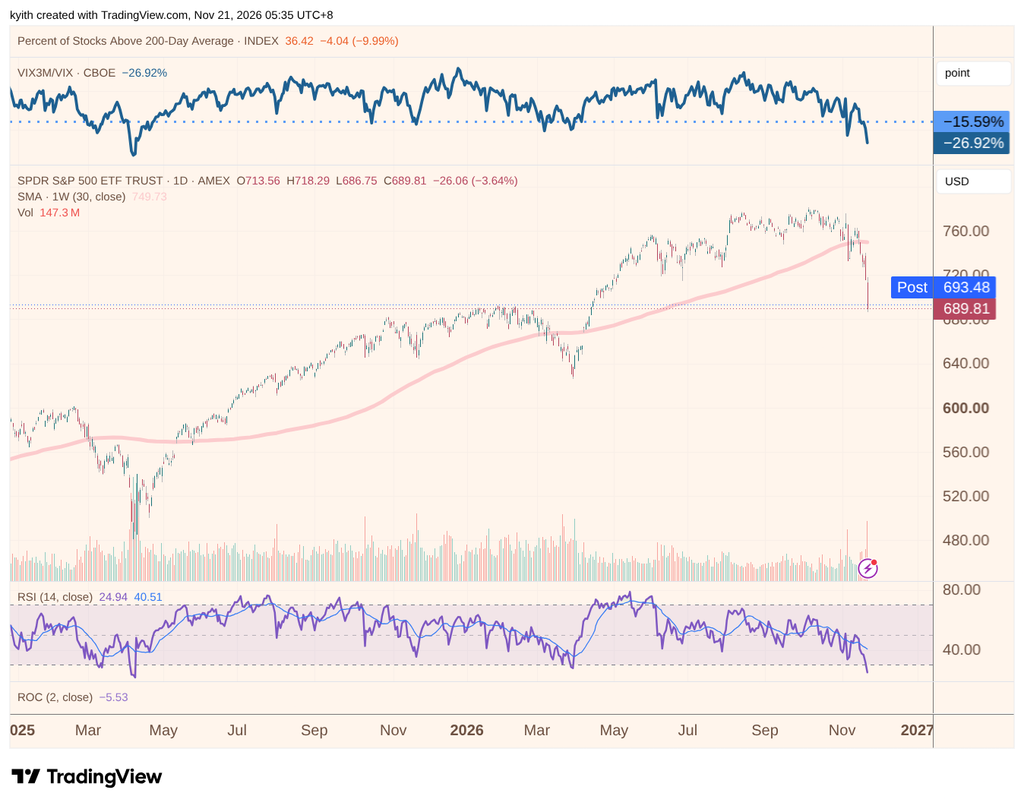
Going through some charts

What goes up… must come down sometimes.
The VIX is about 36. Traditionally DataTrek would say that when VIX is 36 you should be buying some. This is not long term advise though.
Even the 3-Month VIX / Spot VIX chart in that top panel is kind of showing a low similar to 2025. RSI is also in oversold range.
All this does not mean no more downside.

Gold seem to be puking. Perhaps folks are taking this to shore up their margin.

USD is pretty stable in times like this.
Who would have thought?
A lot of people bought gold because they feared the US dollar was losing its place. I understand that fear. Central banks were buying too, and they are still buying now.
But the dollar didn’t fall apart. It is near its highest in about 19 months.
Gold also pays you nothing. When rates go up, it looks worse next to a bank account or a bond. And gold tends to shine when people think the Fed has lost control of inflation. This month, the market is betting the Fed will act instead.

This is a chart of the iShares Core Global Aggregate Bond Index AGGU. It is doing its job by not dying.
Put your money in defensive names like Sheng Siong and ST Engineering?


If prices are going up because money is pouring in and pumping them up, then I wonder whether the valuations of these two companies are fundamentally sustainable. Maybe the market is starting to reprice, as if to say, oh, we don’t think so.
Sorry if this sounds obvious, but there is no defensive stock that is safe from the downside. I think it’s worth keeping in mind.
I think at this point I wouldn’t be surprised if the market has more downside to come. Still, I think it’s more or less due for a bounce, based on the flows we just saw. An options expiry window just passed, and a lot of those put options expired. That should give us a bit of a reset.


The seasonal flows are also in our favour, so we might get some respite from this. I could be wrong, but I wouldn’t be surprised if 2018 plays out again. Once we end the month, I think December could turn out to be kind of a down month.
I think people will be asking how long this shitiness lasts. Will it finish quite soon? Or will it last six years? Or is it closer to 2007?
All of these things are possible.
In the end, it becomes a game of volatility, and many people will find it really hard to sit through. Someone whose portfolio used to be 70% green and 30% red will suddenly see it flipped, with 70% red. It will feel ugly, and they might not know what to do about it.
I guess most of this comes down to volatility and psychology, at least in the short term. Some people are pretty shocked by what they see. Well there is always a first time.
But I think if there is a personal reflection, it would be how your emotions and psychology shift from confident to less confident. And whether you see this coming at all. If you have not, its good to note that down.

Kyith is the Owner and Sole Writer behind Investment Moats. Readers tune in to Investment Moats to learn and build stronger, firmer wealth foundations, how to have a Passive investment strategy, know more about investing in REITs and the nuts and bolts of Active Investing.
Readers also follow Kyith to learn how to plan well for Financial Security and Financial Independence.
Kyith worked as an IT operations engineer from 2004 to 2019. Currently, he works as a Senior Solutions Specialist in Fee-only Wealth Advisory Firm Providend. All opinions on Investment Moats are his own and does not represent the views of Providend.
You can view Kyith’s current portfolio here, which uses his Free Google Stock Portfolio Tracker.
His investment broker of choice is Interactive Brokers, which allows him to invest in securities from different exchanges all over the world, at very low commission rates, without custodian fees, near spot currency rates.
You can read more about Kyith here.

JBL Go 4 - Ultra-Portable, Waterproof and Dustproof Bluetooth Speaker, Big JBL Pro Sound with Punchy bass, 7-Hour Built-in Battery, Made in Part with Recycled Materials (Black)
$31.95 (as of November 21, 2026 03:28 GMT +00:00 - More infoProduct prices and availability are accurate as of the date/time indicated and are subject to change. Any price and availability information displayed on [relevant Amazon Site(s), as applicable] at the time of purchase will apply to the purchase of this product.)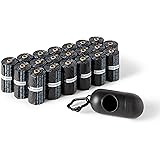
Amazon Basics Dog Poop Leak Proof Bags with Dispenser and Leash Clip, Unscented, 13" x 9" Large Size, 300 Count
$7.83 (as of November 21, 2026 03:24 GMT +00:00 - More infoProduct prices and availability are accurate as of the date/time indicated and are subject to change. Any price and availability information displayed on [relevant Amazon Site(s), as applicable] at the time of purchase will apply to the purchase of this product.)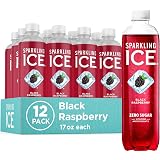
Sparkling Ice, Black Raspberry Sparkling Water, Zero Sugar Flavored Water, with Vitamins and Antioxidants, Low Calorie Beverage, 17 fl oz Bottles (Pack of 12)
$12.47 (as of November 21, 2026 03:24 GMT +00:00 - More infoProduct prices and availability are accurate as of the date/time indicated and are subject to change. Any price and availability information displayed on [relevant Amazon Site(s), as applicable] at the time of purchase will apply to the purchase of this product.)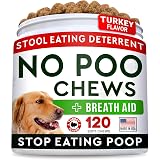
STRELLALAB No Poo Chews for Dogs - Coprophagia & Stool Eating Deterrent | Probiotics, Digestive Enzymes & Breath Aid Support - Stop Dog Poop Eating (120Ct, Turkey)
$17.99 (as of November 21, 2026 03:27 GMT +00:00 - More infoProduct prices and availability are accurate as of the date/time indicated and are subject to change. Any price and availability information displayed on [relevant Amazon Site(s), as applicable] at the time of purchase will apply to the purchase of this product.)









Post Comment