
White House’s Bold New Gamble: US-China Trade Boards—Are They the Secret Weapon to Tame Global Commercial Chaos?
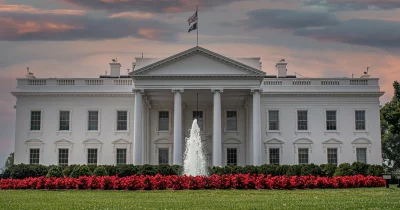
When two economic giants like the US and China decide it’s time to press pause on the chaos and try—and I mean really try—to make sense of their tangled trade drama, you better sit up and pay attention. The White House has just rolled out a pair of new players on this high-stakes chessboard: the US-China Board of Trade and a sister Board of Investment. Now, here’s the kicker—these aren’t your run-of-the-mill committees; they’re tasked with slicing through the tariff mess and figuring out which goods get the green light and which remain off-limits (bye-bye, some fancy tech). It’s like carving out a “tariff canyon” where some products breeze through with low tariffs while others face a steep climb. Sounds simple? Think again. With pioneers like US Trade Representative Jamieson Greer and Treasury Secretary Scott Bessent on the US side mixing it up with China’s Vice Premier He Lifeng, this is about more than trade—it’s about setting the rules in an arena where every dollar, chip, and rare earth mineral counts. The question begs: could these boards bring structure to a relationship ridden with tension, or is this just another layer of complexity in a commercial saga that refuses to settle? If you’re into markets, investments, or just keeping a finger on the pulse of global commerce, this is your front-row seat to the drama unfolding. LEARN MORE
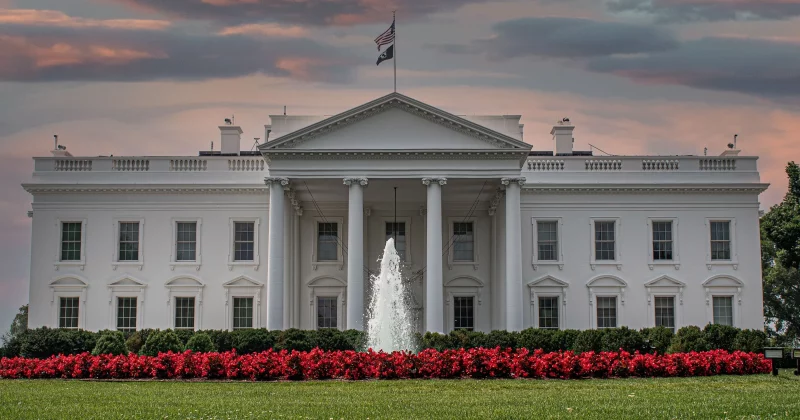
The White House announced the creation of two new bilateral bodies, a US-China Board of Trade and a parallel Board of Investment, designed to bring some structure to the increasingly chaotic commercial relationship between Washington and Beijing.
What the boards actually do
The Board of Trade has a deceptively simple mandate: figure out which products can still be exchanged between the US and China amid escalating tensions. That means creating categories of goods that get favorable treatment versus those that remain restricted, particularly sensitive technologies and advanced chips.
The approach has been described as a “tariff canyon” policy. Approved goods would face lower tariffs, while restricted goods, especially in the semiconductor and advanced technology space, would continue to face steep duties. The gap between those two tariff levels is the canyon.
The Board of Investment, meanwhile, is a slower-moving body focused on resolving investment disputes between the two countries. This tracks with a growing list of grievances on both sides, from US export controls on advanced chips to China’s retaliatory restrictions on rare earth minerals that are critical for everything from electric vehicles to defense systems.
The initial scope of the Board of Trade could cover roughly $30 billion to $40 billion in imports, a meaningful but not transformative slice of the overall US-China trade relationship.
Who’s running the show
The key players on the US side include US Trade Representative Jamieson Greer, Treasury Secretary Scott Bessent, and their counterpart Chinese Vice Premier He Lifeng.
Bessent’s role through the Treasury side brings the investment angle into focus. The Treasury Department has been increasingly active in screening Chinese investments in the US and restricting American capital flows into certain Chinese technology sectors.
On the Chinese side, Vice Premier He Lifeng has been Beijing’s primary economic interlocutor with Washington, handling much of the back-channel communication during recent tariff escalations.
Why this matters for markets
The “tariff canyon” approach is worth watching closely. If implemented effectively, it could create a two-tier system where most consumer and industrial goods flow relatively freely while technology-adjacent products face continued restrictions.
The $30 billion to $40 billion initial scope is modest enough to be achievable but large enough to matter for the specific industries involved. Investors should pay attention to which product categories end up in the “approved” lane versus the “restricted” lane, as those decisions will create winners and losers across supply chains that ultimately affect publicly traded companies.

The Farmer's Dog Snap Sticks, Human Grade Dog Treats, Beef & Apple 3oz | Human-Grade Dog Treats for Puppies and Adult Dogs, For All Ages, Sizes and Breeds
$11.99 (as of October 22, 2026 03:22 GMT +00:00 - More infoProduct prices and availability are accurate as of the date/time indicated and are subject to change. Any price and availability information displayed on [relevant Amazon Site(s), as applicable] at the time of purchase will apply to the purchase of this product.)
Apple AirPods Pro 3 Wireless Earbuds with Active Noise Cancellation | Live Translation, Heart Rate Sensing, Hearing Aid Feature, Bluetooth Headphones, Spatial Audio, USB-C Charging
$199.00 (as of October 22, 2026 03:23 GMT +00:00 - More infoProduct prices and availability are accurate as of the date/time indicated and are subject to change. Any price and availability information displayed on [relevant Amazon Site(s), as applicable] at the time of purchase will apply to the purchase of this product.)
Banana Bunch (4-5 Count)
(as of October 22, 2026 03:12 GMT +00:00 - More infoProduct prices and availability are accurate as of the date/time indicated and are subject to change. Any price and availability information displayed on [relevant Amazon Site(s), as applicable] at the time of purchase will apply to the purchase of this product.)
Amazon Fire TV Stick 4K Plus with AI-powered Fire TV Search, Wi-Fi 6, stream hundreds of thousands of movies and shows, free & live TV, find shows faster with Alexa+
$39.99 (as of October 22, 2026 03:23 GMT +00:00 - More infoProduct prices and availability are accurate as of the date/time indicated and are subject to change. Any price and availability information displayed on [relevant Amazon Site(s), as applicable] at the time of purchase will apply to the purchase of this product.)












Post Comment