
Why Everyone’s Talking About Backrooms: The Horror Movie Born from an Internet Legend That’s Perfectly Creepy and Unforgettable
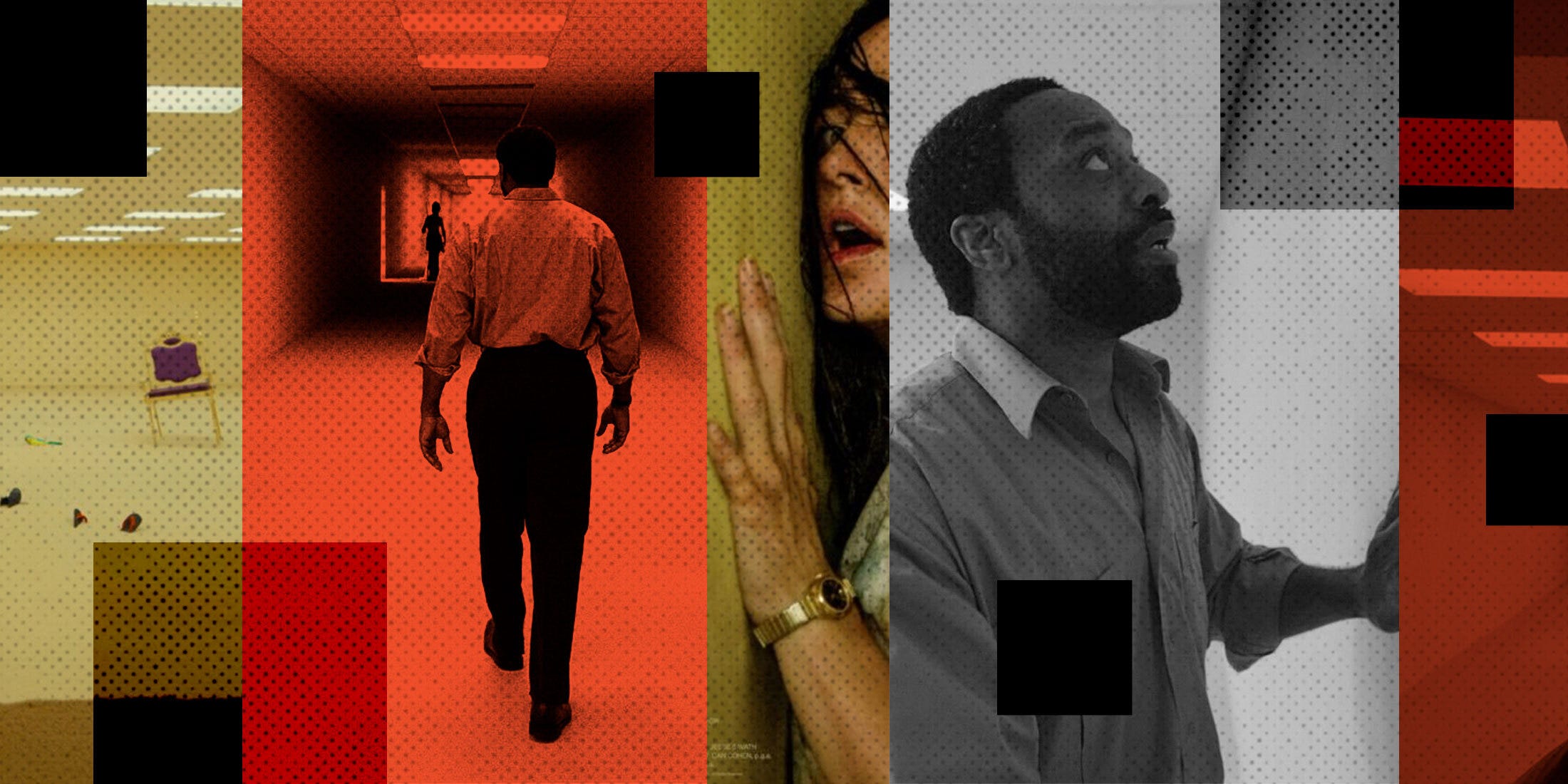
Ever found yourself stuck in an endless maze of dull, yellow-lit hallways that feel oddly familiar—and utterly terrifying? Welcome to the Backrooms, the Internet’s latest horror obsession that’s morphed from a random 4chan post into a sprawling mythos inspiring everything from creeptastic YouTube series to A24’s newest horror flick starring Oscar-worthy actors. It’s wild how an image of an empty office space can spiral into this eerie sensation that digs deep into our everyday fears—like that unsettling hum of fluorescent lights or the dread of an abandoned corridor. But how exactly did this digital ghost story transition from pixelated origins to the big screen? Let’s unravel this internet-born horror tale together and explore the curious journey from anonymous posts to Hollywood spectacle. LEARN MORE
 5 min read
THE INTERNET HAS long been a fertile ground for horror, but few ideas have caught on quite like the Backrooms. Since the genuinely unsettling image of an empty office space bathed in yellow fluorescent light was posted on the website 4chan, the Backrooms has evolved into a sprawling piece of online mythology that has inspired short stories, YouTube series, video games, and now, an A24 horror movie.
How did we get here, and by “here,” I mean Academy Award-nominated actors Chiwetel Ejiofor and Renate Reinsve exploring a seemingly endless series of abandoned hallways with a mix of confusion and terror? To answer that, we have to trace the Backrooms through each distinct phase of its online journey. Let’s break it down.
The Creepypasta Origins
The Backrooms phenomenon as we know it began in 2019, when an anonymous user on 4chan posted a photo of a spacious, fluorescently lit room as part of a series of “disquieting images that just feel ‘off.’ (As for the origins of that photo, Internet sleuths on Discord uncovered the image of an empty HobbyTown store in Oshkosh, Wisconsin that apparently dates back to 2003.) From there, one of the 4chan commenters delivered what would become the first bit of Backrooms lore:
“If you’re not careful and you noclip out of reality in the wrong areas, you’ll end up in the Backrooms, where it’s nothing but the stink of old moist carpet, the madness of mono-yellow, the endless background noise of fluorescent lights at [sic] maxiumum hum-buzz, and approximately six hundred million square miles of randomly segmented empty rooms to be trapped in. God save you if you hear something wandering around nearby, because it sure as hell has heard you.”

There’s a lot to unpack here. For the uninitiated, “no-clipping” is a video game term that refers to players either intentionally disabling collision detection so they can pass through walls, or a glitch in the game that produces the same effect. (In the context of Backrooms, it’s basically slipping out of reality into a nightmare-inducing liminal space.) The notion that something is watching you in the Backrooms hits the sweet spot between laying out a piece of horror lore and leaving enough to the reader’s imagination.
That openness wasn’t an accident—it’s a feature of the format. Creepypastas—user-generated horror stories that are shared across the Internet—thrive on that kind of ambiguity. And like other creepypastas before it, Backrooms achieved virality because it wasn’t a self-contained story so much as a starting point. The appeal lies in the unsettling rules and textures that invite other users to build on them, reinterpret them, or simply push the idea into stranger territory. In that respect, the original post was akin to a shared prompt that the Internet ran with—gaining even more attention on YouTube.
The YouTube Series
Similar to another viral creepypasta, Slender Man, Backrooms generated significant fanfare in a visual medium, where creators began translating its vague rules and unsettling emptiness into something that felt more tangible. Nobody nailed this tone better than teenage filmmaker Kane Parsons, who, under his Kane Pixels YouTube channel, developed a Backrooms web series.
Leaning into found-footage aesthetics, Parsons transformed the Backrooms from abstract Internet lore into its own universe. His series—of which there are 24 episodes, though six are unlisted on YouTube—captures what it might feel like to accidentally stumble into the Backrooms. There’s an unnerving sense of scale that suggests this uncanny purgatorial space goes on in perpetuity, and, worst of all, that something sinister lurks within it.
What made the series resonate wasn’t just its impressive technical polish from an amateur filmmaker, but the way it expanded the Backrooms lore. Episodes add new layers to the world—including an organization called the Async Research Institute that was responsible for opening a portal into the Backrooms—without over-explaining it. Viewers are encouraged to piece together their understanding of the mythology, turning the Backrooms into a collaborative experience as much as a narrative one. (It also inspired liminal space horror video games like The Exit 8, which was adapted into a feature film earlier this year.)
Part of what makes the Backrooms stick is how familiar the dread feels. An empty office late at night, a fluorescent hum you can’t place, and a dark hallway where you don’t know what’s around the corner all tap into the same irrational-yet-relatable fear that might make someone scared to swim alone in a pool at night. (There’s a movie for that, too.) In other words, the Backrooms isn’t scary because it’s otherworldly—it’s scary because it’s an ordinary setting with all the warmth drained from it.
But the bigger story is that Parsons accomplished all of this on YouTube, where a teenager could build a following while cutting their teeth as a filmmaker. Which points to something larger happening in horror right now: the rise of YouTube as a training ground for a new kind of auteur.
The Rise of the YouTube Auteur
What makes the Backrooms’ evolution so significant isn’t just its virality, but how it reflects an emerging pipeline from the Internet to mainstream genre filmmaking. With A24’s Backrooms, Parsons is part of a growing wave of YouTubers whose transition to Hollywood is reshaping how talent is identified and elevated.

Parsons, center, with his stars Chiwetel Ejiofor and Renate Reinsve.
Danny and Michael Philippou, responsible for the comedy channel RackaRacka, have directed two commercially and critically successful horror films for A24 in Talk to Me and Bring Her Back. Curry Barker released his second feature film earlier this month, Obsession, which achieved the rare feat of grossing more in its second weekend than its first thanks to enthusiastic word-of-mouth. Mark “Markiplier” Fischbach made his feature-length debut with the independently released Iron Lung, which became a surprise box office hit in its own right.
Taken together, these career trajectories point to a new auteur pipeline that’s forged through the Internet. Whether these creators’ success stems from their YouTube audience supporting them through buying movie tickets, or whether they’re innately gifted at delivering high-concept premises that can appeal to the masses, is unclear. (The answer is probably a bit of both.) What is apparent is that this has become a viable commercial pathway: Backrooms is projected to make between $40 and $50 million in its opening weekend, which would make it A24’s biggest debut to date.
But the larger implications go beyond a single release or box office figure. Backrooms didn’t just originate online—it was shaped by the same forces that are now producing filmmakers, audiences, and entire visual languages for mainstream horror. In that sense, the leap from a 4chan post to A24 feature isn’t an anomaly. It’s the endpoint of a feedback loop that began with Internet-native storytelling and is now feeding directly into Hollywood itself.


Miles Surrey is a Brooklyn-based culture writer who covers television, film, and whatever your dad is interested in. His work can also be found at The Ringer, Vox, Vice, and The A.V. Club.

XTEINK X4 Pro 4.3" ebook Reader with Front Light & Touchscreen, Space Black | 4.3" E-Book reader with adjustable front light, touch/gesture control, physical buttons, 1100mAh battery & magnetic charging
$84.15 (as of October 11, 2026 03:30 GMT +00:00 - More infoProduct prices and availability are accurate as of the date/time indicated and are subject to change. Any price and availability information displayed on [relevant Amazon Site(s), as applicable] at the time of purchase will apply to the purchase of this product.)
Amazon Echo Spot (newest model), Great for nightstands, offices and kitchens, Smart alarm clock, Designed for Alexa+, Black
$109.99 (as of October 11, 2026 03:20 GMT +00:00 - More infoProduct prices and availability are accurate as of the date/time indicated and are subject to change. Any price and availability information displayed on [relevant Amazon Site(s), as applicable] at the time of purchase will apply to the purchase of this product.)
Dog Allergy Relief Chews - Anti-Itch Skin & Coat Supplement with Omega 3 | Itchy Skin Relief Treatment with Fish Oil - Itching & Paw Licking Support - Dry Skin & Hot Spots Treats - Made in USA, 180Ct
$18.39 (as of October 11, 2026 03:20 GMT +00:00 - More infoProduct prices and availability are accurate as of the date/time indicated and are subject to change. Any price and availability information displayed on [relevant Amazon Site(s), as applicable] at the time of purchase will apply to the purchase of this product.)
Ridge Tracker Card Compatible with Apple Find My, Compatible with Android Slim Tracking Card - Wallet Finder, Item Locator for Luggage Tags, Passports, Phone - MFi Certified, IP68 Water Resistance
$39.00 (as of October 11, 2026 03:30 GMT +00:00 - More infoProduct prices and availability are accurate as of the date/time indicated and are subject to change. Any price and availability information displayed on [relevant Amazon Site(s), as applicable] at the time of purchase will apply to the purchase of this product.)













Post Comment