
Why Generic AI’s Blind Spot on Women’s Health Could Be a Silent Crisis for Our Bodies—And What You Need to Know Now

Ever typed your symptoms into an AI chatbot and felt confident—only to realize later the advice missed the mark? You’re not alone. More women are leaning on AI daily to decode everything from heart disease and autoimmune struggles to menopause and yes, vaginal health. But here’s the kicker—most generic AI tools are flunking the test with a jaw-dropping 60 percent failure rate on women’s health benchmarks. Imagine being told it’s just perimenopause, when in reality, it’s something way more serious lurking beneath the surface. Sounds like a plot twist no one asked for, right? The issue isn’t just tech failing us; it’s a legacy problem—medicine’s age-old blind spots baked into AI, designed without women in mind. The good news? Solutions are emerging, and the future could be brighter for women’s health AI—if we dare to demand better. Ready to dive into why so many systems trip up and how we can fix this mess? Strap in. LEARN MORE
 6 min read
More women are turning to AI for advice every day, and they are discussing far more than reproductive organs. From heart disease and autoimmune disorders to mental health, menopause, chronic pain, and yes, vaginal health, women are increasingly relying on AI for answers.
The problem is that generic AI is frequently inaccurate and often fails when giving women advice about their bodies. In fact, a study evaluating 13 state-of-the-art foundational AI models (the models that power most of today’s “health” chatbots) revealed alarming gaps: Current models show approximately a 60 percent failure rate on a women’s health benchmark.
This failure happened to a 44-year-old friend of mine who started feeling off. Not dramatically off, the way you’d expect a health crisis to announce itself, but quietly, persistently off. Fatigue that sleep didn’t fix. A tightness in her jaw that she chalked up to stress. Nausea that came and went without explanation. She wasn’t the type to rush to a doctor over something she couldn’t quite name, so she did what most of us do now: She opened an AI chatbot and typed in her symptoms.
The answer came back in seconds. Sounds like perimenopause. Very common at your age. Consider tracking your cycle and speaking with your ob-gyn if symptoms persist.
That answer is confident, reassuring, and wrong.
Three weeks later, she was in the emergency room. She had been experiencing a heart attack, the kind that presents differently in women than in men, with jaw pain and nausea and fatigue rather than the chest-clutching dramatic episode we’ve seen in movies. She survived. But she spent three weeks being told, by AI and two different clinicians, that what she was feeling was hormonal or anxiety-driven.
My friend’s story is not an anomaly. It is the system working exactly as it was designed—a system that was never designed with her in mind.
How Does Generic AI Work?
When you ask a generic, generative AI chatbot about your health, you are talking to a system that has read, by some estimates, a significant portion of the entire written Internet. It feels authoritative because it speaks with the confidence of something that has read everything. Women’s health content, the research, the clinical literature, the documented symptom profiles, represents a fraction of what these systems were trained on, dwarfed by decades of general medical knowledge built around male physiology.
AI does not flag this or say it has limited information here. It answers with the same fluency it brings to everything else, and most users have no reason to suspect the difference.
Confidence can read as competence, and a thorough-sounding answer reads as an accurate one. Women walk away from these interactions with information that feels complete, with a tool that kept them engaged, but did not serve them.

Why Women’s Health AI Inherited Medicine’s Blind Spots
Women’s health is one of the most complex areas of medicine. It encompasses hormonal cycles that shift across decades, reproductive conditions that present differently in every patient, symptoms that overlap across systems in ways that resist simple categorization, and a mental and physical health relationship that is deeply intertwined.
For most of medicine’s modern era, men’s health was simply called health, and the default research subject was a 154-pound Caucasian man. Women were largely excluded from clinical trials until 1993, and less than 20 percent of medical residents across specialties received any formal menopause education during residency.
To put it simply, the way women are experiencing their health in their daily life does not match the medical textbooks because our knowledge was built on scientific data that is often incorrect or under-researched. The result is that generic AI’s output is frequently mirroring those historical inaccuracies and lacks the complexity to understand what is happening in a woman’s body, just like some medical textbooks.
So, Are We Doomed?
Well, not exactly. Recent news headlines from frontier labs highlight the need to introduce responsible training, appropriate regulation, and human-centered thoughtfulness in building AI.
But we’ve seen that we simply need to build technology that can actually navigate the complexity, precision, nuance, and contextual intelligence that women’s health needs, which general-purpose systems were not designed for. In other words, it is not all doom and gloom.
The good news is that science is improving, women’s health companies are innovating, and technology has limitless potential. Even more optimistic news: If we as a society can prioritize accuracy and safety frameworks that translate for women’s health, perhaps we can find a way to make generic AI more trustworthy for every industry.
We, at EmaEQ, saw where women deserved better information and set out to lead the charge with enhanced safety, considerate language, and clinical accuracy. We built Ema because we have hope in the future of AI, not only to fill the gaps.

Women Are the Variable That Changes This
First: You are reading this article and now know that the average AI system contains only a small fraction of specialized women’s health knowledge compared to the vast amount of information it was trained on, yet users often assume expertise where none exists.
Secondly, the women sitting in doctors’ offices in 1985 did not know they were being excluded from the research shaping their treatment. They had no framework for what was missing, no language for a gap they could not see, and no AI to help them outside of the office that they could trust. That is no longer where we are. The problem is documented. The stakes are clear. What comes next depends on whether the people (especially women!) decide to get involved.
That starts with refusing to accept confident-sounding answers as complete ones. When a health app gives you an answer, ask where its knowledge base came from and whether it was built with women’s health as a core input rather than an afterthought. These are not unreasonable questions. They are the questions that move institutions and change how technology is built and regulated.
How Can You Help?
Women were written out of the data that medicine was built on, and writing ourselves back in is not a passive process. It requires showing up in the rooms where these decisions are made and insisting that our complexity is not a complication, it’s the baseline. Here’s what you can do:
- Demand regulation and safe AI practices from your government: Use your vote or consider sending a letter to your senator via the Future of Life’s letter portal.
- If you work in technology, medicine, research, or policy, the ask is more direct: Build with this in mind, fund it, hire for it, and refuse to ship tools that were not tested against the populations they claim to serve. The diversity of people who build these systems determines the diversity of the people they will work for. Build and maintain a clinically validated women’s health framework for your AI, or work with a company like EmaEQ (and build alongside my team of AI geniuses).
- Learn more about the Women’s Health AI Consortium (WHAI), which is working directly at this intersection, bringing together researchers, clinicians, technologists, and advocates to set standards for how AI in women’s health should be built and evaluated. Visit the site to find out how you can get involved with the WHAI.
Solving the hardest problem tends to raise the floor for everyone. When researchers designed crash test standards to account for female body types, car safety improved across the board. When architects began designing for wheelchair access, they created curb cuts that now benefit parents with strollers, delivery workers, and cyclists.
When health technology is built to handle the complexity and historically underrepresented accurately, it becomes a more rigorous, more trustworthy system for everyone. Let’s build AI that’s safe for vaginas, penises, hearts, brains, and every body in between.

Amanda Ducach is the founder and CEO of EmaEQ, where she created the first AI platform built specifically for women’s health in 2019. EmaEQ is built on millions of real women’s health conversations, proprietary science and safety frameworks, and collaborations with leading health organizations, delivering clinically accurate, ethically grounded AI at scale. EmaEQ is a Hearst Lab company, and was named AI Innovation of the Year by Femtech World 2025. Amanda also co-founded the first Women’s Health AI Consortium.

Amazon Fire TV Stick HD (newest model), free & live TV, Alexa Voice Remote, powered by the TV, effortless setup, find shows faster with Alexa+
$39.99 (as of October 13, 2026 03:21 GMT +00:00 - More infoProduct prices and availability are accurate as of the date/time indicated and are subject to change. Any price and availability information displayed on [relevant Amazon Site(s), as applicable] at the time of purchase will apply to the purchase of this product.)
Temptations Classic Crunchy and Soft Cat Treats, Tasty Chicken, 30 oz | Under 2 calories per treat, crunchy outside & soft inside, resealable tub, 100% complete & balanced, snack, meal or topper
$14.94 (as of October 13, 2026 03:11 GMT +00:00 - More infoProduct prices and availability are accurate as of the date/time indicated and are subject to change. Any price and availability information displayed on [relevant Amazon Site(s), as applicable] at the time of purchase will apply to the purchase of this product.)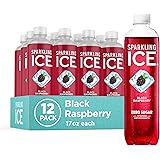
Sparkling Ice, Black Raspberry Sparkling Water, Zero Sugar Flavored Water, with Vitamins and Antioxidants, Low Calorie Beverage, 17 fl oz Bottles (Pack of 12)
$12.47 (as of October 13, 2026 03:09 GMT +00:00 - More infoProduct prices and availability are accurate as of the date/time indicated and are subject to change. Any price and availability information displayed on [relevant Amazon Site(s), as applicable] at the time of purchase will apply to the purchase of this product.)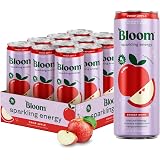
Bloom Nutrition Zero Sugar Energy Drink, Apple Crisp, 12oz 12pk | 180mg natural caffeine with prebiotics, green tea extract & lychee for energy, focus and feel-good refreshment.
$24.99 (as of October 13, 2026 03:09 GMT +00:00 - More infoProduct prices and availability are accurate as of the date/time indicated and are subject to change. Any price and availability information displayed on [relevant Amazon Site(s), as applicable] at the time of purchase will apply to the purchase of this product.)











Post Comment