
Why Resident Evil Crushes Every Other Video Game Movie—and What It Means for Hollywood’s Future

Ever wonder what it takes to flip the script on a notoriously cursed movie genre? Yep, I’m talkin’ about video game movies—historically about as cuddly as a zombie apocalypse itself. Zach Cregger’s new “Resident Evil” isn’t just another gamer flop; it’s a wild, adrenaline-pumped ride that finally nails the essence of survival horror without drowning in convoluted lore or tired callbacks. This flick doesn’t need flashy Easter eggs or longtime fan bait—it gets straight to the sweaty-palmed panic and grit that made the games legendary. After years of cringe-worthy adaptations, could this be the reboot that actually respects its source material and, dare I say, raises the bar for what video game films can be? Buckle up—it’s about time someone cracked the code. LEARN MORE
 4 min read
Zach Cregger’s Resident Evil, a late-summer powerhouse flexing technical bravura across its vacuum-sealed ninety-five minutes, isn’t just good “for a video game movie.” It’s a superb film and it’s based on a video game. Since 2002, Capcom’s zombie franchise has plagued theaters with subpar releases that were essentially director Paul W. S. Anderson bragging that he’s married to Milla Jovovich. After a drab 2021 reboot, the director of Barbarian and Weapons shows how it’s done with a refresh that wholly abandons its source text’s universe to stay true to what really matters: the euphoria of white-knuckle survival and the sopping-wet horrors only Resident Evil games infamously deliver.
In theaters September 18, Resident Evil by Zach Cregger is the eighth live-action film based on the action-horror games. But it is the first that’s truly worth paying any attention. A standalone entry with zero connective tissue to anything “Resident Evil” before it, it follows an ordinary medical courier (Austin Abrams, in a star-making turn) who takes a last-minute job delivering a precious organ (or so he thinks) to a hospital in Raccoon City. What those outside city limits don’t know is that the place has succumbed to flesh-eating monstrosities, leaving Abrams’s Bryan to walk into a living nightmare. Alone.
Cregger’s first stab at an IP blockbuster lacks the depth of his 2025 hit Weapons, a picture molded out of Cregger’s grief, and it doesn’t have any of the provocative themes that made Barbarian a social media phenomenon in 2022. By contrast, Resident Evil is a straight shot of adrenaline, but that simplicity is key to its brilliance. While the Resident Evil games—the first released in 1996—operate on an overcooked mythology, their progression mechanics are fundamentally straightforward: survive.

Austin Abrams stars in Zach Cregger’s Resident Evil, a remarkable standalone reboot based on Capcom’s zombie horror video games.
Any major encounter in the games, including the recently acclaimed Resident Evil Requiem, leaves you with barely enough bullets to kill whatever’s trying to kill you, and you’re left figuring out how to make it to the next save point. And there’s always a puzzle to solve, or a locked door keeping you from moving forward. Cregger’s focused take on Resident Evil is rooted in this exact pedal-to-the-metal propulsion. There are no detours for universe-expanding Easter eggs or name drops for Chris Redfield or Jill Valentine or Lady Dimitrescu (sorry, horndogs). All that matters is what’s in front of (or behind) Abrams’s inept schlub who barely knows how to switch off the safeties. The suspense is ever-present, and the scares are always just around the corner. In short, Cregger’s film doesn’t cosplay as a Resident Evil game, but it’s undoubtedly more faithful and smarter about its approach to adaptation.
Watching Resident Evil is something of a revelation, because you have to wonder what the hell took so long to pull this off. Once upon a time, movies based on video games had the same dubious reputation as “direct-to-video” and “porn parody.” There was a low bar for quality, and for every Mortal Kombat that barely grazed it, there was a Wing Commander, a Doom, a Postal, a Tekken, a Need for Speed. Video game IP was mistaken by Hollywood bigwigs for ready-to-bake action movies, and fans suffered the embarrassment of substandard attempts that never felt like the games they loved. I’m suspicious of anyone who unironically wraps their personality around “Gamer,” but I can’t fault an audience that has come to expect mediocrity as a best-case scenario.
Resident Evil fans especially spent a decade-plus putting up with Anderson’s nu metal nonsense, so when Cregger expressed that his take had next to nothing from the mythos at all, well, the Internet got noisy. But the irony here is that Cregger’s movie, with its wall-to-wall dread mixed with action movie homages (there are nods to Hard Boiled and Die Hard in a single span of twenty-five minutes) and slapstick hilarity, might be the most faithful cinematic interpretation of Resident Evil to date. Cregger knows a good Resident Evil movie isn’t about finding the right actor to wear Leon Kennedy’s shearling jackets, but the palm-sweat tension of being underarmed and outmatched by whatever grotesque nightmare has you in its sights.
Is Resident Evil actually the greatest video game movie of all time? It’s up for debate (Werewolves Within remains underrated), but it absolutely deserves to be in the conversation. The family-oriented Super Mario Bros. movies are downright unwatchable, but they similarly understand the spirit of the Nintendo games and, I’ll admit, nail the look and feel of them for the screen. Earlier this year, Exit 8 impressively adapted an indie horror game about a haunted subway, though it’s uneven to compare a one-hour indie game to a billion-dollar franchise. The competition is slim, but it’s growing now. At the very least, the bar is finally raised.
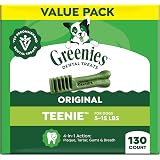
Greenies Teenie Original Natural Dental Dog Treats, Chicken, 130 Count | Veterinarian-recommended, supports oral health & freshens breath, clean to gumline, for dogs 5-15 lbs, chicken flavor
$36.97 (as of October 13, 2026 03:11 GMT +00:00 - More infoProduct prices and availability are accurate as of the date/time indicated and are subject to change. Any price and availability information displayed on [relevant Amazon Site(s), as applicable] at the time of purchase will apply to the purchase of this product.)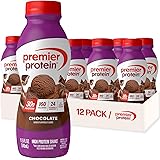
Premier Protein 30g High Protein Shake, Chocolate, 12 Pack | 160 Calories, 24 Vitamins & Minerals, No Added Sugar, Supports Muscle Health, Gluten-Free, 11.5 oz
$29.26 (as of October 13, 2026 03:09 GMT +00:00 - More infoProduct prices and availability are accurate as of the date/time indicated and are subject to change. Any price and availability information displayed on [relevant Amazon Site(s), as applicable] at the time of purchase will apply to the purchase of this product.)
Amazon Kindle Colorsoft Signature Edition 32GB (newest model), Thinner, new aluminum design, 7" color display, Auto-adjusting front light, Fig
$319.99 (as of October 13, 2026 03:32 GMT +00:00 - More infoProduct prices and availability are accurate as of the date/time indicated and are subject to change. Any price and availability information displayed on [relevant Amazon Site(s), as applicable] at the time of purchase will apply to the purchase of this product.)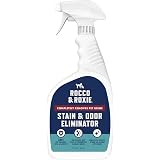
Rocco & Roxie Enzyme Stain & Odor Eliminator, 32 Fl Oz | Bio-enzymatic urine destroyer; CRI Certified Safe; made in USA; for carpets, bedding, litter boxes, crates & cars
$23.92 (as of October 13, 2026 03:11 GMT +00:00 - More infoProduct prices and availability are accurate as of the date/time indicated and are subject to change. Any price and availability information displayed on [relevant Amazon Site(s), as applicable] at the time of purchase will apply to the purchase of this product.)














Post Comment