
Why the Restyled Ioniq’s 6 Appeal Could Be the Game-Changer Investors Didn’t See Coming
Remember when Hyundai dropped the Ioniq 6 back in 2022, proudly calling it a “streamliner”? That name wasn’t just fluff — it was a nod to some seriously obsessive aerodynamics aimed at squeezing every bit of range from its electric heart. Sure, it outpaced the chunkier Ioniq 5 crossover on efficiency, but did it win the style wars? Not exactly. The design split opinions, and with the world still smitten by SUVs, the Ioniq 6 didn’t quite storm the sales charts. Fast forward four years, and Hyundai’s given this electric saloon a sleek makeover, dialing up the looks without ditching what made it efficient. The N Line model even borrows swagger from its performance-minded sibling, blending sportiness with surprisingly comfortable driving dynamics. So, could this revamped Ioniq 6 finally be the EV that balances form, function, and price without compromise? Let’s dig in. LEARN MORE
Back in 2022, Hyundai revealed its production-ready Ioniq 6, an electric saloon referred to by its maker as a “streamliner”, writes Shane O’Donoghue.
This alludes to the painstaking effort put into the aerodynamics of the car in a bid to create a shape with as little drag through the air as possible — in the pursuit of a long range between charges of the battery pack.
This approach undoubtedly worked, as the Ioniq 6 proved to be usefully more efficient than the equivalent (blockier) Hyundai Ioniq 5 crossover.
Alas, the aerodynamicists’ obsession seemed to take precedence over the stylists’ wishes to make a desirable-looking car, and while some appreciated the quirkiness of the design, it was not universally approved of.
That and the marketplace’s fascination with SUV-shaped cars are likely to be the reasons why the Ioniq 6 never sold in very high numbers in comparison to the much more popular Ioniq 5.
Four years later, Hyundai has launched a significantly revamped model, sticking with the same layout and philosophy but with a notable focus on enhancing the car’s aesthetics.
Not only has there been a comprehensive — and largely successful — redesign of the Ioniq 6’s front and rear ends, but the entry-level variant, called the N Line, takes its cues from a high-performance derivative called the Ioniq 6 N and looks every inch the sports saloon.
It feels it on the road too, but not in a way that asks you to forgive it for too-firm suspension. Indeed, the Ioniq 6 is comfortable, quiet and composed unless you want more, but its driving controls are well judged so that you’ll enjoy driving the car, even if you wouldn’t consider yourself a driving enthusiast as such.
The steering is well weighted and direct without causing nervousness at higher speeds and the brake pedal is easy to modulate smoothly as well, which is not something that can be said about all EVs.
The Ioniq 6 uses a single electric motor. It has a relatively modest power output at up to 228hp, but because this turns the rear wheels, it endows the car with lovely balance and uncorrupted steering.
Under the floor is a new 84kWh battery pack that allows for a range of 625km on the official WLTP cycle. That may not be achievable in all conditions, but it’s more than sufficient for most drivers.
And while home charging is the default for EV owners, when they do have to use public chargers they’ll be rewarded with an incredibly fast DC-charging rate in the Ioniq 6 — up to 350kW thanks to a high-voltage electrical system.

Plugging in gives you an opportunity to sit back and explore the interior, and despite the low-slung roof, there’s ample space in the cabin of the Ioniq 6 to do so.
This is especially the case in the rear seats, which come with expansive legroom and a flat floor all the way across. Up front there’s plenty of room, of course, though the design is more cocoon-like, adding to the car’s sporty vibe.
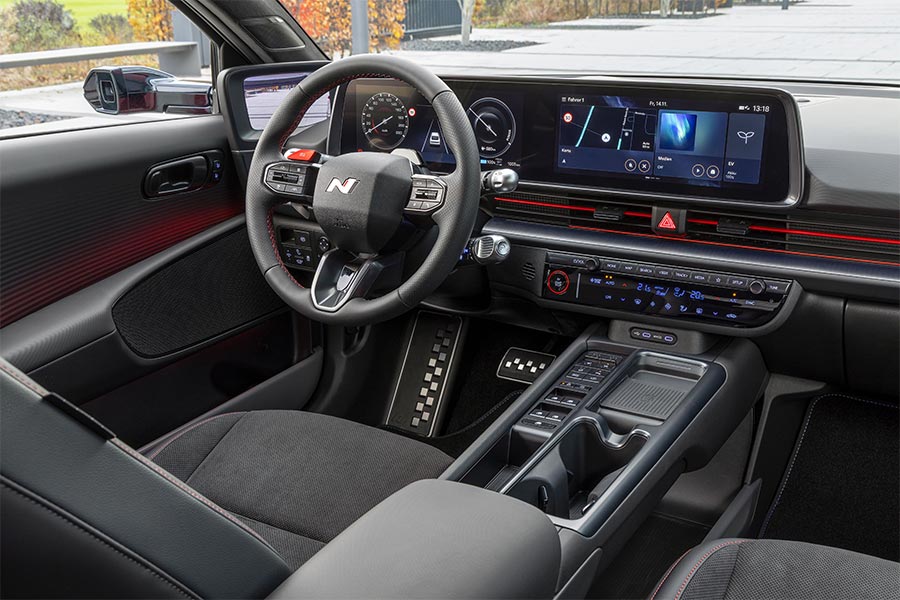
A single vertical construct sitting atop the dashboard contains the digital instrumentation and infotainment touchscreen, while the high-set centre console separates the driver from the front-seat passenger.
In the N Line model featured here, there are further sporty accoutrements, including a special steering wheel with lovely red stitching and a prominent, matching button for drive-mode selection.
A red pinstripe runs horizontally through the air vents and is picked up in the special part-leather seats as well, while variable ambient lighting adds a classy touch to proceedings at night.
Aside from these stylish flourishes, the cabin of the Ioniq 6 has a sensible mix of touch-sensitive and physical switchgear, a few clever storage solutions and a sense of high quality throughout.
We particularly like the rubberised surface of the wireless charging pad that holds your phone in place, and the space behind it into which you can slide your phone when you don’t want to charge it.
Astonishingly, the Ioniq 6 N Line is the most affordable variant offered. If you’re looking at the pictures expecting a not-so-affordable price tag, you may be pleasantly surprised to discover that this car costs just €41,435.

If you’d rather a more toned-down appearance, more equipment again and a focus on luxury instead of sportiness inside, Hyundai will gladly sell you the top-spec Platinum variant instead, for a modest €3,000 extra.
That pricing really is remarkable, putting it into contention with the ubiquitous Tesla Model 3. I know which one I’d rather have, and buyers no longer need to make excuses for the divisive looks if they too favour the car from Hyundai.
Model: Hyundai Ioniq 6 N Line
Price: €41,435
Electric motor: 168kW, rear-mounted
Battery capacity: 84kWh
Range (WLTP): 625km
Power: 228hp
Transmission: Single-speed automatic
Acceleration (0-100kph): 7.4 seconds
Top speed: 185kph
Emissions: 0g/km,€120 motor tax
Dimensions (mm): 4930 (L); 1880 (W, mirrors folded); 1495 (H)
Cargo space: 401 litres (plus 45 litres under bonnet)

Apple Watch Series 12 GPS 42mm Smartwatch | Light Gold Aluminum Case, Sand Sport Band - S/M. Health + Fitness + Sleep Tracking, Heart Rate, Safety
$349.99 (as of October 11, 2026 03:30 GMT +00:00 - More infoProduct prices and availability are accurate as of the date/time indicated and are subject to change. Any price and availability information displayed on [relevant Amazon Site(s), as applicable] at the time of purchase will apply to the purchase of this product.)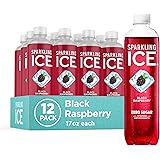
Sparkling Ice, Black Raspberry Sparkling Water, Zero Sugar Flavored Water, with Vitamins and Antioxidants, Low Calorie Beverage, 17 fl oz Bottles (Pack of 12)
$12.47 (as of October 11, 2026 03:09 GMT +00:00 - More infoProduct prices and availability are accurate as of the date/time indicated and are subject to change. Any price and availability information displayed on [relevant Amazon Site(s), as applicable] at the time of purchase will apply to the purchase of this product.)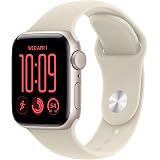
Apple Watch SE 3 GPS 40mm Smartwatch | Starlight Aluminum Case, Sand Sport Band - S/M. Fitness + Sleep + Cycle Tracking, Heart Rate, Vitals, Safety
$199.99 (as of October 11, 2026 03:20 GMT +00:00 - More infoProduct prices and availability are accurate as of the date/time indicated and are subject to change. Any price and availability information displayed on [relevant Amazon Site(s), as applicable] at the time of purchase will apply to the purchase of this product.)
Amazon Kindle 16GB (newest model), Now thinner, lighter, and faster, 6" display, Ube
$149.99 (as of October 11, 2026 03:30 GMT +00:00 - More infoProduct prices and availability are accurate as of the date/time indicated and are subject to change. Any price and availability information displayed on [relevant Amazon Site(s), as applicable] at the time of purchase will apply to the purchase of this product.)













Post Comment