
South Korea’s FIU Drops the Hammer: Is Bithumb’s Six-Month Ban the Beginning of Crypto’s Next Big Shakeup?

Cryptocurrency – it’s the wild west of finance, right? Everyone’s buzzing about its explosive growth, but behind the scenes, the scene’s been getting messier with more scams, hacks, and shady dealings popping up than you can shake a stick at. So, imagine this: South Korea’s Financial Intelligence Unit (FIU) just dropped a bombshell on Bithumb, their second-largest crypto exchange, warning it may face a six-month partial shutdown and putting its CEO under the microscope. Why? Because regulators are accusing Bithumb of slipping up big time on Anti-Money Laundering rules, letting unregistered overseas platforms slip through the cracks and failing to properly verify their customers. This isn’t just a slap on the wrist — it’s a sign that the crypto game in South Korea is tightening up fast, and everyone’s watching to see how Bithumb handles the heat. Curious how this could ripple across the market and what it means for investors holding their breath? Let’s dive in. LEARN MORE
While there is a lot of discussion around the growing adoption of cryptocurrencies, the industry has also seen a sharp rise in scams, hacks, and other illicit activities.
On 09 March, South Korea’s Financial Intelligence Unit (FIU) issued a preliminary notice to Bithumb, the country’s second-largest crypto exchange.
The notice warned of a possible six-month partial business suspension along with potential sanctions against its CEO.
What is the main concern?
While the six-month penalty has attracted attention, the bigger concern lies in the reason behind it. Regulators say the exchange failed to properly meet Anti-Money Laundering (AML) obligations under the Special Financial Information Act.
The FIU’s concerns mainly focus on Bithumb’s dealings with unregistered overseas platforms and its failure to properly follow the Know Your Customer (KYC) rules.
Regulators believe that by allowing transactions through unverified offshore entities, the exchange may have created a loophole that bypasses the capital control measures set under the Act.
A sanctions review committee is expected to meet later this month to decide whether the six-month suspension will become final. However, its impact is already spreading across the industry.
This update follows Bithumb’s recent “ghost coin” error, where a clerical mistake briefly credited users with about $40 billion worth of Bitcoin.
This has pushed authorities to also review other major exchanges such as Coinone and GOPAX – A sign that regulators are finally preparing for a broader crackdown.
Bithumb stands up for itself
In its defence, a Bithumb official said,
“This measure is not a final sanction, but rather a preliminary notice, and there may be some adjustments during the sanctions review.”
The official further added,
“The restriction only applies to new members’ virtual asset transfers (withdrawals).”
Not the first time…
This is not the first time South Korea’s FIU has taken strict action against major crypto exchanges.
In November 2025, Dunamu, the operator of Upbit, was fined 35.2 billion won and given a three-month partial suspension after regulators found more than 5 million cases of KYC violations.
Earlier this year, Korbit also faced a 2.73 billion won fine along with an official warning from authorities.
The proposed action against Bithumb shows that regulators are becoming stricter. The six-month suspension being considered is twice as long as the penalty given to Upbit.
However, such “partial” suspensions usually do not shut down operations. The restrictions mainly apply to new users, preventing them from transferring crypto off the platform, while existing users can still trade normally.
Attention-worthy on-chain activity
Here, it must be noted that recent on-chain data revealed an interesting change in activity.

Source: CryptoQuant
In the past, Bithumb often saw large Bitcoin transfers between exchanges, especially during periods of market volatility in late 2025 and when Bitcoin dipped close to $70,000 in early 2026.
These movements usually indicate large repositioning by institutional investors.
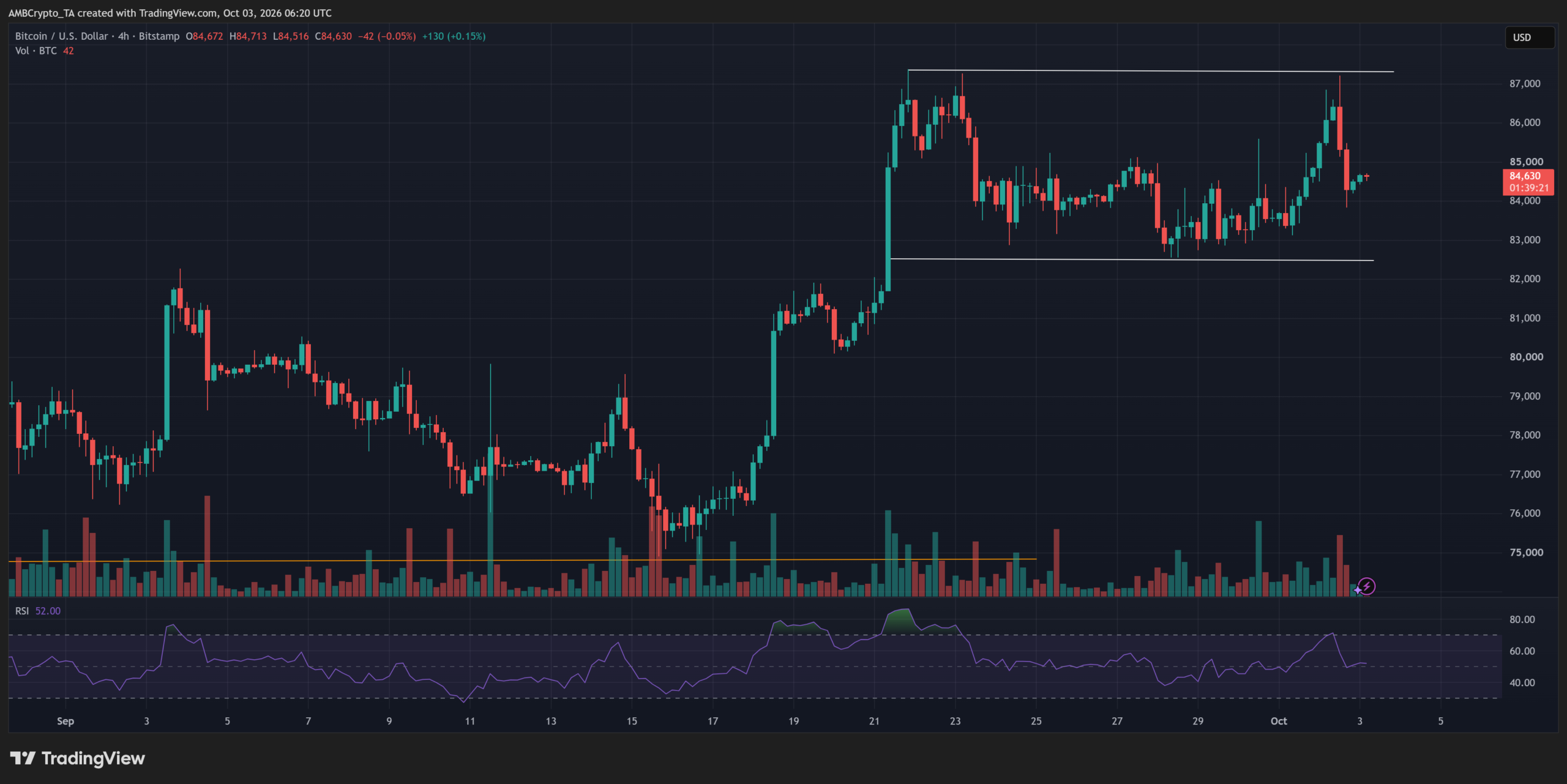
However, on the back of FIU’s possible sanctions approach, these flows have dropped sharply to just 15.9 BTC – A sign that traders are currently holding back.
Therefore, as of now, market participants are pausing their activity as they wait for the Sanctions Review Committee meeting on 16 March.
Final Summary
- Although the proposed suspension may not halt trading entirely, it could still slow platform growth and affect investor confidence.
- Drop in Bitcoin exchange flows suggested that traders and institutions are becoming cautious as regulatory uncertainty grows.

INSIGNIA 50" Class F50 Series LED 4K UHD Smart Fire TV, Voice Remote with Alexa, Stream Live TV Without Cable
$159.99 (as of October 4, 2026 03:18 GMT +00:00 - More infoProduct prices and availability are accurate as of the date/time indicated and are subject to change. Any price and availability information displayed on [relevant Amazon Site(s), as applicable] at the time of purchase will apply to the purchase of this product.)
Amazon Fire HD 10 tablet, built for relaxation, 10.1" vibrant Full HD screen, octa-core processor, 4 GB RAM, 32 GB, Black
$72.99 (as of October 4, 2026 03:18 GMT +00:00 - More infoProduct prices and availability are accurate as of the date/time indicated and are subject to change. Any price and availability information displayed on [relevant Amazon Site(s), as applicable] at the time of purchase will apply to the purchase of this product.)
Amazon Fire TV Stick HD (newest model), free & live TV, Alexa Voice Remote, powered by the TV, effortless setup, find shows faster with Alexa+
$15.99 (as of October 4, 2026 03:18 GMT +00:00 - More infoProduct prices and availability are accurate as of the date/time indicated and are subject to change. Any price and availability information displayed on [relevant Amazon Site(s), as applicable] at the time of purchase will apply to the purchase of this product.)
Wall Charger, Surge Protector, QINLIANF 5 Outlet Extender with 4 USB Ports | 1680 Joules, 3-Sided Power Strip, Multi Plug Wall Outlet Adapter Spaced for Home Travel Office, White
$9.99 (as of October 4, 2026 03:18 GMT +00:00 - More infoProduct prices and availability are accurate as of the date/time indicated and are subject to change. Any price and availability information displayed on [relevant Amazon Site(s), as applicable] at the time of purchase will apply to the purchase of this product.)












Post Comment