
Why the World’s Power Shift, Failing Education, and Gold’s Crisis Role Could Rewrite Your Financial Future—Now
So, here’s the kicker: the world as we’ve known it—the one where a single power called the U.S. called most of the shots—is reshaping itself, fast. We’re not just seeing cracks in the edifice; we’re witnessing a tectonic shift from a unipolar to a multipolar world, where the game is changing and new players like China and India are no longer just waiting in the wings. It’s a complex dance of declining influence, shifting economic centers, and volatile markets that even precious metals, once a safe haven, can’t predict reliably anymore. Gold isn’t the untouchable asset it used to be—during crises, liquidity often trumps value. And if you thought oil prices were just a rollercoaster, brace yourself: if the Strait of Hormuz stays closed, prices above $200 a barrel aren’t just possible—they’re probable. This isn’t just about economics; it’s about understanding power dynamics and the real risks that come with an uneven, K-shaped recovery where wealth doesn’t trickle down, it pours up. If you’re serious about navigating today’s economic jungle, grasping these shifts isn’t optional—it’s survival. Ready to think bigger and act smarter? LEARN MORE
Key takeaways
- The world is shifting from a unipolar to a multipolar power structure.
- The US is experiencing a decline in global influence, moving towards a multipolar world.
- Different metrics of empire decline at varying rates, with education quality as an early indicator.
- Precious metals prices have declined despite geopolitical tensions due to prior price action.
- Precious metals no longer have the same pricing asymmetry, indicating potential volatility.
- In crises, entities may sell gold for liquidity rather than its value.
- If oil prices rise indefinitely, it could cripple the global economy.
- The economy’s resilience to high oil prices depends on inflation-adjusted thresholds.
- Oil prices could exceed $200 if certain geopolitical conditions persist.
- The current economy is characterized by a K-shaped recovery, benefiting wealthier individuals.
- Understanding the geopolitical landscape is crucial for global economic implications.
- Historical analysis supports the shift in global power dynamics towards multipolarity.
- Market sentiment and historical price movements affect precious metals prices.
- Gold serves as a liquid asset during crises, beyond its traditional value.
- Monitoring geopolitical developments is essential for understanding potential economic impacts.
Guest intro
Lyn Alden is the founder and CEO of Lyn Alden Investment Strategy. She previously served as a Lead Electronics Engineer at the Federal Aviation Administration’s William J. Hughes Technical Center. Her research focuses on macroeconomic trends, monetary policy, inflation, and investment markets.
The transition to a multipolar world
-
The world is transitioning from a unipolar power structure to a multipolar one.
— Lyn Alden
- The US is experiencing a gradual decline in its global influence.
-
We’re kind of falling back toward a world that historically is more usual.
— Lyn Alden
- The rise of other economies like China and India contributes to this shift.
- Historical analysis supports the shift in global power dynamics.
- Understanding the geopolitical landscape is crucial for global economic implications.
-
One of the frameworks I’ve had for a while is that the world is exiting a peak period of like a unipolar power.
— Lyn Alden
- The shift towards multipolarity reflects a significant change in global power dynamics.
Indicators of empire decline
- Different metrics of empire decline at varying rates.
-
Education quality tends to be a leading indicator on the way up and it also tends to fall early.
— Lyn Alden
- The global reserve currency is one of the last to decline.
- Understanding these metrics is crucial for analyzing the rise and fall of empires.
-
Something like global reserve currency tends to be a later rise but also one of the last things to decline.
— Lyn Alden
- Education quality serves as an early indicator of empire decline.
- Historical context is important for understanding these dynamics.
- The decline of global powers is influenced by various factors.
Precious metals market dynamics
- The decline in precious metals prices despite geopolitical tensions is notable.
-
There are multiple factors, one is the price action that occurred in precious metals before all this happened.
— Lyn Alden
- Market sentiment and historical price movements affect precious metals prices.
- Precious metals no longer have the same asymmetry in pricing.
-
I’m not turning into a bear on precious metals per se… but they no longer have that asymmetry.
— Lyn Alden
- Potential for volatility in the precious metals market exists.
- Understanding previous price levels is crucial for analyzing market behavior.
- Precious metals are in a more balanced range, indicating caution for investors.
Gold’s role in crisis liquidity
- In crises, entities may sell gold for liquidity rather than its value.
-
Gold is a source of liquidity for many market participants.
— Lyn Alden
- Gold serves as a liquid asset during crises, beyond its traditional value.
- Market liquidity dynamics during crises impact gold’s role.
- Understanding the practical use of gold is important for financial markets.
- Gold’s liquidity role highlights its importance in times of crisis.
- Sovereign participants may also rely on gold for liquidity.
- The behavior of financial markets during crises is critical for investors.
The impact of oil prices on the global economy
- If oil prices rise indefinitely, it could cripple the global economy.
-
There’s really no limit to how high oil prices could go if the strait of Hormuz stayed closed indefinitely.
— Lyn Alden
- Geopolitical implications of oil supply disruptions are significant.
- Monitoring oil prices is crucial for understanding economic stability.
- The potential economic consequences of geopolitical events are emphasized.
- Oil prices are a critical factor in global economic stability.
- Understanding energy production infrastructure vulnerabilities is important.
- The impact of oil prices on the economy depends on various factors.
Economic resilience and oil prices
- The economy’s resilience to high oil prices depends on inflation-adjusted thresholds.
-
The economy is resilient enough to handle those types of similar nominal numbers of the past.
— Lyn Alden
- Historical oil price impacts must be adjusted for current economic conditions.
- Potential future scenarios are influenced by economic resilience.
- Understanding the relationship between oil prices, inflation, and economic resilience is crucial.
- Economic resilience plays a role in handling high oil prices.
- Inflation-adjusted thresholds are important for analyzing economic impacts.
- The current economic context influences resilience to oil price changes.
The potential for oil prices to exceed $200
- Oil prices could exceed $200 if certain geopolitical conditions persist.
-
If the strait stays closed long enough… those 200 plus numbers are quite possible.
— Lyn Alden
- Geopolitical tensions and energy production infrastructure vulnerabilities are key factors.
- Monitoring geopolitical developments is essential for understanding potential economic impacts.
- The potential for oil prices to exceed $200 highlights economic risks.
- Understanding geopolitical conditions is important for analyzing oil price scenarios.
- The economic impact of high oil prices is significant.
- The potential for oil prices to exceed $200 reflects geopolitical uncertainties.
The K-shaped recovery in the current economy
- The current economy is characterized by a K-shaped recovery.
-
We’re already in what other analysts are calling a K-shaped economy.
— Lyn Alden
- Wealthier individuals benefit while others are left behind.
- Understanding the implications of a K-shaped recovery is important for economic analysis.
- The uneven recovery from economic challenges affects different socioeconomic groups.
- The K-shaped recovery highlights disparities in economic outcomes.
- Economic policy must consider the effects of a K-shaped recovery.
- The K-shaped recovery reflects broader economic trends and challenges.

STRELLALAB Dog Allergy & Itching Relief - Skin&Coat Support Chews w/Omega 3 | Anti Itch, Immune Supplements - Treats for Dogs Health w/Fish Oil for Irritated & Dry Skin - Proven by Science, 60 Ct
$12.99 (as of October 13, 2026 03:21 GMT +00:00 - More infoProduct prices and availability are accurate as of the date/time indicated and are subject to change. Any price and availability information displayed on [relevant Amazon Site(s), as applicable] at the time of purchase will apply to the purchase of this product.)
Greenies Teenie Original Natural Dental Dog Treats, Chicken, 130 Count | Veterinarian-recommended, supports oral health & freshens breath, clean to gumline, for dogs 5-15 lbs, chicken flavor
$36.97 (as of October 13, 2026 03:11 GMT +00:00 - More infoProduct prices and availability are accurate as of the date/time indicated and are subject to change. Any price and availability information displayed on [relevant Amazon Site(s), as applicable] at the time of purchase will apply to the purchase of this product.)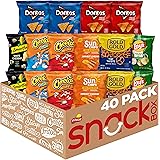
Frito-Lay Fun Times Mix Variety Pack, 40 Count
$21.14 (as of October 13, 2026 03:09 GMT +00:00 - More infoProduct prices and availability are accurate as of the date/time indicated and are subject to change. Any price and availability information displayed on [relevant Amazon Site(s), as applicable] at the time of purchase will apply to the purchase of this product.)
Soundcore by Anker Q20i Hybrid Active Noise Cancelling Headphones, Black | Over-Ear, Bluetooth, 40H ANC Playtime, Hi-Res Audio, Big Bass, Transparency Mode, Customize via App, Travel, Home, Office
$44.99 (as of October 13, 2026 03:21 GMT +00:00 - More infoProduct prices and availability are accurate as of the date/time indicated and are subject to change. Any price and availability information displayed on [relevant Amazon Site(s), as applicable] at the time of purchase will apply to the purchase of this product.)










Post Comment