
Why the Mannequins at the Met Might Be the Most Game-Changing Element You’re Totally Overlooking—And What That Means for Fashion & Fitness Fans Alike!
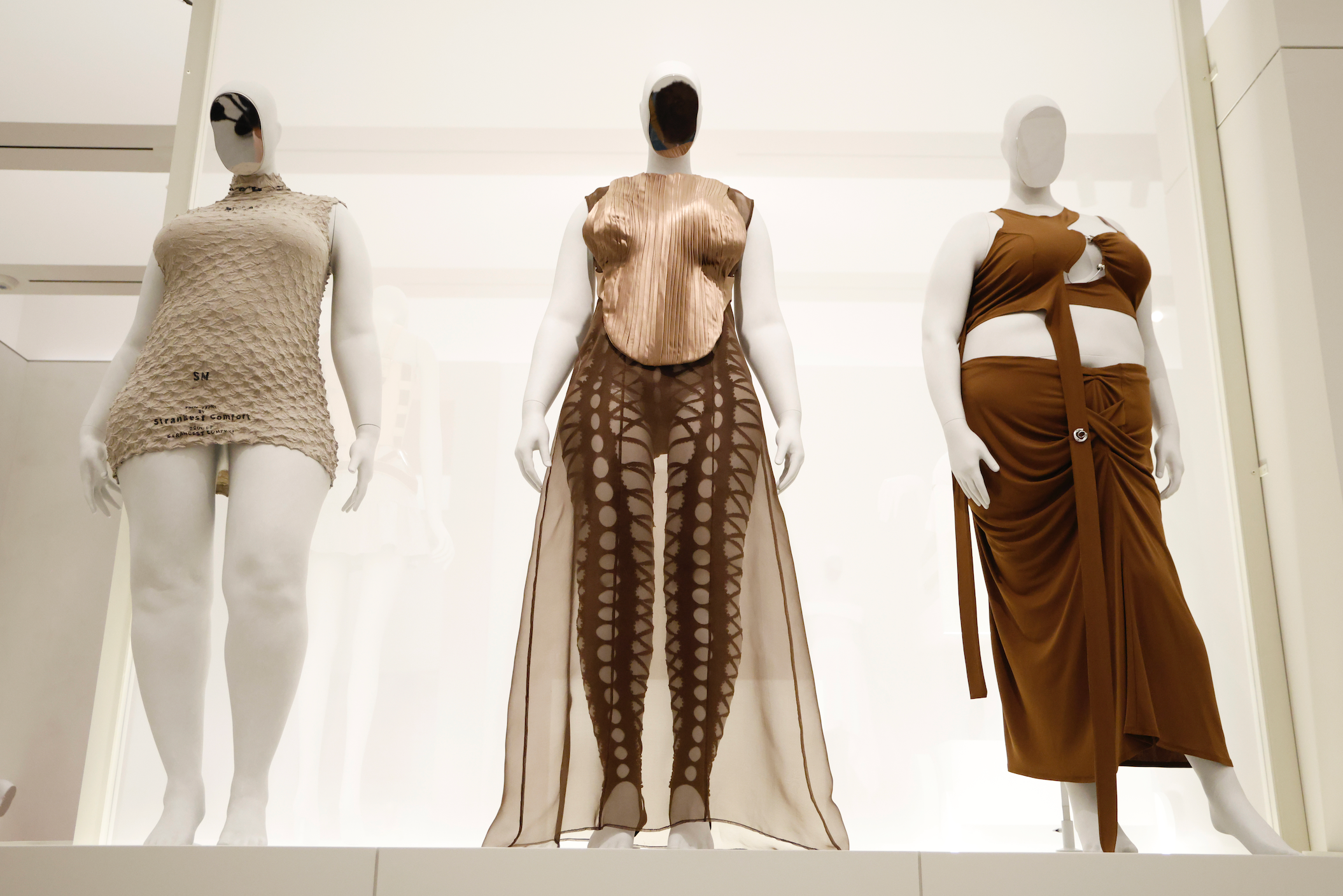
You know, the Met Gala—glitzy, glamorous, and often crazy—has turned into this massive pop culture beast everyone loves to gossip about. But beneath all the flash and frenzy, there’s real artistry going on, a deeper story stitched into every fabric and seam. This year’s gig? It’s all about the new Costume Institute exhibit, Costume Art, which throws down the gauntlet on how we see fashion—not just as clothes, but as living, breathing sculpture that hugs our very skin. Think mannequins that aren’t your typical size 2 cookie cutters, but true-to-life bodies sculpted from 3-D scans of all sorts of people. It’s a bold play at a time when diversity in fashion feels like it’s waning, fighting back against the usual shallow standards. The Brooklyn-based artist Frank Benson, wielding some serious 3D tech chops, gives these figures an organic realism that connects body, movement, and art in a way that makes you stop and ponder—what does fashion really say about us? If you’ve ever wondered why mannequins look nothing like the rest of us, prepare for a real eye-opener. LEARN MORE
 7 min read
Last night’s Met Gala was meant to celebrate the opening of the museum’s latest Costume Institute exhibit, Costume Art. Yes, the gala itself has become a polarizing pop-cultural phenomenon and a brand-marketing juggernaut, but it’s important to remember that there’s actual art (and fashion, for that matter) behind the viral event. And this year, the exhibit begs for a closer examination of our actual human, skin-deep connection to clothes, be they E! News-worthy or not.
From May 10th of this year through January 10, 2027, Costume Art will display a vast and varied collection of fashion alongside artwork belonging to the Met Museum in a show conceived by the Costume Institute’s curator Andrew Bolton. The exhibition explores ideas of the dressed body, highlighting the connections between fashion and human anatomy and the different ways that the body has been interpreted by artists over time. The clothes will be presented on specially designed mannequins, many of which have been molded from 3-D scans of real people representing a wide swath of sizes, shapes, and abilities, like activist Sinéad Burke, model Aariana Rose Philip, musician Yseult, and many others. At a moment when fashion’s commitment to body diversity has all but died amidst the Ozempic boom, a museum show about fashion displayed on realistic mannequins (remember that the average mannequin is a size 2!) is a powerful statement.
In collaboration with Bolton, designer Michaela Stark, and artist Samar Hejazi, the Brooklyn-based contemporary artist Frank Benson crafted the true-to-form mannequins that anchor Costume Art in the everyday. Benson’s sculptural work is created using 3D modeling technology. His hyperrealistic pieces, which include a cyclist made from plastic and a pirate figure in a squatting position, have been displayed at The Met Breuer and Whitney Museums. All of his work focuses on capturing organic movement and form, elements that align with this year’s exhibition theme.

Below, Benson spoke to Bazaar about his collaboration with The Met for Costume Art, why he was eager to explore this kind of fashion work in his own practice, and the importance of mannequins made from real bodies.
How did this project come to be?
The project came to me through a couple of different avenues. I have been working with New York Capture, a 3D scanning studio in Brooklyn, on various projects since 2022. When The Met approached them about this project, the owner, Ivin Ballen, recommended me based on my experience working on other high-profile projects in the art and fashion worlds. I was also recommended by artist David Kennedy-Cutler, who has strong ties to the Costume Institute at The Metropolitan Museum of Art.
I have a longstanding interest in the intersection of fashion, art, and technology—and in depictions of the human body—so the opportunity to work with one of my favorite institutions in the world on a project that combines all of these interests was genuinely exciting.
The most challenging aspect was adjusting the mannequins’ proportions so the clothing fit properly. Some figures required multiple rounds of revisions to get the dimensions right, but having the ability to digitally sculpt and then 3D print test forms at my studio was invaluable. The team at the Costume Institute was enormously helpful throughout the process.

Can you describe the process a bit?
Andrew Bolton, Stephanie Kramer (a senior research associate at the Costume Institute), and Joyce Fung (an installation manager) brought their first model to New York Capture, where we scanned her using a photogrammetry rig with 175 cameras. The scans were then sent to me, and I began digitally sculpting them in ZBrush. This involved removing scan artifacts, replacing the head with a modified Schlappi head, smoothing surfaces, accentuating certain folds, and defining the hands and feet. I also carved out dressing gaps between the thighs and under the arms—important practical details for display.
In most cases, the models were wearing form-fitting undergarments and heeled shoes, which had to be digitally removed or seamlessly blended into the surface of the body. Toward the end of the sculpting process, I verified the circumference measurements of the 3D models before sending the approved files to the mannequin fabricator. We repeated this process for 14 mannequins on view, and the entire project took approximately eight months.
What I found most rewarding was how the process demanded both technical precision and artistic sensibility simultaneously—each figure presented its own unique set of problems to solve.
In your own words, how do the mannequins and the crafting behind them speak to the overall intention of the exhibition? What is important for people to know about this particular work you’ve done with The Met?
These mannequins are essential to the exhibition for two reasons. First, they represent body types not typically depicted by standard mannequins, allowing clothing made for specific models to be displayed as originally intended. Second, some mannequins were designed to display garments that radically alter the body’s silhouette. Michaela Stark’s mannequins, for instance—created to present her corsetry—capture creases and bulges that would have been nearly impossible to achieve without 3D scanning and digital sculpting. The mannequins help present the garments in the best possible way, supporting Costume Art’scentral argument that fashion is indeed art.
How does this project and this exhibition relate to your overall artistic practice?
I felt a deep connection to this project from the very beginning, for both professional and personal reasons. My engagement with the human form in sculpture goes back 20 years, to my work Human Statue, which was shown at the Met Breuer in Like Life: Sculpture, Color, and the Body (2018). My second work in that series, Human Statue (Jessie), depicts a woman in a contemporary gown with a distinctly mannequin-like pose—and it was the first piece in which I used the same combination of 3D scanning, digital sculpting, and 3D printing that I employed to create these mannequins.
I also have an investment in the theme of inclusivity. I sculpted mannequin heads for the brand Telfar, which appeared on several different body types in their presentation at the 9th Berlin Biennale. My own choice of models—as in Juliana, shown at the 2015 New Museum Triennial and recently in S-Curve at The FLAG Art Foundation—reflects that same commitment.
Beyond the technical and formal connections, I have a longstanding love of fashion and the dialogue with the fashion world that living in New York makes possible. My mother, who has a strong sense of style, studied fashion illustration and worked as an illustrator in Virginia, so fashion was always part of my upbringing.
I also enjoyed the film Mannequin as a child—it was in heavy rotation on TV during my formative years—and mannequins have a rich, time-honored presence in art history. Charles Ray, one of my teachers at UCLA and the subject of a recent survey at The Met, has used mannequins in his work to extraordinary effect. Altogether, it made this project feel like a genuine full-circle moment.

Has fashion ever been a focus for you in terms of your own artwork?
Fashion and clothing have definitely appeared in my work. In Human Statue (Jessie)—shown in Busted on the High Line in 2014 and Post Human at Jeffrey Deitch Los Angeles in 2025—the figure wears a loose-fitting, tunic-like dress and vintage Versace sunglasses, all recreated in bronze. My sculpture Castaway, recently acquired by the Whitney Museum of American Art, also explores an eccentric form of fashion assembled from the detritus of modern life. Some elements the character wears—worn leather ankle boots, football pants, a mesh shirt—came from the model’s own wardrobe, while others, like the horseshoe crab hat and detergent bottle canteen, were objects I added.
One particularly challenging aspect of this project was creating the mannequin for drag performer Goddess Bunny, who passed away in 2021. Because we were unable to scan her, I had to digitally sculpt the mannequin entirely from photographs and archival reference material—a very different process from the others, and one that felt like an important responsibility. I also 3D printed, assembled, and painted the Goddess Bunny mannequin entirely in-house, which was an exciting challenge.
Why do you believe that this exhibition is important right now in terms of the larger worlds of fashion and art, and where we are today from a cultural standpoint?
The exhibition matters on several levels. At a moment when the future of the contemporary art world feels increasingly uncertain, the show firmly establishes fashion as equal to other art forms. The rise of social media has transformed fashion into one of the primary ways people express identity—where someone might once have painted a picture or written a poem, they now communicate through clothing choices in a selfie. The diverse range of body types depicted in Costume Art also allows a wider range of viewers to see themselves reflected in the exhibition.
Do you think having more realistic mannequins is something that fashion and retailers should pay more attention to and adopt outside of this exhibition?
It’s a nuanced question. These mannequins do represent body types rarely seen in traditional retail display, but they are also highly stylized, with standardized heads—and I think that was a wise curatorial choice. Hyperrealistic mannequins can produce an uncanny effect that distracts from the clothing itself. In my own art, that uncanny quality can be a powerful tool, but it isn’t always appropriate for retail display.
What makes the mannequins in this exhibition so successful is the balance they strike: realistic, varied bodies in naturalistic poses—a direct result of the 3D scanning process—without tipping into unsettling territory. I would absolutely encourage other brands and retailers to follow their lead.

XTEINK X4 Pro 4.3" ebook Reader with Front Light & Touchscreen, Space Black | 4.3" E-Book reader with adjustable front light, touch/gesture control, physical buttons, 1100mAh battery & magnetic charging
$99.00 (as of October 15, 2026 03:32 GMT +00:00 - More infoProduct prices and availability are accurate as of the date/time indicated and are subject to change. Any price and availability information displayed on [relevant Amazon Site(s), as applicable] at the time of purchase will apply to the purchase of this product.)
SINROBO Bitter Apple Spray for Dogs, No Chew Spray for Dogs to Stop Chewing, Effective Indoor/Outdoor Deterrent Training Corrector for Anti-Scratch, Anti Marking, Furniture Protection (1 Pcs)
$18.99 (as of October 15, 2026 03:21 GMT +00:00 - More infoProduct prices and availability are accurate as of the date/time indicated and are subject to change. Any price and availability information displayed on [relevant Amazon Site(s), as applicable] at the time of purchase will apply to the purchase of this product.)
Active Noise Cancelling Ear Buds Wireless Bluetooth Headphones 80H Playtime Display Charging Case 50dB ANC Over Ear Hooks Earbuds with Hi-Res Sound & Clear Calls for Sports Running Gym Workout Black
$89.96 (as of October 15, 2026 03:32 GMT +00:00 - More infoProduct prices and availability are accurate as of the date/time indicated and are subject to change. Any price and availability information displayed on [relevant Amazon Site(s), as applicable] at the time of purchase will apply to the purchase of this product.)
JLab Go Air Pop+ Earbuds, Dual Connect, EQ3 Sound, Black
$19.99 (as of October 15, 2026 03:21 GMT +00:00 - More infoProduct prices and availability are accurate as of the date/time indicated and are subject to change. Any price and availability information displayed on [relevant Amazon Site(s), as applicable] at the time of purchase will apply to the purchase of this product.)












Post Comment