
Bitcoin’s $75K Comeback: Why This Skyrocketing Surge Might Cost You More Than You Think!
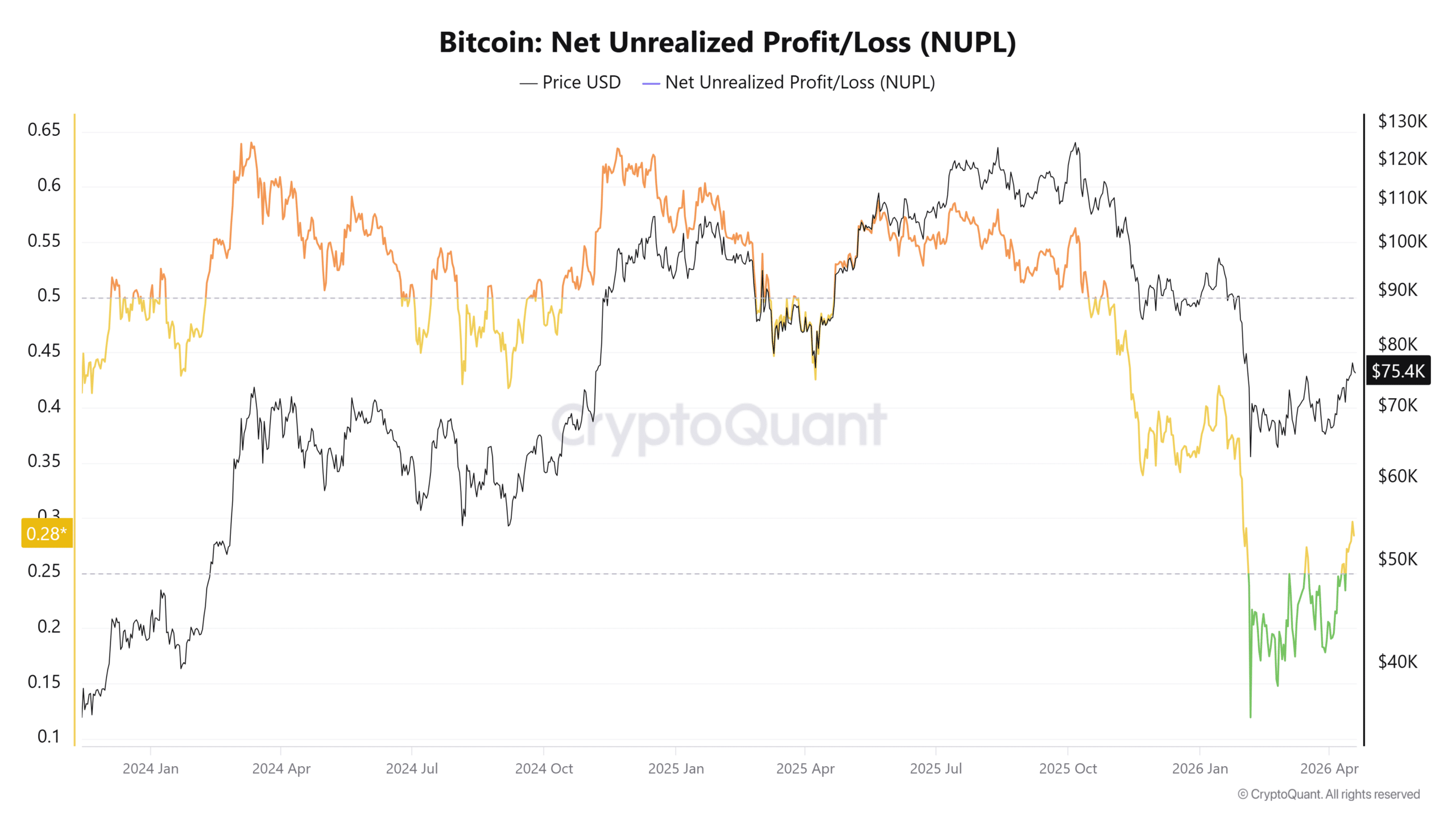
Bitcoin charging back toward that juicy $75,000–$77,000 zone? It’s like watching a thriller where the hero shakes off an earlier stumble and suddenly the crowd roars. But here’s the kicker — as prices bounce back, it’s not just numbers on a screen; it’s real holders flipping the script. Coins once stuck in the red are suddenly waving green flags with Net Unrealized Profit/Loss (NUPL) hitting highs not seen since January. Sounds like a win, right? Yet, with profits in hand and brains ticking, many are now pondering: when’s the right time to cash in before the momentum meets its match? This shift in holder behavior is more than a market move; it’s a chess game between bulls, whales, and smart money. I’ve seen markets like this before — questions about whether demand can keep pace with rising supply often make or break these rallies. So, are we on the cusp of a fresh bull run, or just witnessing a cleverly masked pause? Dive in to unpack the layers beneath this recovery and discover what’s really moving the needle. LEARN MORE
Bitcoin’s recent rebound toward the $75,000–$77,000 range begins to reverse the earlier drawdown, and that shift directly feeds into holder positioning.
As the price recovers, coins purchased at lower prices move back into profit, pushing Net Unrealized Profit/Loss (NUPL) up to around 0.29, its highest level since late January.

This rise does not happen in isolation; it reflects how recovering prices restore unrealized gains. This, in turn, improves sentiment and draws buyers back into the market.
However, this same process changes incentives. As more holders sit in profit, the urge to realize gains increases, which introduces fresh supply into rallies.
That is why momentum often meets resistance in this phase, as demand must absorb both new inflows and profit-taking. If buying remains strong, the trend can extend; if not, the market can shift into distribution and slow down.
Whale distribution emerges as profitability returns
As price recovers and NUPL rises, more holders move into profit, which naturally changes behavior across large cohorts. This shift leads whales to begin distributing their strength, reflected in the Exchange Whale Ratio sitting at 0.7 from 0.4.

As recent whale deposits increase sell-side supply at elevated prices, upward momentum slows despite Bitcoin’s strong positioning.
Smart money distributes itself as strength while new demand absorbs it. As long as absorption holds, prices consolidate higher; however, weakening bids risk sharper corrections.
Active supply surge signals smart money distribution
As price recovery pushed more holders into profit, coins that stayed idle began moving again, driving a sharp rise in active supply.
Activity climbed to about 134,000 addresses, breaking above both the 7-day and 14-day averages, signaling that holders are reacting to favorable pricing conditions. This increase is not random; it reflects a shift from holding to capital rotation.

As profits become available, smart money redirects supply toward exchanges, with over 64% of activity, about 86,000 addresses, flowing to OKX and Binance.
This behavior shows intent to realize gains rather than accumulate. As this supply reaches the market, it adds sell-side pressure, which can slow momentum and increase the probability of short-term correction if demand fails to absorb it.
Final Summary
- Bitcoin [BTC] recovery drives profitability higher, yet rising whale distribution and active supply increase sell pressure, which can cap upside momentum.
- Bitcoin holds strength as demand absorbs supply, yet weakening bids risk shifting structure into consolidation or short-term correction.

Wireless Earbuds, 2026 Bluetooth 5.4 Headphones Bass Stereo Ear Buds with Noise Cancelling Mic, LED Display in Ear Earphones 50H Playtime Ear Buds, IP7 Waterproof for Laptop Pad Phones Pure Black
$19.99 (as of October 11, 2026 03:30 GMT +00:00 - More infoProduct prices and availability are accurate as of the date/time indicated and are subject to change. Any price and availability information displayed on [relevant Amazon Site(s), as applicable] at the time of purchase will apply to the purchase of this product.)
Naturesweet, Tomato Cherry Cherub Conventional, 10 Ounce | Sweet, Greenhouse Grown Heavenly Snacking Grape (similar to Cherry) Tomatoes, Salads, and Easy Meal Prep for Families
(as of October 11, 2026 03:09 GMT +00:00 - More infoProduct prices and availability are accurate as of the date/time indicated and are subject to change. Any price and availability information displayed on [relevant Amazon Site(s), as applicable] at the time of purchase will apply to the purchase of this product.)
30 PCS Cable Organizer for Desktop, Data Cable Management Ties, Wire & Network Routing Fixer
$2.70 (as of October 11, 2026 03:30 GMT +00:00 - More infoProduct prices and availability are accurate as of the date/time indicated and are subject to change. Any price and availability information displayed on [relevant Amazon Site(s), as applicable] at the time of purchase will apply to the purchase of this product.)
Lavazza Super Crema Whole Bean Coffee, Medium Espresso Roast, Arabica and Robusta Blend, 2.2 lb Bag, Package May Vary (Pack of 1)
$26.99 (as of October 11, 2026 03:09 GMT +00:00 - More infoProduct prices and availability are accurate as of the date/time indicated and are subject to change. Any price and availability information displayed on [relevant Amazon Site(s), as applicable] at the time of purchase will apply to the purchase of this product.)













Post Comment