
This Wildfire-Fighting Union Leader Is Sparking a Political Revolution in Montana—Here’s Why Everyone’s Talking About Him!
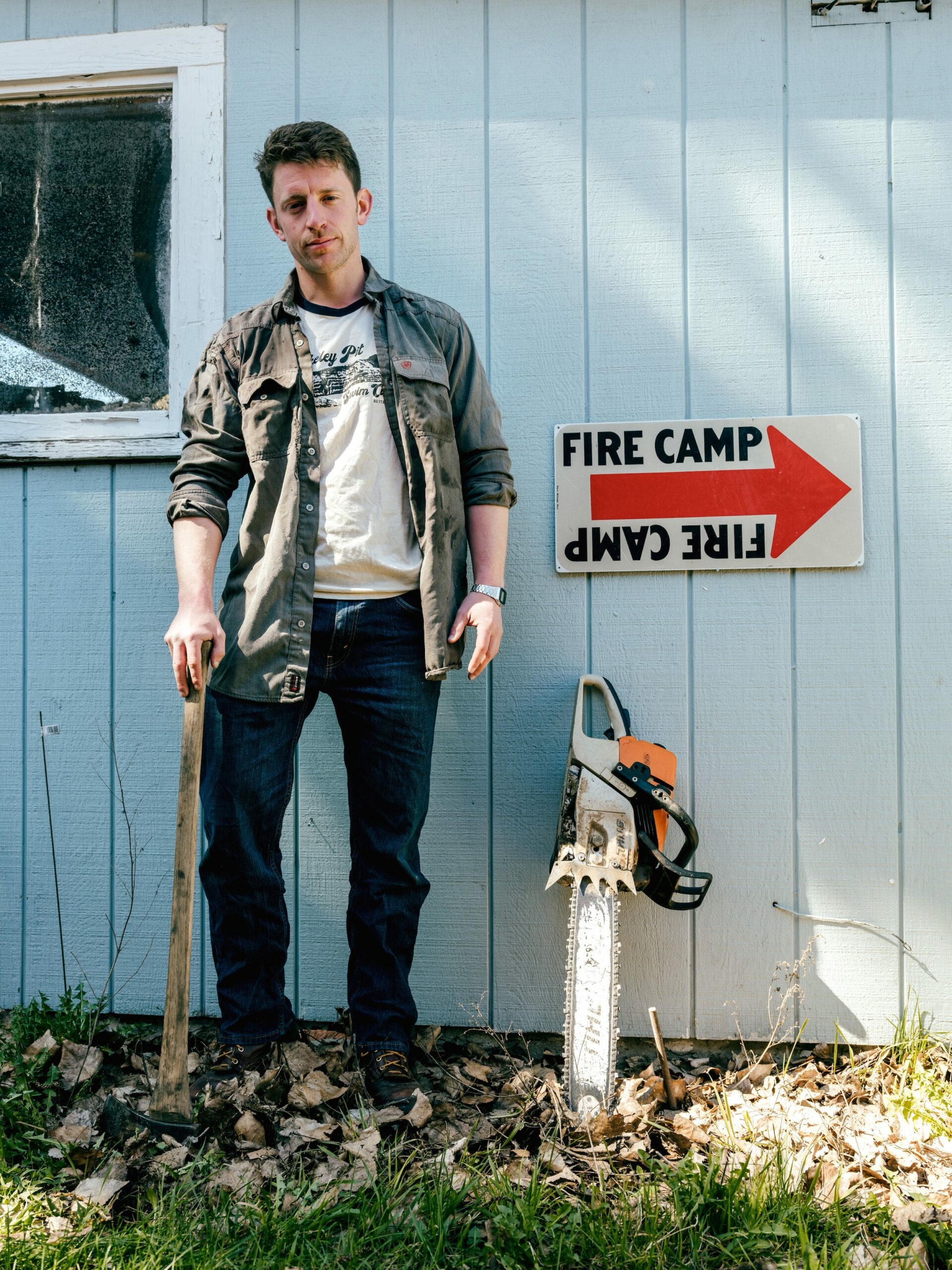
Ever wondered what it takes to literally dive headfirst into danger and then turn that grit into a fight for change? Meet Sam Forstag — a smokejumper with a Kevlar suit and a cause bigger than the flames he battles. Picture this: it’s June 2025, a roaring plane slices through Alaskan skies, and Sam’s about to jump into a wildfire that could have ended him. Yet instead of retreating, he chooses a new battleground — the political arena — fueled by the raw reality of vanishing public lands and a workforce being slashed to bare bones. It’s a story of courage, resilience, and asking the tough question: when the skies are on fire, who else but the heroes should step up to rewrite the rules? Get ready to explore the intense journey of a man who trades his parachute for a campaign trail, fighting not just flames but the very system that lets them burn hotter. LEARN MORE
 21 min read
Part One: The Jump
The plane was high in the air, just outside Fairbanks, Alaska. Its twin engines roared as the wind howled and barreled through the yawning door. It was June 2025. A sprawling sea of black spruce was licked in flame three thousand feet below, adding to the midsummer heat. Though the blaze spanned thirty acres, it wasn’t as big as the others that Sam Forstag had seen that benighted the sky with billowing smoke.
He, like the five others in the plane, was outfitted in a Kevlar jumpsuit, tall leather boots, a full parachute system, and a helmet. He would soon launch himself into the burning forest below, as he’d done dozens of times, to fight the flames before they reached a small development of houses just three miles away.
He turned and knelt in the cabin, examining the fire through the windows. From here, he could tell how hot it might be, how fast it was ripping through the spindly trees. He scanned the forest for where to land. The crew decided on a spot a quarter mile from the fire with shorter trees that wouldn’t hang up the parachutes. It was farther than they would have liked—the crew usually landed right on the edge of the fire—but it would have to do.
As Forstag maneuvered toward the open door, he focused on the ground far below. He touched each piece of equipment on his parachute system as he mentally recited the familiar four-point checklist of the release mechanism: drogue release, reserve, cutaway, lower reserve static line. Then he stepped into the thin air of the burning morning.
As he hurtled through the sky, he didn’t know that this was the fire that would nearly kill him. The one that would add weight to everything to come.

Forstag in the Wind River Mountains, Wyoming, in August 2025, outfitted in smokejumping gear.
On a cold night in early January 2026, Forstag entered a packed bar in downtown Missoula, Montana. The Union Club had long been the gritty workers’ pub in town, the de facto Democratic headquarters for both launching campaigns and tracking polls. The thirty-one-year-old, compact and muscled with a thick mop of red hair, was dressed in his usual worn Carhartt work jacket, jeans, and work boots.
The crowd inside was astonishingly young. The twenty-something woman next to me had been a wildland firefighter and recognized other Forest Service workers in the room. Forstag seemed to know everyone. He hugged several people as he made his way past the pool tables and shook hands as he crossed the dimly lit dance floor.
Two months before, Forstag had driven his 1984 Toyota van, with its temperamental spark plugs and homemade bed, to a lake tucked into a valley outside town. Underneath blazing-gold larch trees that would soon drop their needles, he spent the night alone, thinking, writing. Crying.
Friends, colleagues, and local political players had been begging him to run for the seat of Montana’s First Congressional District. It was a heavy ask. He wasn’t a politician. He was a smokejumper, the most elite level of wildland firefighter. It was a seasonal job that paid just twenty dollars an hour—and it was dangerous. He had to parachute from planes into forests across the western U.S. to extinguish wildfires. He pictured himself jumping until his body gave out.
The journey to this point had been winding, his life hard-won. He’d had a poor childhood in Oregon. Worked multiple jobs to get himself through the University of Montana. Became a wildland firefighter to help pay for law school. Then he fell in love with smokejumping and became a union leader. As his statewide profile grew, bolstered by public appearances in which he spoke out against the Trump administration’s cuts to public lands and their workers, he wondered whether he really should run for office. Could he make a bigger difference by shaping law rather than learning to practice it?
That night in the valley, he finally asked himself, Why not me? By morning, he’d decided to run for Congress. There was no going back. Smokejumpers are federal employees, and federal employees can’t run in partisan races. He also suspected that, even if he lost the election, the Trump administration could find a way to ensure he wouldn’t get his job back.
A week later, Forstag wrote a resignation letter to the Missoula Smokejumper Base. “I wouldn’t be writing this letter if it weren’t for the chaos we’ve all lived through over the past year,” he wrote. “Seeing our colleagues be illegally fired, intimidated into silence, insulted in official emails … it’s been hard to feel anything but embattled and abandoned by the people who were supposed to lead us.”
Forstag would be entering a crowded Democratic primary, challenging a former firearms executive, a rancher and former Black Hawk pilot, and a Navy veteran turned start-up founder. But in the Union Club it felt like a one-man race. When Forstag stepped onto the low stage, the wall behind him papered in “Sam for Montana” signs, the crowd went crazy.
“They don’t take care of us; we take care of us,” he said, referring to Republican incumbent Ryan Zinke and other wealthy Congress members. “We’re the ones we’ve been waiting for. No one else is coming. And they are going to be against all of us.” The crowd thrust drinks and fists into the air. With that speech, he had officially launched his campaign.
Why was the crowd so excited about Forstag? I’m told he doesn’t point fingers. He invites everyone in, including Trump voters. He doesn’t use the inflammatory rhetoric so many folks are sick of. He’s approachable. Working-class. Connects with everyday people. He’s authentic, he listens, and he speaks directly to people’s experiences—not just about them.

Forstag’s supporters and volunteers marching in the St. Patrick’s Day parade in Butte, Montana, in March this year.
Willis Curdy—legislator, retired smokejumper, and the self-proclaimed “oldest codger in the room” that night—was impressed by the support. As the victor in five consecutive elections, from state representative to state senator, he saw Forstag as the candidate willing to put in the groundwork to win a tight race. If he can win the primary, Curdy said, he has a realistic shot to become the first Democratic House representative from Montana since 1997.
Forstag has aimed his campaign at reclaiming voters lost by the Democratic party: moderates, young people, rural Americans, the working class. In every town he visits, he stops in at local meetings of pipe fitters, nurses, and carpenters. The Montana AFL-CIO, which represents five hundred union locals, recently threw its support behind him.
With only two House seats for the entire state, the stakes are high for every election. But even if Forstag were to win the Democratic primary, national polls believed Zinke’s seat to be a foregone conclusion. Few House seats are considered truly competitive; the Cook Political Report listed only eighteen out of 435 as toss-ups, none of which was in Montana.

Forstag campaigning at the Butte St. Patrick’s Day parade.
But Forstag earned key endorsements that turned him into a challenger. Bernie Sanders shared Forstag’s campaign-launch video to his 8.8 million Instagram followers. The Congressional Progressive Caucus, made up of nearly one hundred progressive members of the House and Senate, also backed him. The New York Times, The Guardian, and Outside all ran stories on his campaign. And on February 10, the national Democratic party added Montana’s First Congressional District to its list of forty targeted seats on the party’s battleground map.
Then, on March 2, Zinke suddenly announced he wouldn’t seek reelection, citing old Navy SEAL injuries that required surgery. He was the latest in a wave of more than thirty House Republicans who were vacating their seats.
Within days, four candidates launched themselves into the Republican primary. The foregone conclusion was now a heated competition. The national spotlight shone upon Montana, a state emblematic of the fast-changing rural West.
Thanks to the runaway success of the TV show Yellowstone, pandemic migrations, and a tech boom in Bozeman, Montana morphed into an exorbitant hot spot. Millionaires and billionaires bought up land in search of, as Town & Country reported in 2022, “five-star living dressed up as American frontiersmanship.” Ultra-luxe “Western” resorts privatized public land, even entire mountain ranges, to cater to the rich. As if the resulting affordability crisis weren’t enough, the Trump administration continued to gut funding to public lands and the workers who steward them. On March 31, it announced a reorganization of the Forest Service. All nine regional offices and more than fifty research and science facilities are being shuttered. The headquarters is moving from Washington, D.C., to Utah, which has a history of selling off public land. For Montana, where support for public lands is a nonpartisan issue, the matter is more pressing than ever. Nearly one-third of the state is federal land, which drives $5.5 billion to Montana’s tourism industry, thereby supporting nearly forty thousand jobs in addition to government employees.
At a March campaign event in an old Bozeman music venue, I spoke to Mary and Frank Erickson, a retired couple who had both been Forest Service employees, about why they thought Forstag stood a chance.
“So many young women say they’d vote for him just because he’s a smokejumper,” Mary said.
Frank just smiled. “Well, a smokejumper is a hero,” he said. “And we like heroes.”
Part Two: The Smoke
Forstag and his crew landed safely. A column of smoke surged and rippled in the stiff wind. He stripped off his jumpsuit and put on a mosquito net to keep the bugs at bay. He then packed his parachute up and set to work helping the others gather the gear that floated down to them: two pump-and-hose kits, sleeping bags, chainsaws and cans of gasoline to power them, ax-hoe hybrids called Pulaskis, three days’ worth of dry food, five-gallon jugs of water—everything they might need for a few days of unsupported work on the ground. He loaded eighty pounds of it onto his back and trudged toward the fire. Moving through the Alaskan tundra felt like walking on furry deflated basketballs; with every step, his foot sank into the squishy ground.
The crew then prepared their exit. Forstag revved up his chainsaw to help cut a pocket out of the stubby trees broad enough for a helicopter to land. Next they would normally create a break zone by felling trees, cutting brush, and digging trenches to prevent the fire from spreading any further. Then they’d pump water from nearby streams or ponds to soak the ground. But before they could do any of that, Forstag heard the radio crackle. Air Attack, which coordinates aerial resources over wildland fires, called down from the small plane circling overhead.
“We’ve got four new starts near Fairbanks proper,” the Air Attack supervisor said. “This burn is no longer the priority.”
The air tanker, which carried thousands of gallons of retardant and water to aid the ground crew, was yanked away to focus on the new fires. Air Attack was also getting pulled. The crew effectively lost their eyes in the sky.
The jumper-in-charge—a democratic position given to the first one to parachute out of the plane on any given job—palmed his radio to reply. “We cannot hook this thing with just six guys, without air support,” he said. “It’s already thirty acres and running. We’re going to need transport to those subdivisions. We’ll go do structure protection.”
Air Attack signed off and buzzed away over the horizon. The JIC pulled out a satellite phone—radio communications over long distances can be spotty in Alaska—and called dispatch in Fairbanks. The man on the other end promised a helicopter in thirty to forty minutes.
The crew finished cutting out the landing spot. They readied their gear for transport when dispatch called back.
“That heli was diverted to a new burn. We’re sending another.”
That helicopter ended up diverted too.
Forstag watched the column expand. Every hour they waited, the bigger the fire grew and the less time they had to protect those cabins. After losing faith in the third helicopter, the crew pulled out maps and conferred. Highway 2 was three miles due west. Could they get out on foot? In the thick, black spruce of the tundra, weighed down by heavy packs and equipment, that meant several hours of bushwhacking.
The wind swung 180 degrees and blew in Forstag’s face at thirty miles an hour. The chatter stopped.
Oh shit, Forstag thought. This is bad.

Sam Forstag sits on his van outside of his home in Missoula, Montana.
Sam Forstag grew up in Portland, Oregon. His parents split when he was young. His mother, an ICU nurse, worked nights for better pay and picked up extra shifts to make ends meet. She raised him and his little sister mostly on her own, but the kids would spend time with their father every other weekend. While trying to earn a teaching degree, the man relied on food stamps to feed them. Forstag remembers going to the store with him to carefully pick certain groceries from the shelves.
With the help of financial aid, Forstag attended the local Jesuit high school alongside much wealthier kids. Although he was a three-sport athlete in cross-country, track, and swimming, he was small and not very good. He preferred outdoor activities that weren’t athletic, like camping, hiking, and even chopping wood at his grandparents’ place in central Oregon.
Maybe because Forstag was the butt of jokes about size and social class, he demonstrated “uncommon concern for those on the margins,” says high school friend and fellow smokejumper Conor Hogan. Forstag volunteered to coordinate his homeroom’s Christmas canned-food drive. He invited everyone and anyone to parties. He stepped in if someone was being bullied.
After high school, Forstag and Hogan both enrolled at the University of Montana in Missoula. Forstag took a year off to get state residency in Montana, which allowed him to qualify for in-state tuition, which was less expensive—a solid draw, given Forstag was paying his own way. He studied political science and philosophy, all while working two or three jobs at a time to support himself. During senior year, he won student-body president and organized students to testify at the state capitol against massive budget cuts to education. He interned for USAID in Washington, D.C., one semester.
After graduating in 2017, he took a job the following spring as a wildland firefighter to pay down student-loan debt before applying to law school. Forstag started on a ground crew based in Lincoln, the thickly forested district of Unabomber infamy. He spent another few years as a sawyer and squad leader to gain experience. Finally, he was picked up by a rookie smokejumper crew in 2022.
The occupation’s roots date back to the early 20th century. After World War I, the U.S. Forest Service began to use aircraft for fire detection in the West. Once a fire was spotted, wildland firefighters would then hike twenty or more miles into the burn, arriving tired. By then, the fire would have scorched enough to meet them halfway anyway. In 1934, T.V. Pearson, a Forest Service leader based in Utah, proposed the idea of dropping self-sufficient firefighters directly into the blaze. Another forester with the agency, headquartered in Missoula, disagreed: “The best information I could get from experienced fliers is that all parachute jumpers are more or less crazy,” the man wrote. And yet, in 1940, two men made the first jump into a fire in the Nez Perce forest in Idaho.

While fighting a fire near Fairbanks, Alaska, in June 2025, Forstag was forced to leave his kit behind. A charred rip-cord handle, pictured, and the mask from his helmet were all that remained.
Smokejumpers are so uniquely skilled that in 1951, as the U.S. government was beginning clandestine operations in Asia, the CIA sent two agents to the smokejumper base outside Missoula to learn to parachute into isolated mountainous areas. Once the agents returned, they reported that there was no need to send anyone else. The smokejumpers were willing to take on missions themselves, which they did during the 1950s and ’60s.
David Stadler, a friend of Forstag’s, explained to me what makes smokejumpers special. On the first big fire he ever fought, Stadler watched a load of jumpers fall out of the sky to aid the crews already on the ground. It was hot, hard work, and after they quieted the fire, they collapsed onto their sleeping pads, exhausted. Stadler woke at 1:00 a.m. to a glow on the other side of the ridge. The fire had rekindled. Would it blaze down into camp? Should he wake the crew? Then he saw headlights cutting up the mountain. Two smokejumpers were hiking up the ridge to keep an eye on it so the rest of them could get some sleep.
Rookie smokejumper training is famously brutal, however. About 60 percent of trainees make it through. Hopefuls run the equivalent of marathons over rugged terrain in the heat while toting heavy packs. They dig fire lines for twenty-four hours straight. And they participate in endless rounds of sit-ups and push-ups. All of it with experienced smokejumpers yelling at them and haranguing them.
In his third week of training, Forstag boarded a small plane for his first-ever jump. He’d already learned to suit up and hook up his parachute harness—a thirty-two-step process—in under two minutes without error. He could recite the four-point checklist in his sleep. Yet still his nerves twanged like guitar strings ready to snap. Eventually the rookies would learn to parachute into a clearing the size of a basketball court in tall timber, but for now the plane rose over an open field. Rookies sat shoulder to shoulder in the rear, side door open to the churning air. The man across from Forstag prayed with his eyes closed, which unsettled him even more. He preferred poetry to prayer and began to whisper lines from Rudyard Kipling’s “If—” to relax:
If you can keep your head when all about you / Are losing theirs…
Soon the spotter called him to the plane door. Forstag performed the four-point checklist: drogue release, reserve, cutaway, lower reserve static line. Distanced himself enough from fear. And jumped into the violent chaos of 30-knot winds, thousands of feet in the air.
When he landed, he felt a wave of relief. But before he could be too satisfied, the instructors got in his face about all the ways he’d messed up, how terrible the jump was. He got back in the plane to do it again.
Part Three: The Fire
“We need that helicopter right fucking now,” the JIC said into the satellite phone. Smoke now darkened the sky.
“It was diverted too,” the man on dispatch replied. “We’ll send another.”
“We don’t have time to wait. There’s been a wind switch. We are now in the path of the fire.”
This was the perfect storm of circumstances that appeared in every fatality report on a wildfire that Forstag had ever read: Wind shift. No mode of transportation. No rapid exit route. There was no need to mention the Mann Gulch fire in Montana that had consumed thirteen trapped smokejumpers in 1949 or the 2013 Yarnell Hill fire in Arizona that overran and killed all but one member of an entire crew. This was just as dire. Everyone knew it.
He and the others knew they wouldn’t make it to the highway. But their maps showed a grove of hardwood, which typically doesn’t burn as fast or hot as spruce, a mile and a half northeast up a drainage ditch. If they were forced to set up their shelters, forced to face being burned over, that was their safest bet.
The crew left most of their gear, shouldered their packs, and took off as fast as the tangled forest allowed. Forstag did his best not to think about what would happen if they couldn’t outrun the flames. The six of them tried to stay close, but the trees were so dense they had to spread out in search of the best path.
“Take the contour on the right,” one crewmember said over radio. “It’s thinner; the walking’s better.”
They heard blasts from behind. The gas cans for the chainsaws must have exploded in flames, destroying the gear they left behind. The fire, it seemed, was chasing them.
Forstag realized that he hadn’t caught a glimpse of a particular crewmember, the oldest man on the job that day, for a few minutes. “Has anyone seen him?” he said.
The missing crewmember’s voice crackled on the radio. He was behind.
“I’ll stay back and wait,” Forstag said.

Forstag speaking at the Fighting Oligarchy rally in Missoula, Montana, on April 16, 2025.
Because summer and fall are the peak seasons for wildfires, smokejumpers tend to find other jobs in the winter, often at ski resorts. Forstag did one stint at Alta in Utah, but the next winter he convinced Hogan to backpack through the Sonoran Desert. Over that month and a half, he read the Bible cover to cover—with some Mary Oliver and Wendell Berry thrown in too. He came to a greater understanding of the New Testament as a progressive document about helping the poor. It’s a real shame the Left has ceded that whole space to Republicans for so long, he thought.
From then on, Forstag spent his offseasons working for nonprofits like the ACLU, Montana Library Association, and Montana Innocence Project. He’d already had his eyes on a career in civil liberties and social justice. Public policy, he says, became his love language. By 2023, he would claim one of his first major political victories.
As a leader of the Montana Coalition to Solve Homelessness, Forstag helped convince lawmakers from both parties to allocate half a million dollars from the state’s enormous budget surplus to build a homeless shelter in Bozeman. As the city gentrified, the number of people without stable housing shot up more than 500 percent from 2020 to 2025. Housing costs skyrocketed, wrenching homeownership out of reach. Rent for a one-bedroom apartment—the ones that survived being turned into vacation rentals, that is—tripled from $500 in 2017 to $1,500 today.
The boom wasn’t unique to Bozeman. Forstag himself could barely afford the mortgage on his 980-square-foot house over in Missoula, even after working hundreds of hours of overtime. During one fire season, he leased it out to a veteran who needed help getting back on his feet. When Forstag returned from a smokejumping job, he discovered that the tenant had squatters over. They had used drugs, trashed the place. He could’ve cursed at the man, chased him out, called the police. Instead, Forstag bought him a hotel room for the night and gave him money for addiction treatment.
Forstag joined the local chapter of the National Federation of Federal Employees, NFFE Local 60, in 2024. The union was founded in 1917 as part of the first unionized national forest in the country, Lolo, where the Missoula Smokejumper Base is located. NFFE Local 60 represented eight hundred workers across all the national forests in western Montana. By January 2025, Forstag had risen to vice president.
Around the same time, the newly founded Department of Government Efficiency, led by billionaire Elon Musk, began cutting what it considered wasteful government spending. On January 28, 2025, the infamous Fork in the Road email was sent to all federal employees, including Forest Service workers like Forstag, encouraging them to leave their “lower productivity jobs in the public sector” for “higher productivity jobs in the private sector.” The ax fell just weeks later.
On February 14, 2025, approximately twenty-three hundred workers were terminated from the agencies that manage America’s 640 million acres of public lands. Montana’s all-Republican congressional delegation did almost nothing to stop it, despite the fact that the state has a high proportion of both public lands and the people who work on them. Many of those fired made less than nineteen dollars an hour.
Forstag and the other union leaders hosted an emergency virtual meeting. The call was crowded with tiny thumbnails of people who’d lost their livelihoods with no warning. One terminated worker, a Forest Service employee for fifteen years, had just been diagnosed with cancer. Another received his termination notice at the airport on the way to his mother’s funeral. Those who survived the first round received emails that they were to report on their productivity with five bullet points once per week. Some spoke out and were fired for it. Others feared retaliation if they did so themselves.
After what was dubbed the “Valentine’s Day Massacre,” Forstag requested multiple meetings with Representative Zinke to discuss the cuts. None were granted. Not that Zinke would have understood. In 2021, financial disclosures showed he owned assets worth up to $32.5 million. And although Zinke styled himself a public-lands champion through his connection to congressional groups like the Public Lands Caucus, he supported the cuts.
Two months later, on April 16, 2025, Bernie Sanders and Representative Alexandria Ocasio-Cortez stopped in Missoula for their Fighting Oligarchy rally tour. The organizers reached out to Local 60 to find someone to speak on behalf of those who had lost their jobs. But the union was still in litigation hoping to get those roles reinstated, and those affected were afraid that speaking publicly would endanger their chances. Meanwhile, those who were still employed feared placing a target on their back.
“I guess I’m the only one who wants to speak,” Forstag told a fellow Local 60 leader. “And this story needs to be told.”

Forstag holding the helmet he would wear when parachuting out of planes into wildfires.
A crowd of three thousand had been expected for the rally, held at the Adams Center arena at the University of Montana. Over nine thousand showed up, the crowd spilling out into the parking lot. As Forstag waited backstage for his turn to speak, he repeated a familiar calming ritual—drogue release, reserve, cutaway, lower reserve static line—and stepped out to applause.
“What we’re facing today isn’t a wildfire, but it’s damn sure an emergency,” he boomed into the mic in his confident baritone. “What we’re facing today is greed burning out of control. Somewhere I read that hope is a state of mind, not a state of the world. And when I see the thousands of us who are here today to say that we’ve had enough, I’m starting to feel the kind of hope it’s going to take to fight this thing.”
The crowd stood and clapped. Out of all the speakers so far, Forstag incited the strongest reaction. The words were on everyone’s lips: That guy needs to run for office.
After the rally, the secretary of agriculture’s office—which oversees the U.S. Forest Service—called the Missoula Smokejumper Base to have him fired.
“[Secretary] Brooke Rollins herself came for his head,” Curdy, the legislator and former smokejumper, told me. “The vindictiveness is just beyond belief. I’ve never seen this from any other administration.”
The situation symbolized what the state had become. Montana had been purple for nearly a century, with union roots as deep as mine shafts. It was the epicenter of one of the most famous labor movements in national history, when unionized miners in the city of Butte took on the corrupt Anaconda Gold & Silver Mining Company in the late 1800s. By the turn of the twentieth century, Butte was known as the “Gibraltar of Unionism,” with thirty-four unions representing nearly eighteen thousand workers, from blacksmiths and teamsters to newsboys and waitresses. The state only went all red in 2024, after voters ousted three-term Democratic senator and third-generation farmer Jon Tester. The race shattered spending records as Republicans aimed to retake the Senate, successfully electing MAGA novice Tim Sheehy.
That’s not to say some blue hasn’t cracked through the red. In Kalispell, the seat of a historically right-wing county that Trump took by nearly 34 points in 2024, Democrats elected Ryan Hunter as mayor in 2025. Citizens in Billings, Montana’s largest conservative city, elected Democrat-backed Mike Nelson as mayor. Although both candidates won by fewer than three hundred votes, their victories indicated discontent with Republican policies.
By the time of his speech, Forstag had abandoned the idea of making a difference as a lawyer. He was thinking of running for state legislature. But he wasn’t ready to run for Congress. Not yet.
Part Four: The Burn
It felt like much longer than two minutes before the man came running out of the spruce. Behind him, Forstag saw the wall of fire crest the ridge, the trees blazing up like firecrackers. It sounded like a train coming.
They needed to turn and sprint for the drainage, but the other crewmember couldn’t move any faster. The man was redlining, breathing hard.
“Listen, man, we need to move,” Forstag said. They struggled together through the trees as the fire consumed everything behind them.
By the time they made it to the grove of hardwoods, it had been forty minutes. Still no sign of air support. The JIC called dispatch again as Forstag went looking for a place to deploy their shelters, which resembled metallic tunnels, designed to protect their bodies from intense heat. He found a dried-out creek bed, little more than depressions in the ground amid the tall grass.
“If worse comes to worst, that’s where we go,” he told the crew.
The smokejumper buttoned up his fire-resistant coat. He pulled on gloves to protect his hands. He readied a water bottle. He thought about everything he’d done. Everyone he loved.
At that moment, an air tanker appeared over the approaching flames.

Forstag sits inside his garage, where he keeps mementos from his experiences as a smokejumper.
Forstag almost didn’t tell me that story. He doesn’t like to talk about fighting fire. It feels too much like bragging. By telling it, though, he helps me understand the situation that public lands—and their protectors—face. The government cuts had hollowed out federal fire support. The dispatcher on the ground was only in his third week of employment in a low-paying job that sees high turnover. Without proper funding, undertrained staff is inevitable. Forstag doesn’t blame the dispatcher, though. He blames the Trump administration’s reckless actions for that near-death incident in June 2025.
“It makes you reconsider your part in a very serious way,” he says. “Life is short. Am I doing all that I can do?”
A few months later, he would drive his van into the valley and decide to run for Congress.
He’s pushing for affordable homes and rentals. Comprehensive health care. Expanded investments in childcare and paid leave for new parents. Education that’s affordable for working people. Raising the federal minimum wage, strengthening unions. Heightened tax rates on corporations and the wealthy. Immigration reform. And, of course, reinvestment in public lands.
His message has resonated. Close to a thousand people have signed up to volunteer for his campaign. Compared with his primary opponents, he has far more endorsements from state legislators, including Republicans like former state representative Greg Frazer.
“We are alienating our brothers and sisters who oftentimes are fighting for the same exact thing,” Frazer told me. “What matters to me most is that somebody is going to actually fight for the working class.”
Forstag thinks Zinke saw the tides changing. “I’m a little disappointed that [Zinke’s retirement] steals the pleasure of actually beating him myself at the ballot box, after all the harm he did,” he says.
Polling is sparse for the Democratic race. According to a Tulchin Research poll touted by competitor Ryan Busse, Forstag sits in third. If Forstag manages to win the primary on June 2, he’ll face the Republican candidate on November 3. Though he may never smokejump again, the memories will always remain—especially of the Fairbanks blaze.
A few days after he and the crew made it out, the JIC returned to the burn site to retrieve any surviving gear. The fire had ravaged the ground they covered. Their chainsaws were incinerated. Their pumps were completely gone. The JIC grabbed what little remained, including the face mask from Forstag’s helmet and the metal handle from his drogue release, rubber melted away. Forstag still has them in his garage.
Download Exclusive Digital Issues

Winter 2026

Fall 2025

Summer 2025

Blue Buffalo Life Protection Formula Chicken Adult Dry Dog Food, 5 lb | Real Chicken #1 Ingredient, Supports Immunity with Antioxidant-Rich LifeSource Bits, Promotes Healthy Muscle Development
$14.97 (as of October 24, 2026 03:13 GMT +00:00 - More infoProduct prices and availability are accurate as of the date/time indicated and are subject to change. Any price and availability information displayed on [relevant Amazon Site(s), as applicable] at the time of purchase will apply to the purchase of this product.)
New! Sceptre Curved 27-inch Prime Gaming Monitor DisplayPort x2 180Hz HDMI x2 180Hz 1500R 1ms Build-in Speakers, Machine Black 2027 (C275B-FW180T Series)
$99.97 (as of October 24, 2026 03:34 GMT +00:00 - More infoProduct prices and availability are accurate as of the date/time indicated and are subject to change. Any price and availability information displayed on [relevant Amazon Site(s), as applicable] at the time of purchase will apply to the purchase of this product.)
Nespresso Capsules Vertuo, Variety Pack, Medium and Dark Roast Coffee, 30 Count Coffee Pods, Brews 7.8 oz.
$42.00 (as of October 24, 2026 03:13 GMT +00:00 - More infoProduct prices and availability are accurate as of the date/time indicated and are subject to change. Any price and availability information displayed on [relevant Amazon Site(s), as applicable] at the time of purchase will apply to the purchase of this product.)
Amazon Fire TV Stick 4K Select, start streaming in 4K, AI-powered search, and free & live TV, find shows faster with Alexa+
$21.99 (as of October 24, 2026 03:23 GMT +00:00 - More infoProduct prices and availability are accurate as of the date/time indicated and are subject to change. Any price and availability information displayed on [relevant Amazon Site(s), as applicable] at the time of purchase will apply to the purchase of this product.)










Post Comment